
A city WIPS deployment is expanding sensors into new community centers. What license-management action prevents security coverage gaps?
Select an answer to reveal the explanation.
Short Explanation
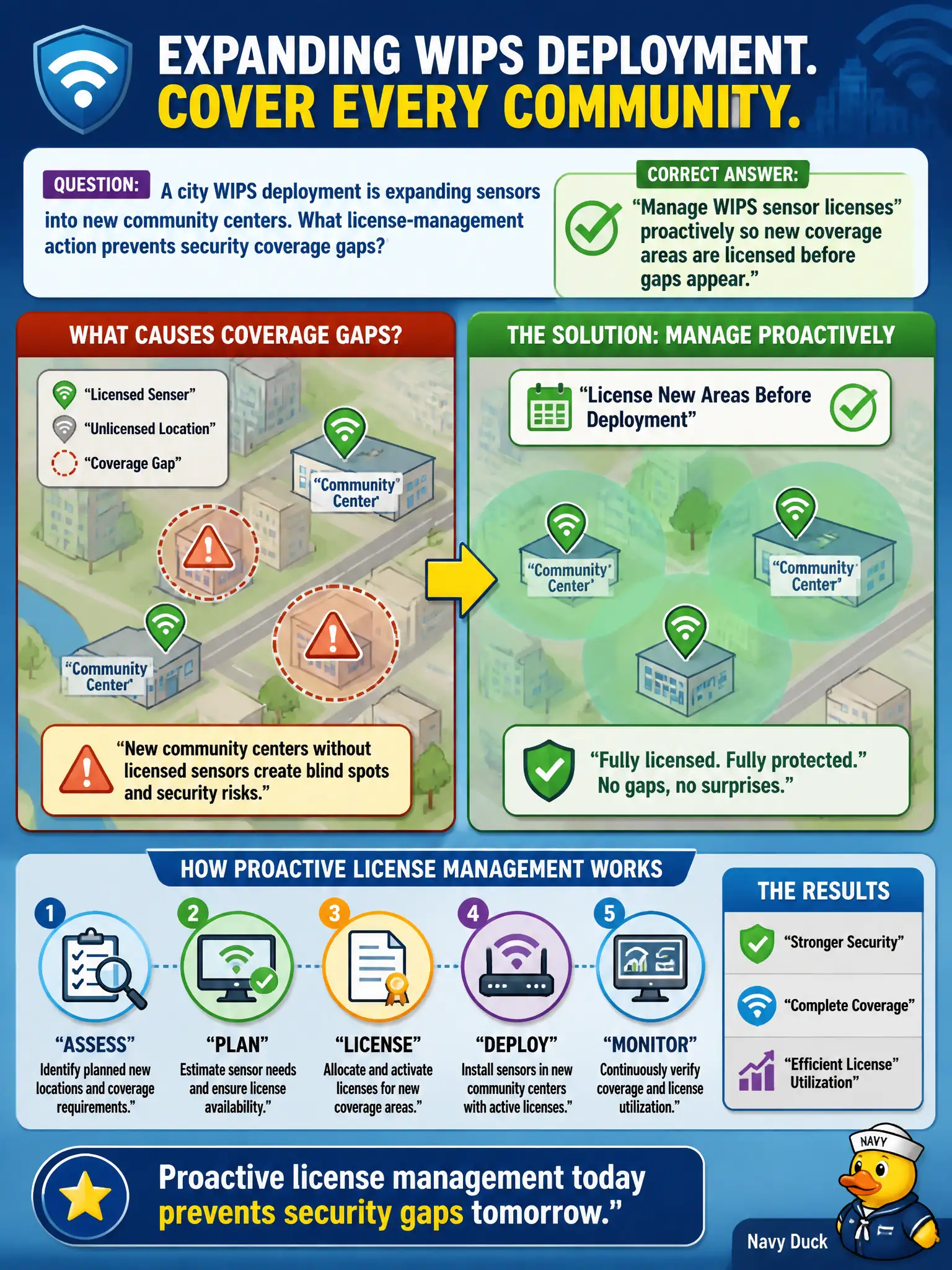
Licenses are the fuel gauge for WIPS eyes. Buy and assign sensor seats before the new buildings go dark on the map. Discovering you are short after opening day is a self-inflicted blind spot.
Full Explanation
Proactively managing WIPS sensor licenses ensures continuous security coverage as new community centers come online. By securing licenses ahead of deployment, the city prevents unauthorized sensor operation and avoids gaps where rogue devices or attacks could go undetected. This approach aligns with vendor licensing models that require sensors to be licensed before activation to function fully. Deploying unlicensed sensors and waiting for vendor lockouts is reactive and risks exposure during the unlicensed period, leaving blind spots in the wireless intrusion prevention system. Reusing a single sensor license across multiple locations by power-cycling devices daily violates licensing agreements and can cause operational instability, as sensors may not function reliably without proper licensing. Dropping WIPS in new buildings to avoid license tracking sacrifices security coverage entirely, exposing critical municipal assets and users to wireless threats. It is important to note that license management must be integrated into the deployment planning process to maintain continuous protection. To operationally verify this practice, confirm that each new sensor is registered and licensed before activation, and monitor license usage reports to anticipate and address upcoming needs proactively.