
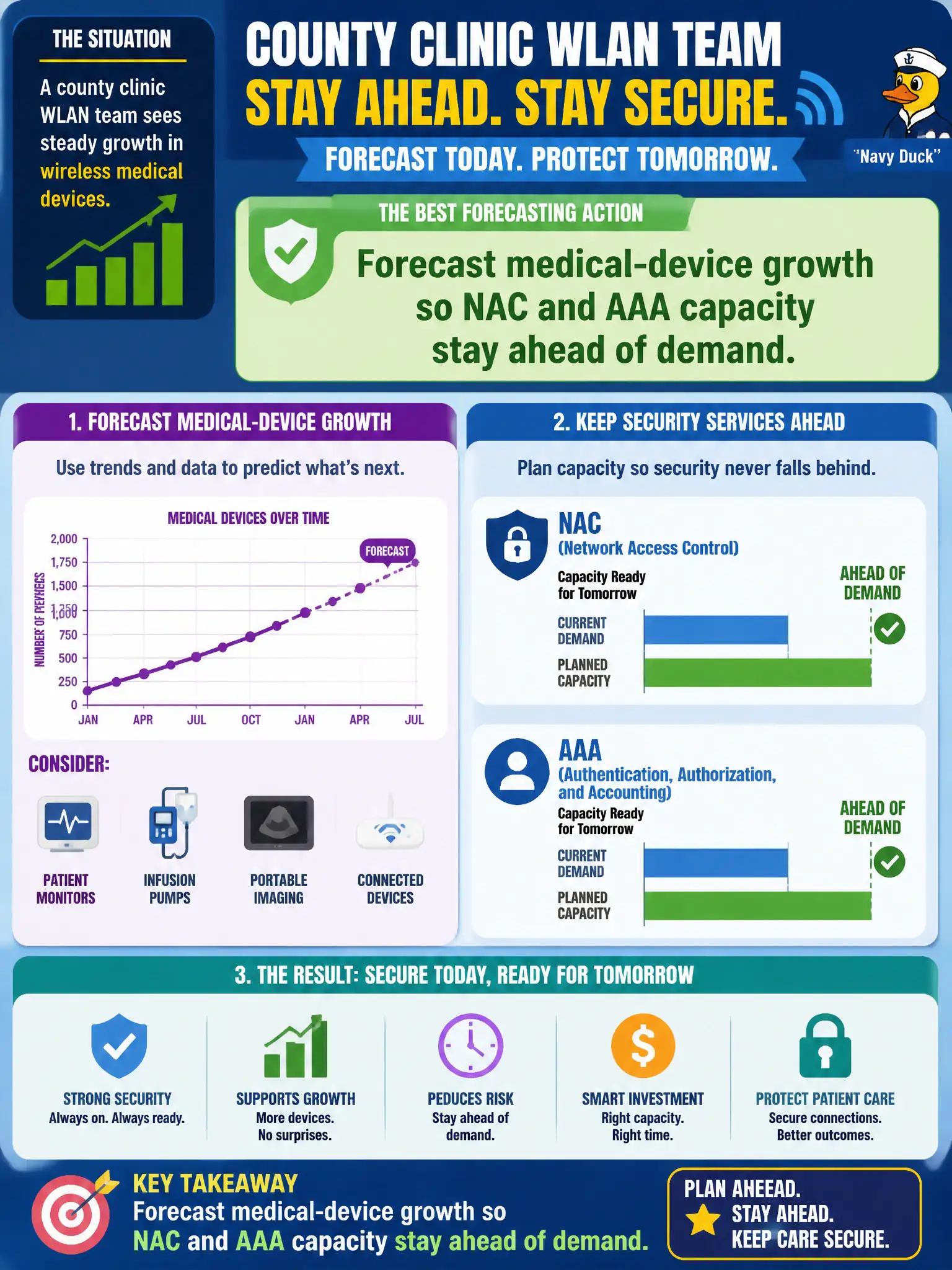
A county clinic WLAN team sees steady growth in wireless medical devices. What forecasting action best keeps security services ready?
Select an answer to reveal the explanation.
Short Explanation
If more clinical gadgets are joining Wi-Fi, size the gatekeepers before the rush. Forecast NAC/AAA capacity so authentication does not become the bottleneck. Hoping growth pauses is not a capacity plan.
Full Explanation
For a county clinic WLAN experiencing steady growth in wireless medical devices, forecasting device growth to ensure Network Access Control (NAC) and Authentication, Authorization, and Accounting (AAA) systems have sufficient capacity is essential for maintaining security services. NAC and AAA systems enforce device authentication and policy compliance, critical in healthcare environments to protect sensitive data and ensure regulatory compliance. Proactively forecasting growth allows for timely scaling of licenses and infrastructure, preventing service disruptions. Freezing AAA licenses while hoping device growth halts ignores actual trends and risks authentication failures. Moving medical devices to open SSIDs bypasses security controls, exposing critical systems to unauthorized access and violating compliance mandates. Focusing only on guest usage forecasts neglects the unique security requirements of clinical devices. The scope is that forecasting must be comprehensive and aligned with device categories to maintain secure network operations. A practical operational check is to verify that NAC and AAA capacity planning documents include projections for medical device growth and that procurement plans reflect anticipated license expansions.