
A municipal guest portal needs scheduled downtime for a security fix that will interrupt visitor Wi-Fi at city hall. Which change-management practice is most important for that downtime?
Select an answer to reveal the explanation.
Short Explanation
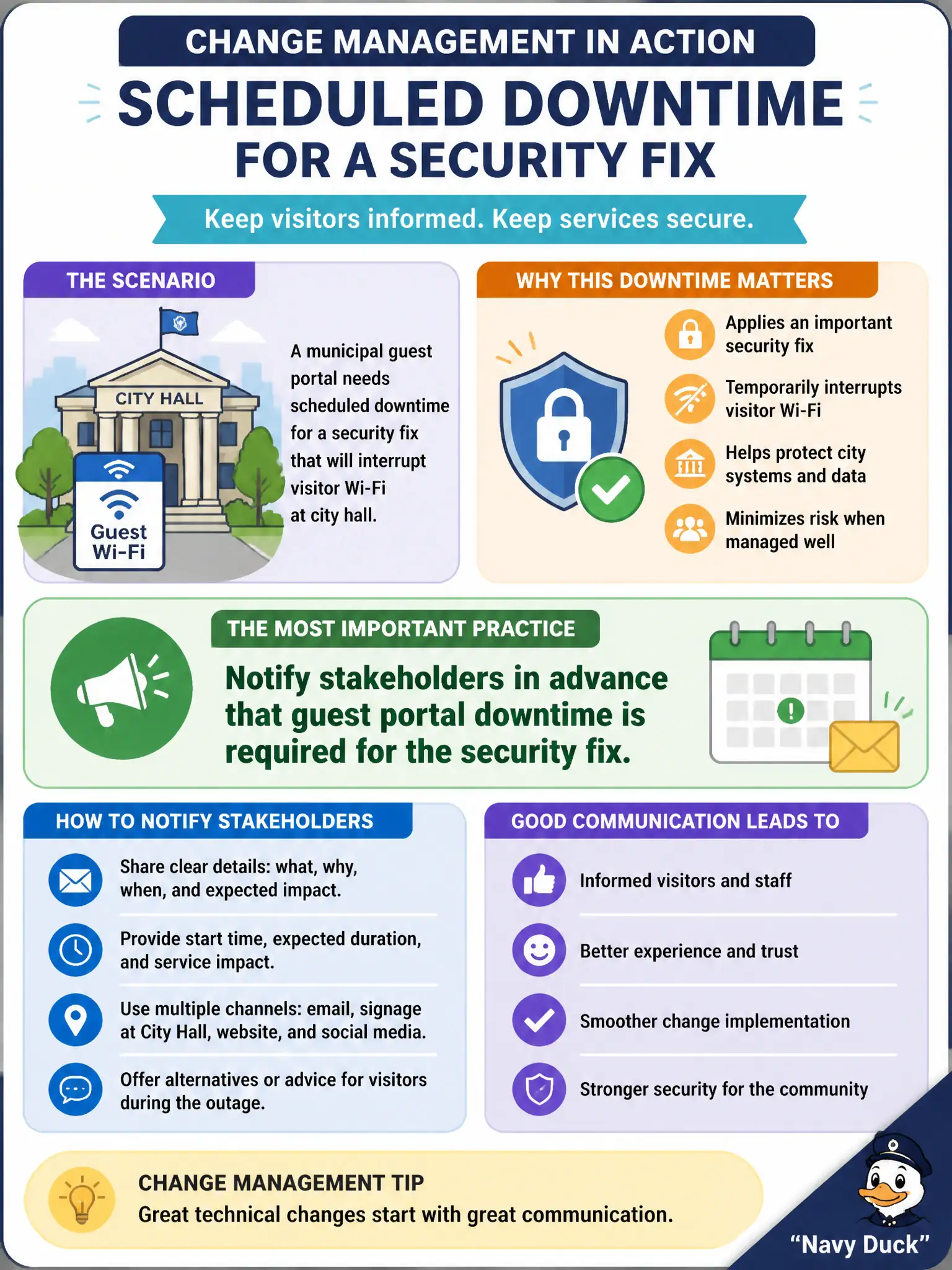
If city hall guest Wi-Fi is going dark for a fix, tell the people who care before it happens. Notifications are part of change management, not optional courtesy. Surprise outages just create angry lobbies and blind help desks.
Full Explanation
Scheduled downtime for a municipal guest portal to implement a security fix requires proactive stakeholder notification as a core change-management practice. Informing users and internal teams ahead of time manages expectations, reduces frustration, and allows for contingency planning, which is essential when visitor Wi-Fi access at critical locations like city hall will be interrupted. Taking the portal offline without notice may enhance security by reducing predictability but simultaneously risks user dissatisfaction and increased support calls, undermining public trust. Notifying only social media followers while excluding internal help desk and facilities disregards the operational coordination necessary to manage the outage effectively. Delaying communication until after users report issues is reactive and fails to uphold service transparency. While minimizing attack surface is important, in civic WLAN contexts, balancing security with user communication is paramount. A practical operational check is to confirm that notification emails or alerts were sent to all relevant stakeholders, including help desk, facilities, and end users, at least 48 hours before the scheduled downtime.