
A town’s SOC pushes an emergency WIPS signature update to stop an active outdoor attack. What change-management expectation still applies after the urgent fix?
Select an answer to reveal the explanation.
Short Explanation
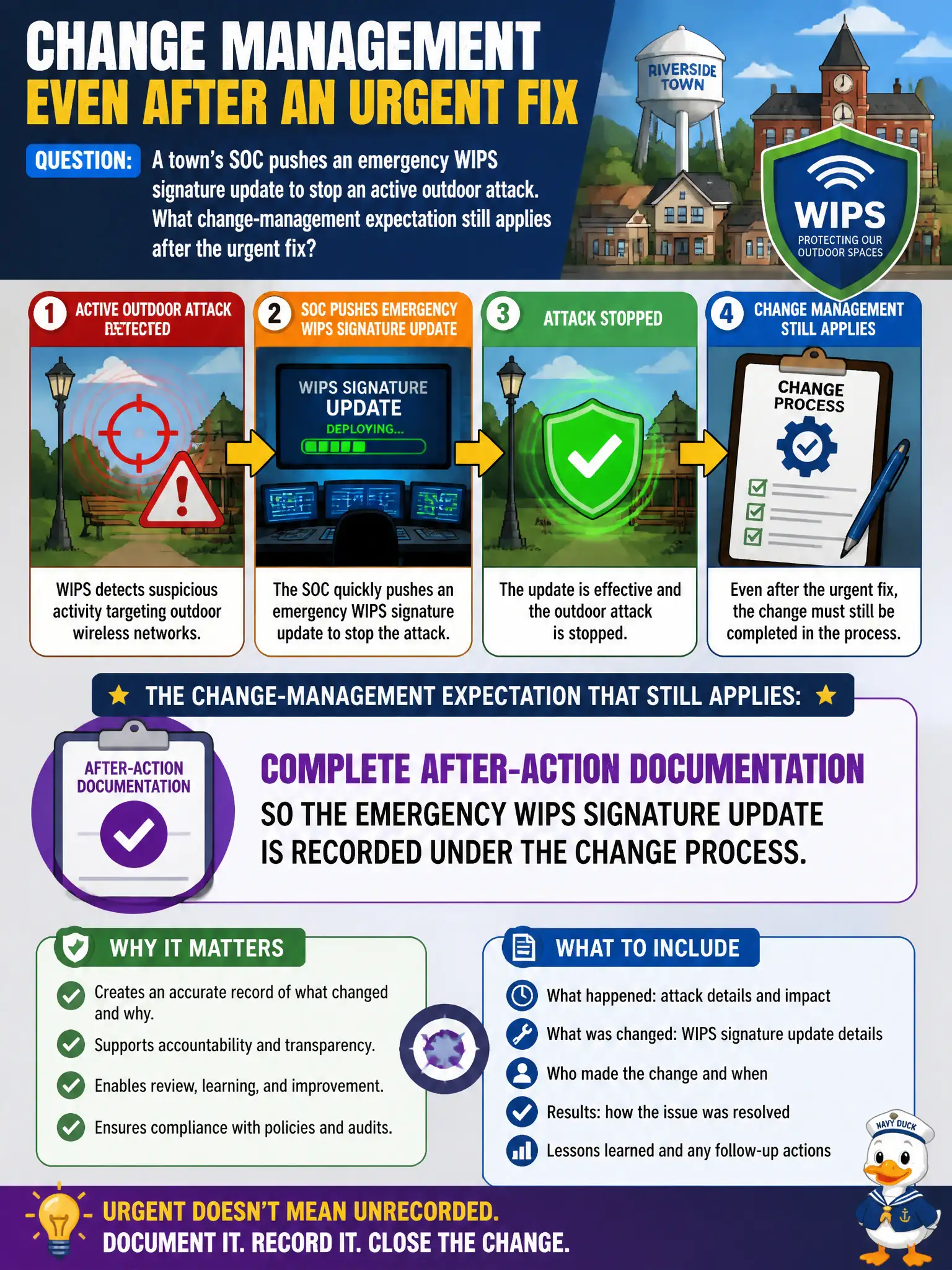
Emergencies let you move fast—they do not erase the paperwork. After the WIPS signatures land, write the after-action so the change history stays honest. Future you (and auditors) will thank you.
Full Explanation
When a municipal Security Operations Center (SOC) issues an emergency Wireless Intrusion Prevention System (WIPS) signature update to counter an active outdoor attack, the urgency does not exempt the event from standard change-management documentation. Completing after-action documentation post-update is critical to maintain an accurate audit trail, facilitate incident analysis, and support continuous improvement in security processes. The technical mechanism involves recording the update details, rationale, and outcomes within the change management system, ensuring traceability despite the emergency nature. Avoiding documentation under the guise of speed undermines governance and leaves gaps in compliance records. Deleting controller logs to obscure the event compromises forensic capabilities and violates audit requirements, which are essential for municipal accountability. Treating all signature updates as permanently exempt from change management ignores the need for oversight in routine and emergency updates alike, potentially leading to unmanaged risks. The scope of this practice is that emergency fixes must be documented retrospectively to balance rapid response with governance. To operationally confirm compliance, ensure the emergency WIPS update is entered into the change management database with a post-incident report and linked to the corresponding security event.