
Leadership asks how WLAN security health should be reviewed on a recurring basis. What audit practice fits?
Select an answer to reveal the explanation.
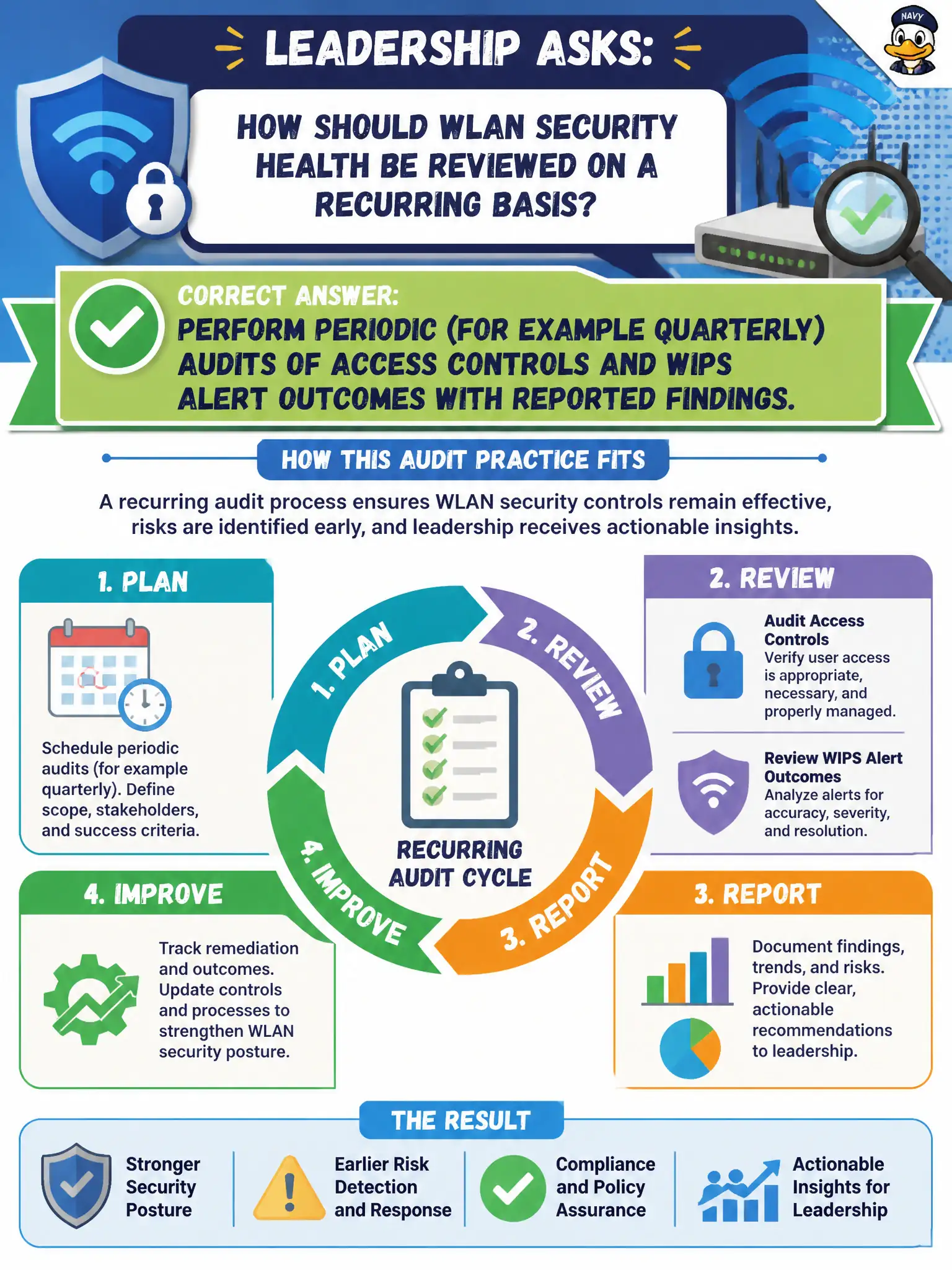
Short Explanation
WLAN security is not a set-and-forget ceiling tile. Quarterly (or similar) reviews of who gets on and what WIPS has been yelling about keep the program honest. Deleting alerts for “clean dashboards” is how you fail the next audit.
Full Explanation
Leadership asking how WLAN security health should be reviewed on a recurring basis should hear periodic audits—for example quarterly—of access controls and WIPS alert outcomes with reported findings. Recurring review catches allowlist drift, stale exceptions, and noisy or ignored wireless alerts before they become normalization of deviance. Civic accountability favors documented findings over tribal claims that everything is fine.
Reviewing access only when a reporter calls about an incident is reactive and politically driven. Never revisiting WIPS alert tuning after initial install guarantees either blindness or alert fatigue. Deleting historical WIPS alerts each Monday to keep dashboards clean destroys trend evidence.
Exam caveat: audit scope should sample high-value SSIDs, rogue outcomes, and AAA exceptions—not only guest portal cosmetics. Operational check: run a scheduled audit checklist, record findings with owners and due dates, and verify prior findings closed or explicitly risk-accepted. In municipal WLAN programs, capture the decision in the wireless standard and re-check it at change review so the next project inherits the same control bar instead of rediscovering the failure during an outage. In municipal WLAN programs, capture the decision in the wireless standard and re-check it at change review so the next project inherits the same control bar instead of rediscovering the failure during an outage.