
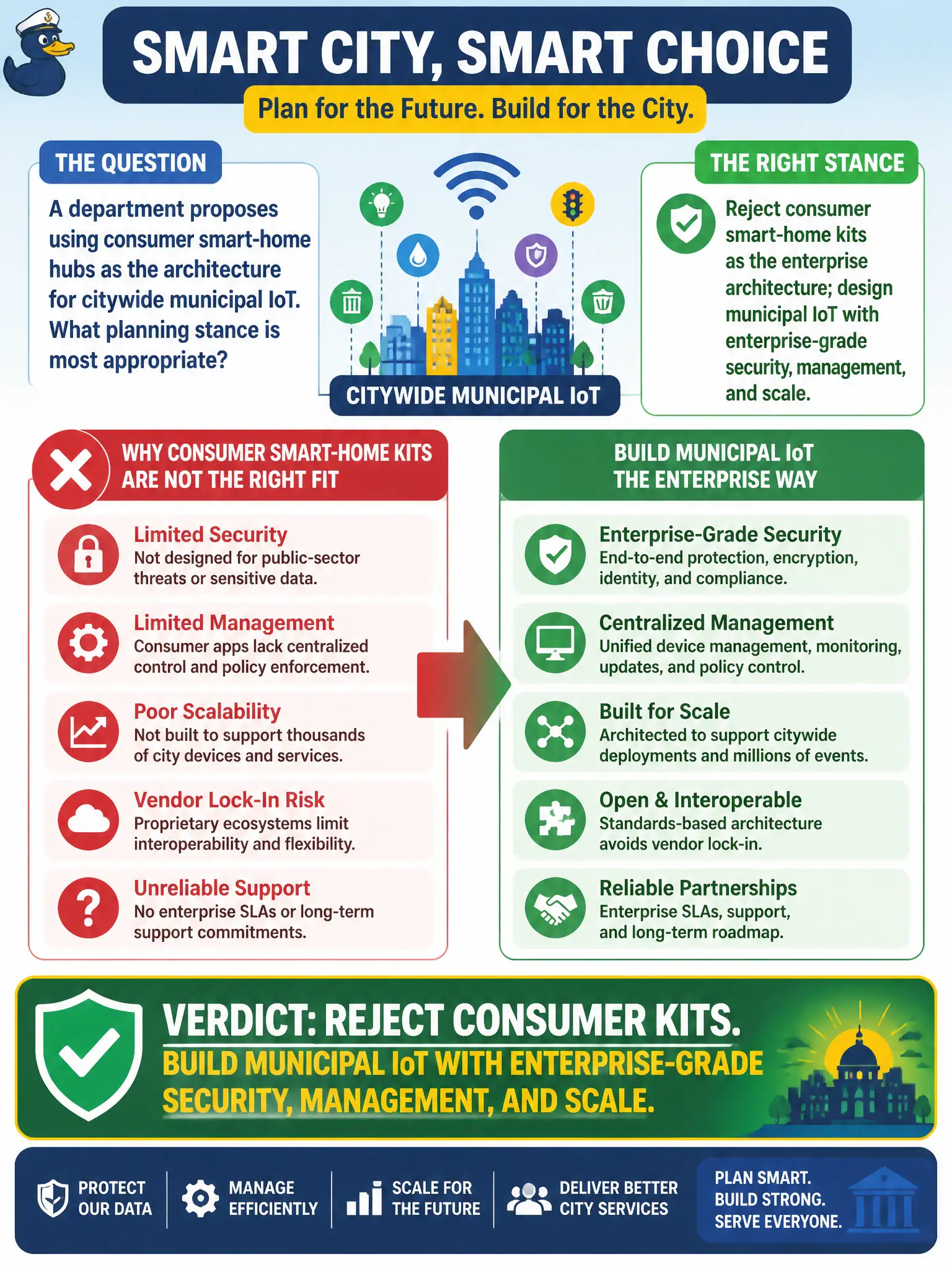
A department proposes using consumer smart-home hubs as the architecture for citywide municipal IoT. What planning stance is most appropriate?
Select an answer to reveal the explanation.
Short Explanation
A living-room hub is not a city platform—different locks, different scale, different support story. Build municipal IoT like infrastructure, not like a weekend gadget install. Turning off logs does not invent enterprise compliance.
Full Explanation
Reject consumer smart-home kits as the architecture for citywide municipal IoT; design with enterprise-grade security, management, and scale. Accepting consumer hubs as equivalent for security and scale underestimates civic risk. Mandating that every civic sensor use only a single residential mesh vendor’s phone app creates lock-in and weak operations. Disabling all logging so consumer hubs supposedly meet municipal audit requirements automatically fails compliance. Exam caveat: municipal IoT is enterprise infrastructure, not a home hobby stack. Operational check: require enterprise management, identity, logging, and support SLAs in procurement, and pilot only platforms that meet the civic security baseline. In municipal WLAN and IoT operations, record the chosen control and the rejected alternatives in the change ticket so on-call staff understand which failure modes were avoided for city services. Re-validate after the next maintenance window that the same control still holds under the current platform code, device mix, and civic event calendar used by the wireless team. Keep RF, capacity, security, and QoS evidence attached to the municipal runbook entry for auditors and future CWNE-level reviews.