
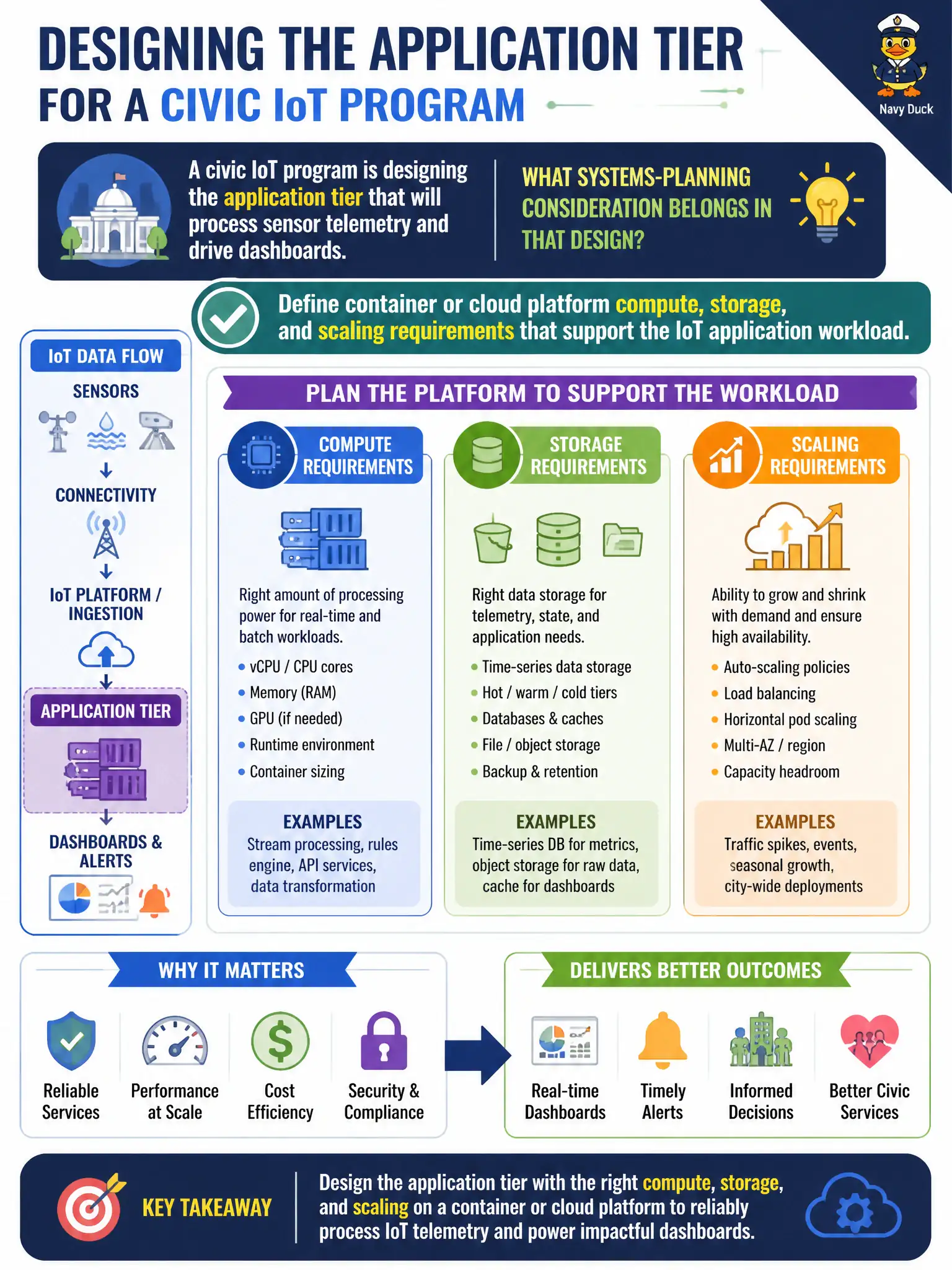
A civic IoT program is designing the application tier that will process sensor telemetry and drive dashboards. What systems-planning consideration belongs in that design?
Select an answer to reveal the explanation.
Short Explanation
Sensors whisper; something has to listen, store, and show the story—that is your app tier on containers or cloud. Gateways are not a data warehouse, and tiny field sensors are not hypervisors. Plan the compute like you plan the radios.
Full Explanation
Civic IoT application tiers that process telemetry and drive dashboards need defined container or cloud platform compute, storage, and scaling requirements supporting the workload. Assuming gateways alone store all historical analytics with no application or cloud compute tier underbuilds the platform. Requiring every soil sensor to run a full hypervisor locally is absurd at the edge. Prohibiting APIs so the application tier can never receive telemetry breaks the architecture. Exam caveat: IoT systems planning includes the application/compute tier, not only radios. Operational check: size ingest and storage for projected sensor rates, load-test dashboards, and document municipal cloud or on-prem scaling triggers. In municipal WLAN and IoT operations, record the chosen control and the rejected alternatives in the change ticket so on-call staff understand which failure modes were avoided for city services. Re-validate after the next maintenance window that the same control still holds under the current platform code, device mix, and civic event calendar used by the wireless team. Keep RF, capacity, security, and QoS evidence attached to the municipal runbook entry for auditors and future CWNE-level reviews.