
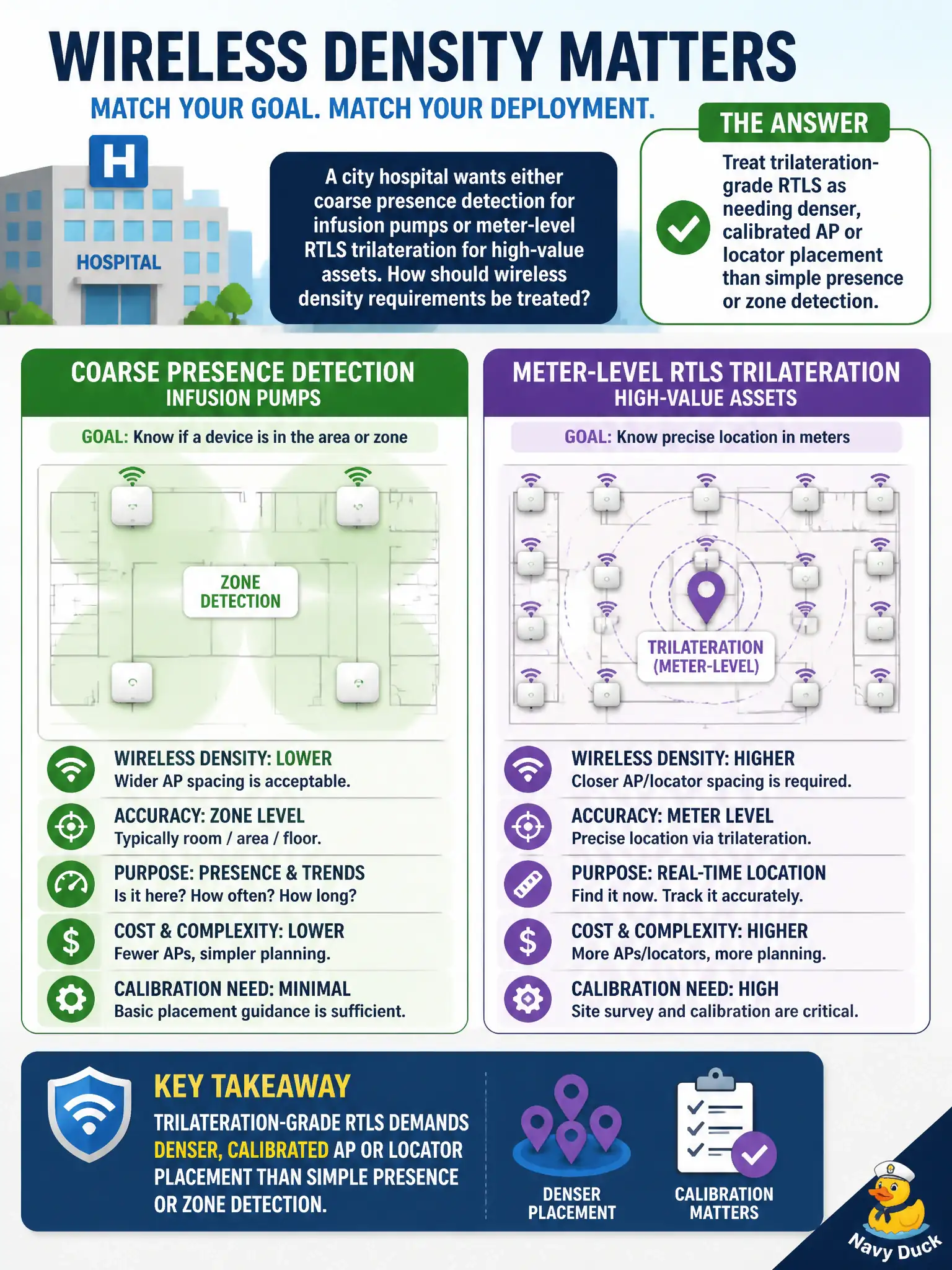
A city hospital wants either coarse presence detection for infusion pumps or meter-level RTLS trilateration for high-value assets. How should wireless density requirements be treated?
Select an answer to reveal the explanation.
Short Explanation
Presence is like knowing a pump is 'somewhere on this floor'; trilateration is like wanting the room and nearly the bay. Meter-level work needs denser, calibrated locators—not the same AP plan as basic coverage. One hallway AP or captive-portal logins will not magically become RTLS.
Full Explanation
Meter-level RTLS trilateration for high-value hospital assets needs denser, calibrated AP or locator placement than simple presence or zone detection for infusion pumps. Identical AP density for both goals is wrong because coverage for association is not calibration for meter accuracy. A single hallway AP’s RSSI cannot deliver sub-meter trilateration citywide. Guest captive-portal login events are not an RTLS source of truth. Exam caveat: location accuracy requirements drive infrastructure density and calibration cost. Operational check: state whether the civic clinical use case needs presence or trilateration, design locator density accordingly, and validate accuracy in representative wards before purchase lock-in. In municipal WLAN and IoT operations, record the chosen control and the rejected alternatives in the change ticket so on-call staff understand which failure modes were avoided for city services. Re-validate after the next maintenance window that the same control still holds under the current platform code, device mix, and civic event calendar used by the wireless team. Keep RF, capacity, security, and QoS evidence attached to the municipal runbook entry for auditors and future CWNE-level reviews.