
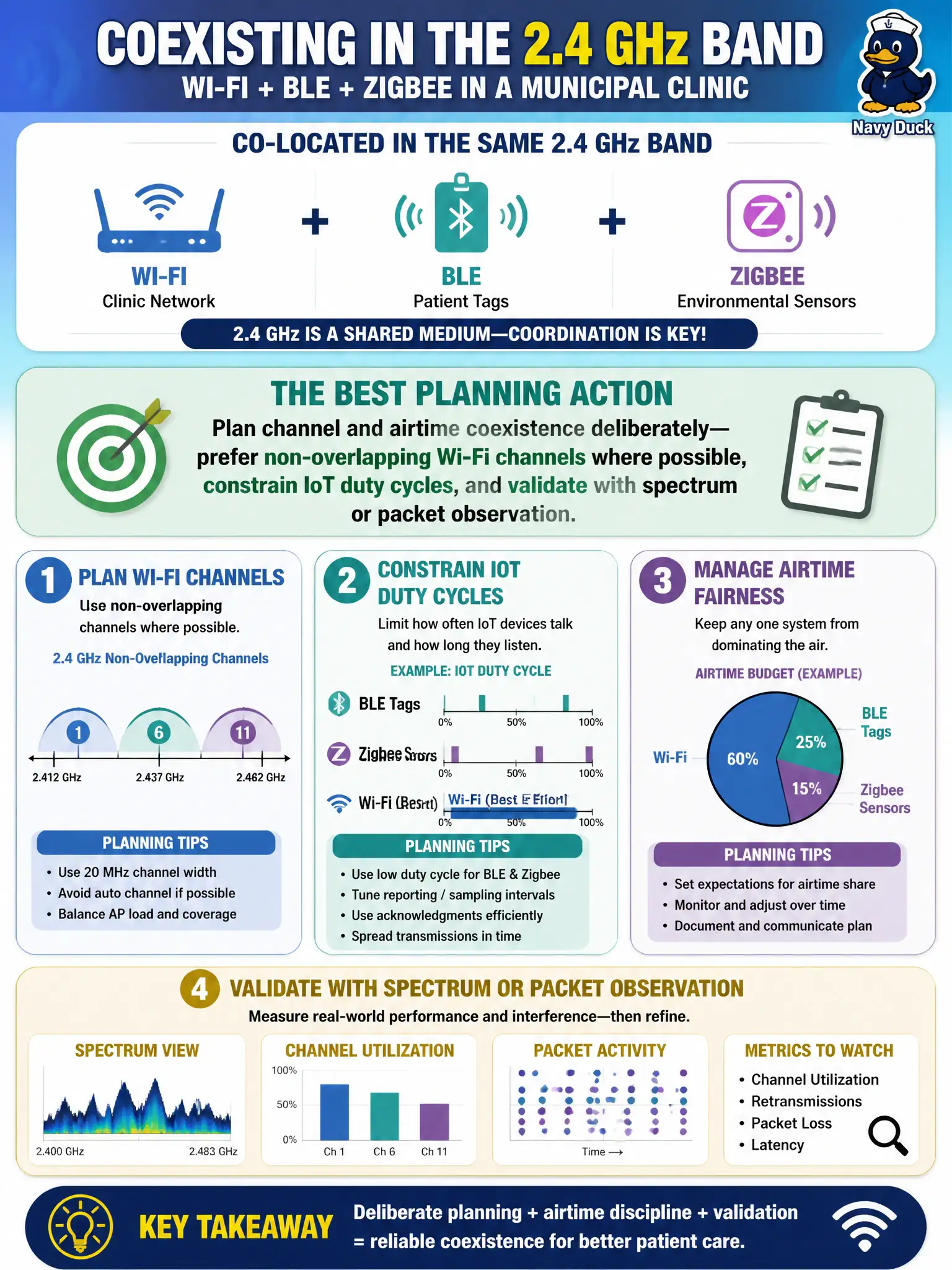
A municipal clinic will co-locate Wi-Fi, BLE patient tags, and Zigbee environmental sensors in the same 2.4 GHz band. What planning action best coordinates those systems?
Select an answer to reveal the explanation.
Short Explanation
Same 2.4 GHz neighborhood means everyone shares the air, not just the logo on the box. Plan Wi-Fi channels, keep IoT chatty devices from hogging airtime, and verify with real spectrum or captures. Hoping brand names isolate radios is wishful thinking.
Full Explanation
A municipal clinic co-locating Wi-Fi, BLE patient tags, and Zigbee environmental sensors in 2.4 GHz must plan channel and airtime coexistence deliberately—prefer non-overlapping Wi-Fi channels where possible, constrain IoT duty cycles, and validate with spectrum or packet observation. Running clinic Wi-Fi only on 2.4 GHz channel 6 at 40 MHz while ignoring BLE/Zigbee energy maximizes conflict. Assuming brand names prevent RF overlap is false. Disabling all clinic Wi-Fi so only Zigbee remains breaks EHR workstation needs. Exam caveat: healthcare IoT coexistence is an RF plan, not an afterthought. Operational check: set Wi-Fi and IoT channels, measure duty cycle near tags and sensors, and confirm clinical WLAN SLOs in the county clinic. In municipal WLAN and IoT operations, record the chosen control and the rejected alternatives in the change ticket so on-call staff understand which failure modes were avoided for city services. Re-validate after the next maintenance window that the same control still holds under the current platform code, device mix, and civic event calendar used by the wireless team. Keep RF, capacity, security, and QoS evidence attached to the municipal runbook entry for auditors and future CWNE-level reviews.