
After a library Wi-Fi 6 upgrade, an engineer validates airtime with a spectrum analyzer. Which observation best reflects expert recognition of modern Wi-Fi PHY and channel-width footprints?
Select an answer to reveal the explanation.
Short Explanation
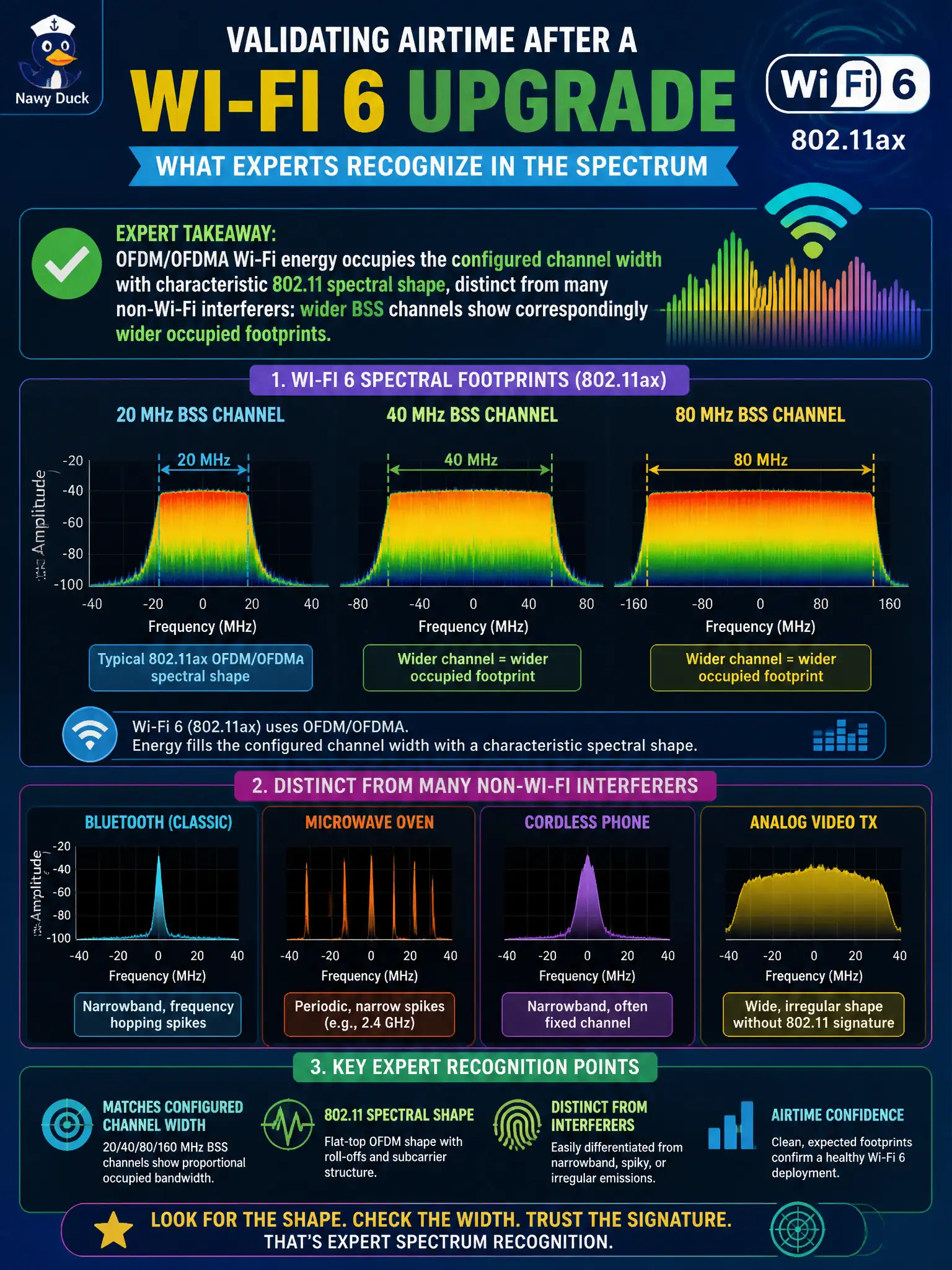
Wi-Fi 6 still paints a recognizable OFDM/OFDMA 'block' across whatever width you set — 20 looks skinny, 80 looks fat — and it doesn't look like a microwave smear. DSSS-only thinking belongs in the museum wing of the library.
Full Explanation
After a library Wi-Fi 6 upgrade, validating airtime with a spectrum analyzer should show OFDM/OFDMA Wi-Fi energy occupying the configured channel width with a characteristic 802.11 spectral shape, distinct from many non-Wi-Fi interferers. Wider BSS channels present correspondingly wider occupied footprints on FFT/waterfall. Expert recognition ties spectrum morphology to PHY and width settings rather than confusing Wi-Fi with microwave sweeps.
Claiming OFDMA resource units always appear identical to continuous microwave oven sweeps on FFT collapses scheduled Wi-Fi structure into broadband swept energy. Saying only legacy DSSS signatures exist on Wi-Fi 6 APs and that OFDM disappeared with 802.11a contradicts modern PHY reality. Asserting channel width cannot be inferred from occupied bandwidth on spectrum displays ignores a primary visual cue engineers use in the field.
Exam caveat: map spectrum occupied bandwidth to BSS channel width when accepting Wi-Fi 6/7 civic upgrades. Operational check: set a library AP to 20 then 40/80 MHz on a test SSID, observe occupied footprint growth on the analyzer, and confirm the shape matches OFDM Wi-Fi rather than non-Wi-Fi interferers. Archive FFT screenshots of each accepted width with the library upgrade package so future NOC tickets can compare morphology to the golden BSS footprint.