
After a crushed coax jumper on a city-yard AP, VSWR/return-loss measurements worsen and radiated performance drops. What does the expert recognize?
Select an answer to reveal the explanation.
Short Explanation
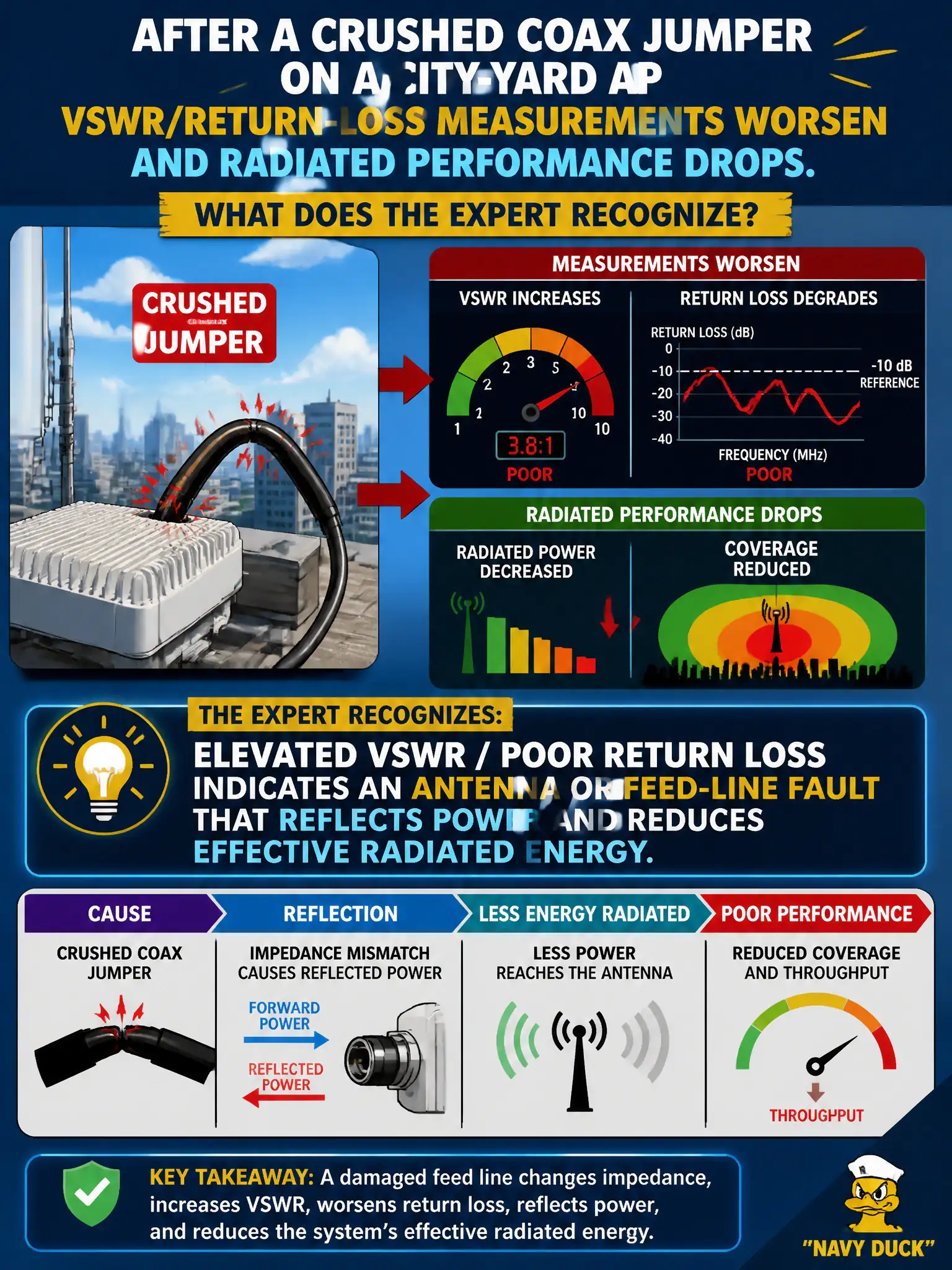
A crushed jumper is a kinked garden hose for RF — energy reflects instead of radiating, and VSWR/return loss tell on it. That's an antenna-system fault, not a password or DNS mystery. MU-MIMO won't unkink coax.
Full Explanation
After a crushed coax jumper on a city-yard AP, worsened VSWR/return-loss and reduced radiated performance indicate an antenna or feed-line fault that reflects power instead of radiating it. Elevated VSWR means a larger fraction of forward power returns toward the radio, lowering effective energy delivered to the air and risking radio stress. Expert recognition ties the mechanical damage to RF measurements and replaces/repairs the jumper and connectors.
Claiming high VSWR always means the SSID passphrase is wrong confuses RF hardware metrics with PSK authentication. Saying return loss only measures DNS latency on the CAPWAP tunnel invents a nonsensical mapping of an RF quantity to DNS. Asserting VSWR problems are solved exclusively by enabling MU-MIMO ignores that multi-user MIMO cannot fix a damaged feed line.
Exam caveat: VSWR/return loss are physical-layer health checks for outdoor civic antenna systems after weather or crush damage. Operational check: measure VSWR/return loss on the damaged city-yard run, replace the crushed jumper with known-good coax, re-measure, and confirm radiated RSSI/SNR recovery at a test client. Include a spare known-good jumper in the city-yard truck kit and trend VSWR after storms so crushed or water-ingressed coax is caught before users report a “dead outdoor AP.”