
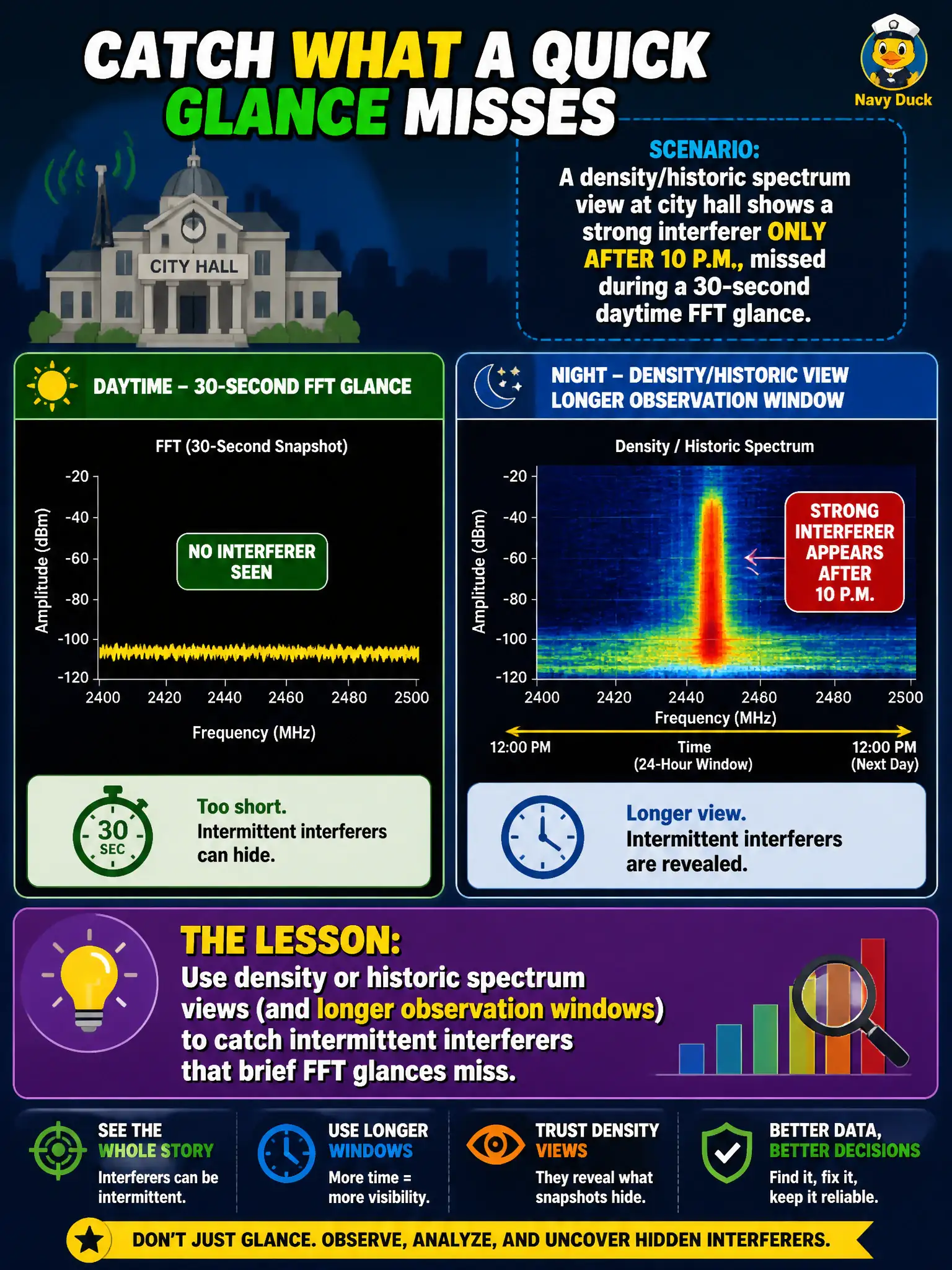
A density/historic spectrum view at city hall shows a strong interferer only after 10 p.m., missed during a 30-second daytime FFT glance. What lesson should guide the expert?
Select an answer to reveal the explanation.
Short Explanation
Night-only interferers laugh at a thirty-second daytime peek — you need the long-exposure photo, not a Polaroid. Density and historic views catch what a quick FFT misses. Ping tests won't draw the RF fingerprint.
Full Explanation
A density or historic spectrum view at city hall that reveals a strong interferer only after 10 p.m. teaches that brief daytime FFT glances miss intermittent sources. Longer observation windows and historic/density plots accumulate rare events across hours so overnight civic interferers become visible. Expert practice matches tool dwell time to the complaint’s time pattern.
Insisting a single real-time FFT snapshot is always sufficient for intermittent overnight sources contradicts how short dwell misses low-duty events. Claiming intermittent night-only energy cannot be recorded by any spectrum platform is false given sensor and historic capture capabilities. Replacing all historic views with ping tests to the default gateway abandons RF visibility for an IP reachability check that cannot classify interferers.
Exam caveat: match spectrum methodology to intermittency—real-time for live localization, historic/density for after-hours civic ghosts. Operational check: schedule multi-hour sensor capture on the affected city-hall channels covering the 10 p.m. window, review density plots, then localize with a handheld when the signature reappears. When complaints are time-of-day specific, write the observation window into the change ticket and retain historic plots as evidence for facilities before any AP reboot cycles are attempted.