
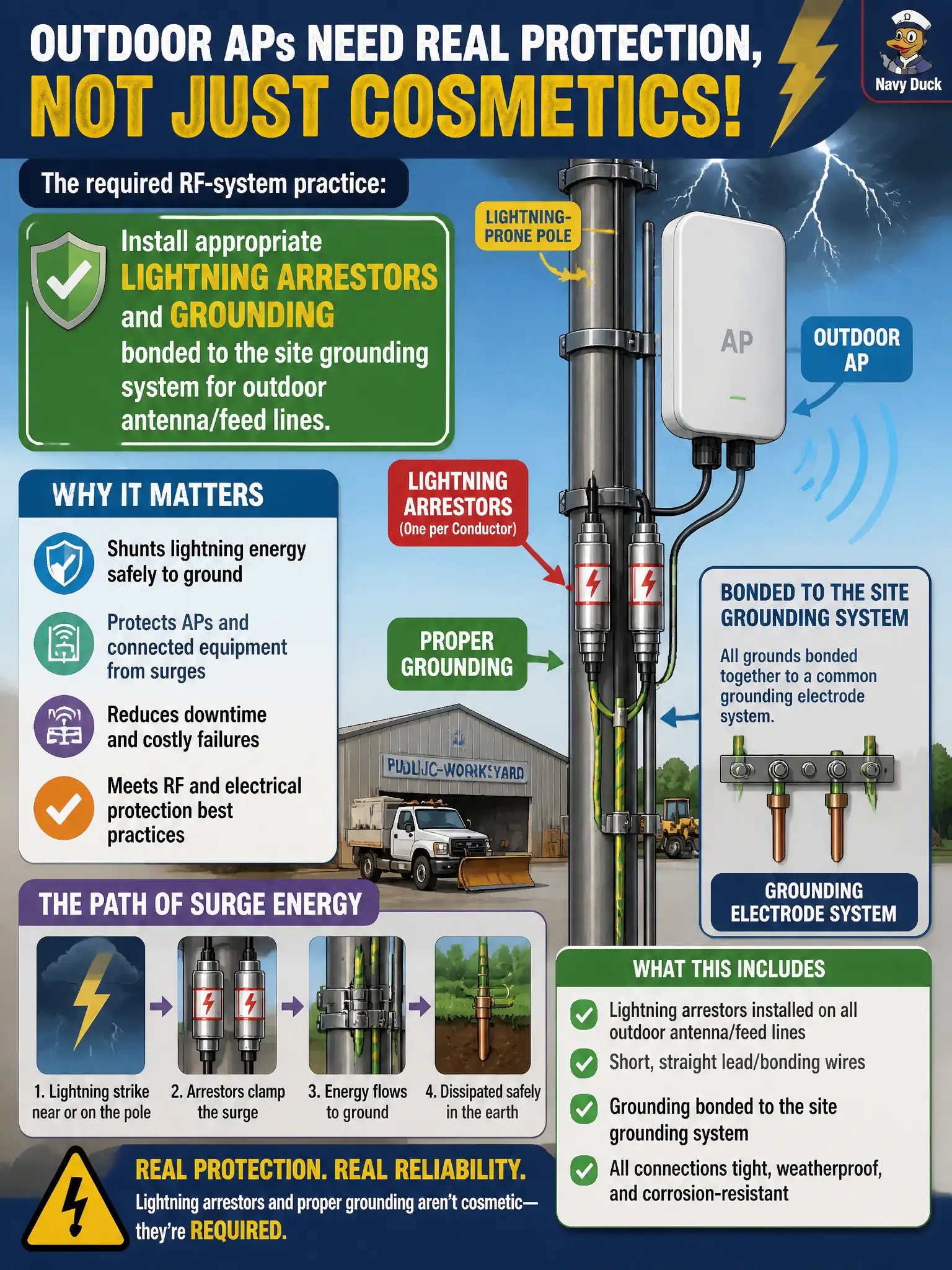
A public-works yard mounts outdoor APs on lightning-prone poles. Which RF-system practice is required rather than cosmetic?
Select an answer to reveal the explanation.
Short Explanation
Outdoor poles in storm country need grounding and arrestors like seatbelts, not decorative stickers. PoE is not a lightning rod substitute. Protect the feed line and bond to a proper ground.
Full Explanation
Outdoor APs on lightning-prone poles at a public-works yard require proper lightning arrestors and grounding bonded to the site grounding system for antenna and feed lines. This is an RF-system and safety practice, not cosmetics: surge energy on coax/antenna paths can destroy radios and create hazards. PoE does not substitute for outdoor RF path bonding and arrestor practice on elevated metallic structures.
Skipping grounding outdoors because PoE “already isolates all RF energy from strikes” misunderstands surge paths through antennas and shields. Painting antennas fluorescent orange so lightning preferentially avoids them is superstition, not engineering. Replacing spectrum analyzers with longer Ethernet jumpers to “absorb surge energy” neither protects the RF path nor is a surge design method.
Exam caveat: outdoor civic WLAN installs follow electrical grounding and lightning practices aligned with site codes—RF design includes physical protection. Operational check: verify arrestors on antenna lines, confirm bonding to the yard’s grounding system, inspect jumper condition, and document the outdoor AP’s surge path before declaring the install complete. Document bonding conductors, arrestor part numbers, and inspection dates in the public-works outdoor WLAN package so seasonal maintenance does not leave an unbonded jumper after antenna swaps.