
A museum wants aesthetic AP mounts inside display cases with lossy laminated glass. What RF factors must the expert account for?
Select an answer to reveal the explanation.
Short Explanation
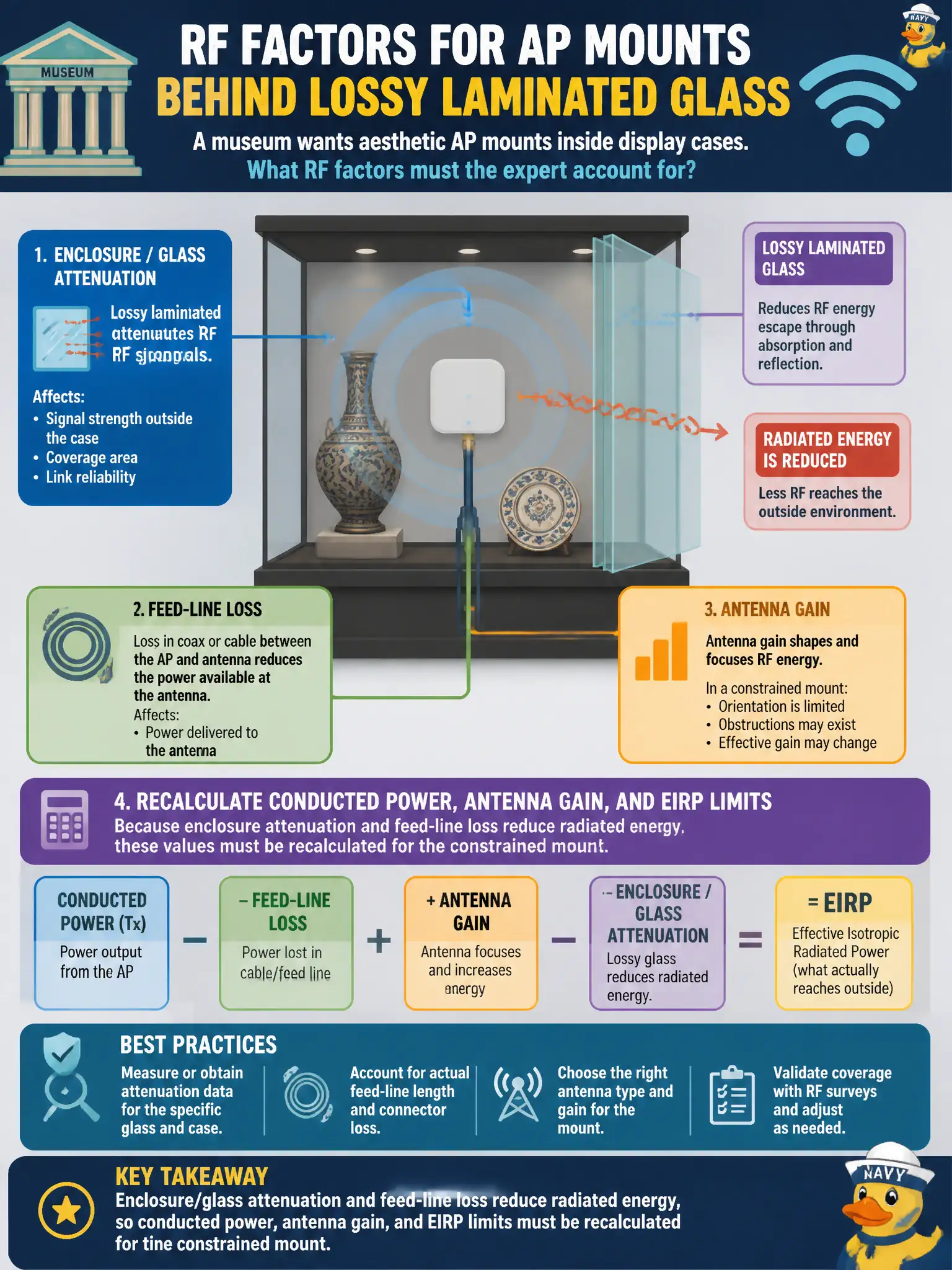
Sticking an AP in a fancy glass case is like putting a speaker inside a fishbowl — some of the energy never gets out. Budget enclosure loss, cable loss, and EIRP rules before you call it pretty and done. Glass doesn't magically add antenna gain.
Full Explanation
Museum display-case AP mounts behind lossy laminated glass force a full RF budget rethink: enclosure and glass attenuation plus any feed-line loss reduce energy that actually radiates into the gallery. Conducted power, antenna gain, cable/jumper loss, and regulatory EIRP limits must be recalculated for the constrained mount so the aesthetic install still meets coverage and compliance. Ignoring glass loss produces optimistic museum coverage and possible EIRP misstatements.
Claiming enclosure and glass loss never affect EIRP calculations for indoor museums is false; EIRP depends on what leaves the antenna system after losses. Saying only captive-portal branding matters for display-case APs treats a Layer-7 portal as a substitute for RF math. Believing lossy glass automatically increases antenna gain so AP count can drop reverses physics—loss reduces, not increases, effective radiated performance.
Exam caveat: decorative and secure enclosures are RF attenuators; museum and civic aesthetic mounts need measured insertion loss in the link budget. Operational check: measure glass/enclosure loss at the operating band, recompute EIRP (conducted + gain − losses), confirm regulatory headroom, then validate gallery SNR with a survey.