
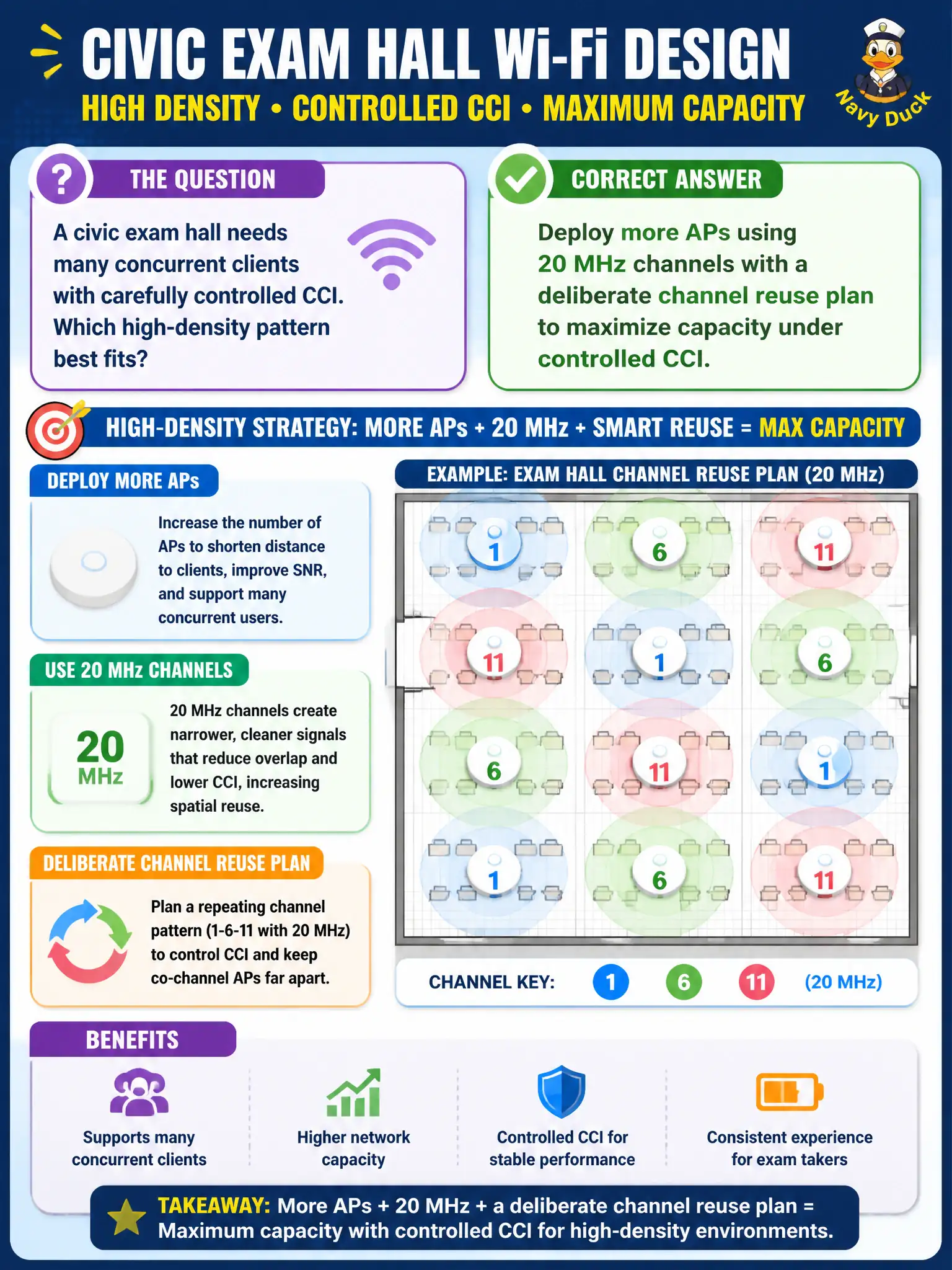
A civic exam hall needs many concurrent clients with carefully controlled CCI. Which high-density pattern best fits?
Select an answer to reveal the explanation.
Short Explanation
Packed exam seats need lots of small cells, not one fat channel. More APs on tidy 20 MHz reuse beats one 160 MHz circus tent.
Full Explanation
A civic exam hall needing many concurrent clients with carefully controlled CCI fits a high-density pattern of more APs using 20 MHz channels with a deliberate channel reuse plan to maximize capacity. One AP on 160 MHz covering the entire hall collapses reuse and concentrates contention. Disabling all 5 GHz radios simplifies the plan only by destroying capacity. Relying on a single omni AP at maximum power in the ceiling center recreates the one-cell failure mode. Exam caveat: high density favors narrower channels and more cells under controlled CCI. Operational check: model 20 MHz reuse for peak exam seating, load-test with representative clients, and lock the municipal hall RF template before exam week. In municipal WLAN and IoT operations, record the chosen control and the rejected alternatives in the change ticket so on-call staff understand which failure modes were avoided for city services. Re-validate after the next maintenance window that the same control still holds under the current platform code, device mix, and civic event calendar used by the wireless team. Keep RF, capacity, security, and QoS evidence attached to the municipal runbook entry for auditors and future CWNE-level reviews.