
In a civic auditorium, upper-balcony seats see strong CCI from floor APs aimed too high. What physical remediation best reduces that interference while preserving floor coverage?
Select an answer to reveal the explanation.
Short Explanation
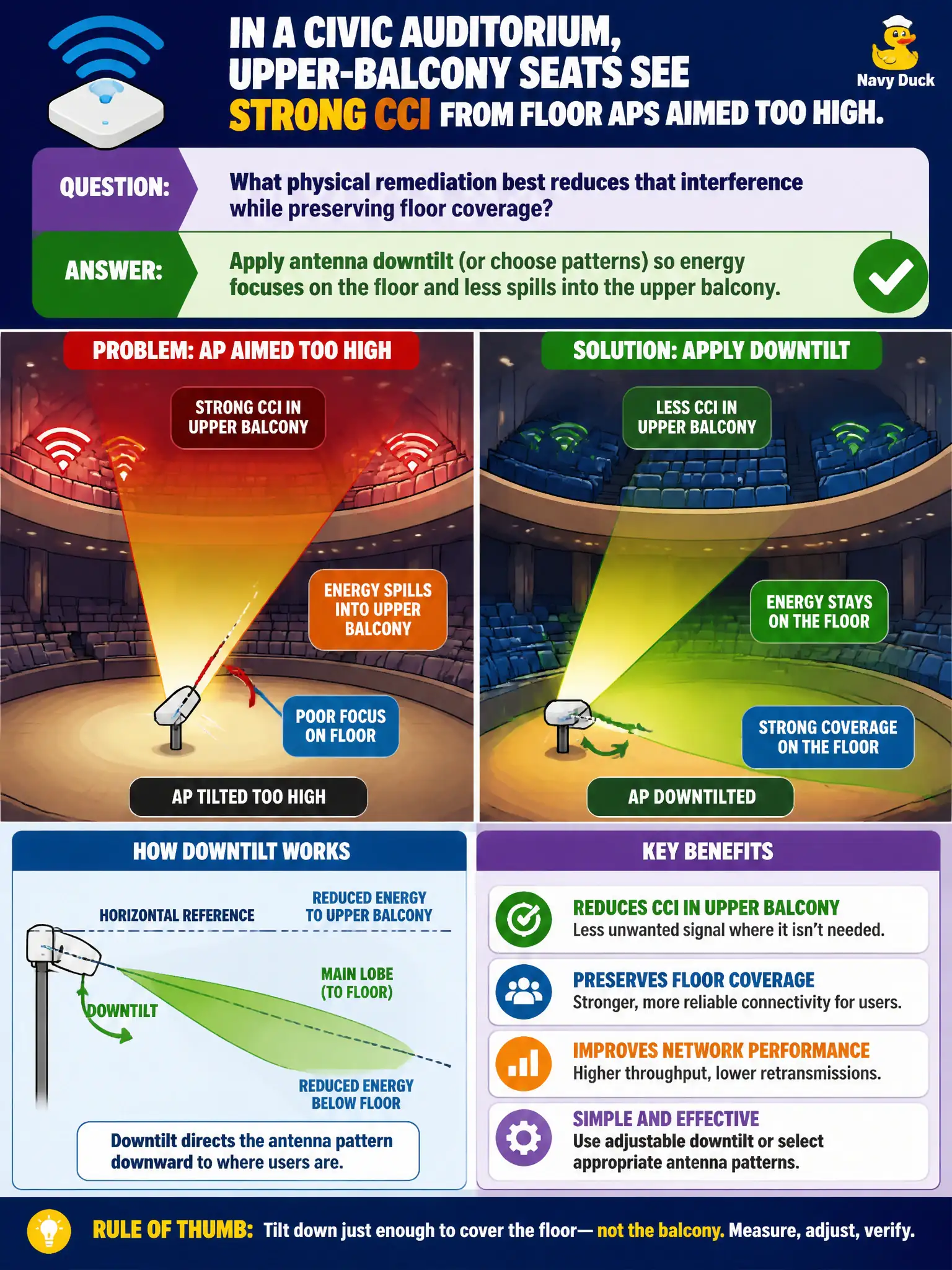
If floor APs are spotlighting the balcony, tip the cans down. Downtilt keeps energy on the seats you care about and stops painting co-channel noise upstairs.
Full Explanation
In a civic auditorium where upper-balcony seats see strong CCI from floor APs aimed too high, apply antenna downtilt or choose patterns so energy focuses on the floor and less spills into the upper balcony, preserving seating coverage with less interference. Raising every AP to maximum EIRP so the floor signal dominates the balcony increases spill and CCI. Disabling 5 GHz on floor APs so balcony clients only hear 2.4 GHz harms capacity and does not fix pattern geometry. Removing balconies from the predictive model so CCI is ignored hides the problem in documentation only. Exam caveat: antenna pattern and tilt are first-class capacity controls in multi-level venues. Operational check: adjust downtilt, resurvey balcony CCI and MCS, and confirm floor and balcony experience for civic events before showtime. In municipal WLAN and IoT operations, record the chosen control and the rejected alternatives in the change ticket so on-call staff understand which failure modes were avoided for city services. Re-validate after the next maintenance window that the same control still holds under the current platform code, device mix, and civic event calendar used by the wireless team. Keep RF, capacity, security, and QoS evidence attached to the municipal runbook entry for auditors and future CWNE-level reviews.