
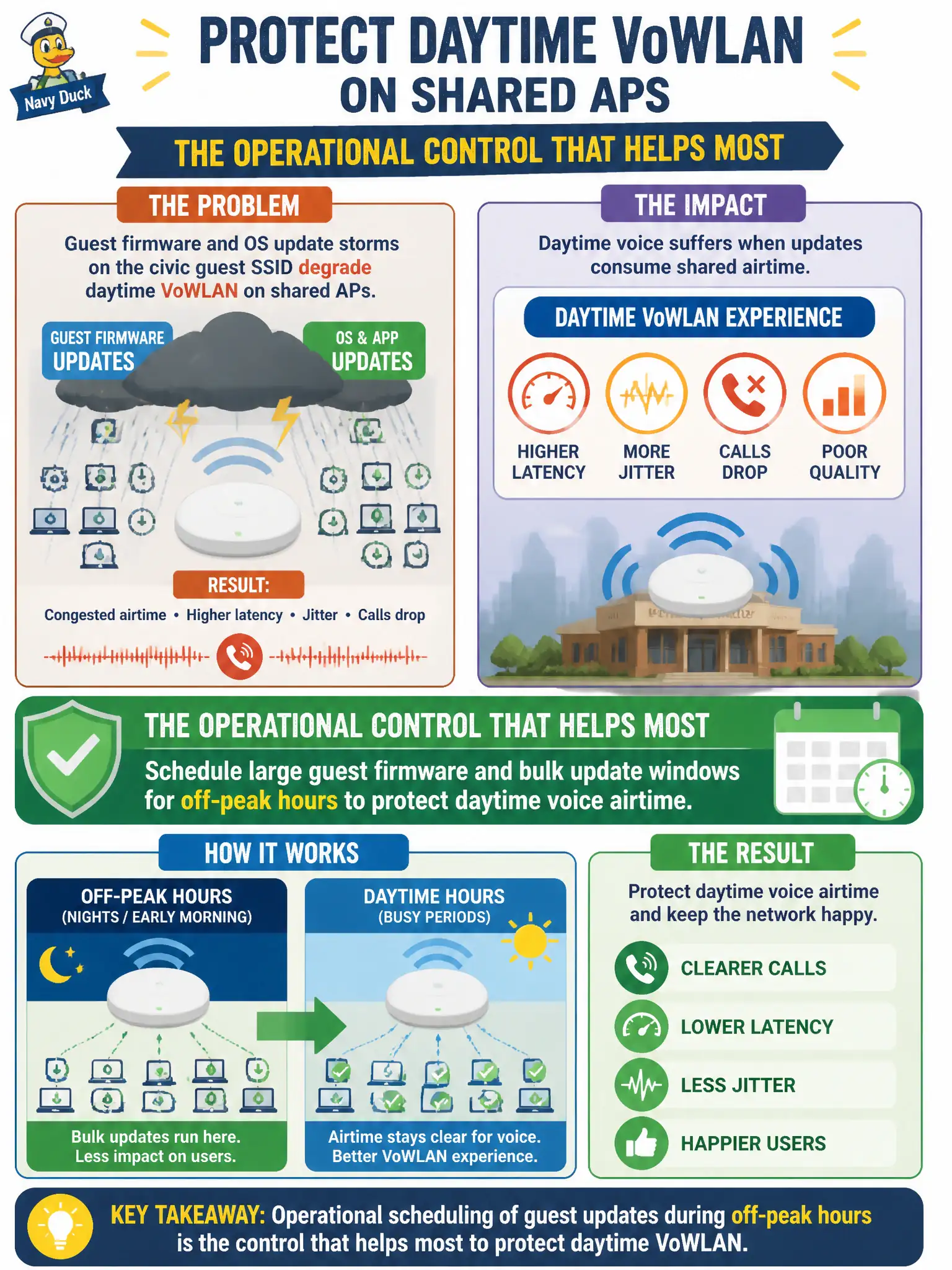
Guest firmware and OS update storms on the civic guest SSID degrade daytime VoWLAN on shared APs. Besides RF and WMM tuning, what operational control helps most?
Select an answer to reveal the explanation.
Short Explanation
Do not let overnight updates crash the lunch-hour phone system. Push guest bulk downloads to off-peak windows so daytime voice keeps the air.
Full Explanation
Guest firmware and OS update storms on the civic guest SSID can degrade daytime VoWLAN on shared APs even after RF and WMM tuning. Scheduling large guest firmware and bulk update windows for off-peak hours protects daytime voice airtime—an operational control as important as EDCA. Advertising guest and voice on the same SSID with identical QoS removes isolation and priority separation. Blocking all guest traffic permanently at the firewall abandons a required civic guest service. Raising AP power at noon so voice cells overpower guest cells worsens CCI and does not schedule bulk updates. Exam caveat: policy and scheduling are performance tools alongside protocol QoS. Operational check: rate-limit or schedule guest update classes, verify AC_VO health during business hours, and publish the municipal guest maintenance window to departments. In municipal WLAN and IoT operations, record the chosen control and the rejected alternatives in the change ticket so on-call staff understand which failure modes were avoided for city services. Re-validate after the next maintenance window that the same control still holds under the current platform code, device mix, and civic event calendar used by the wireless team.