
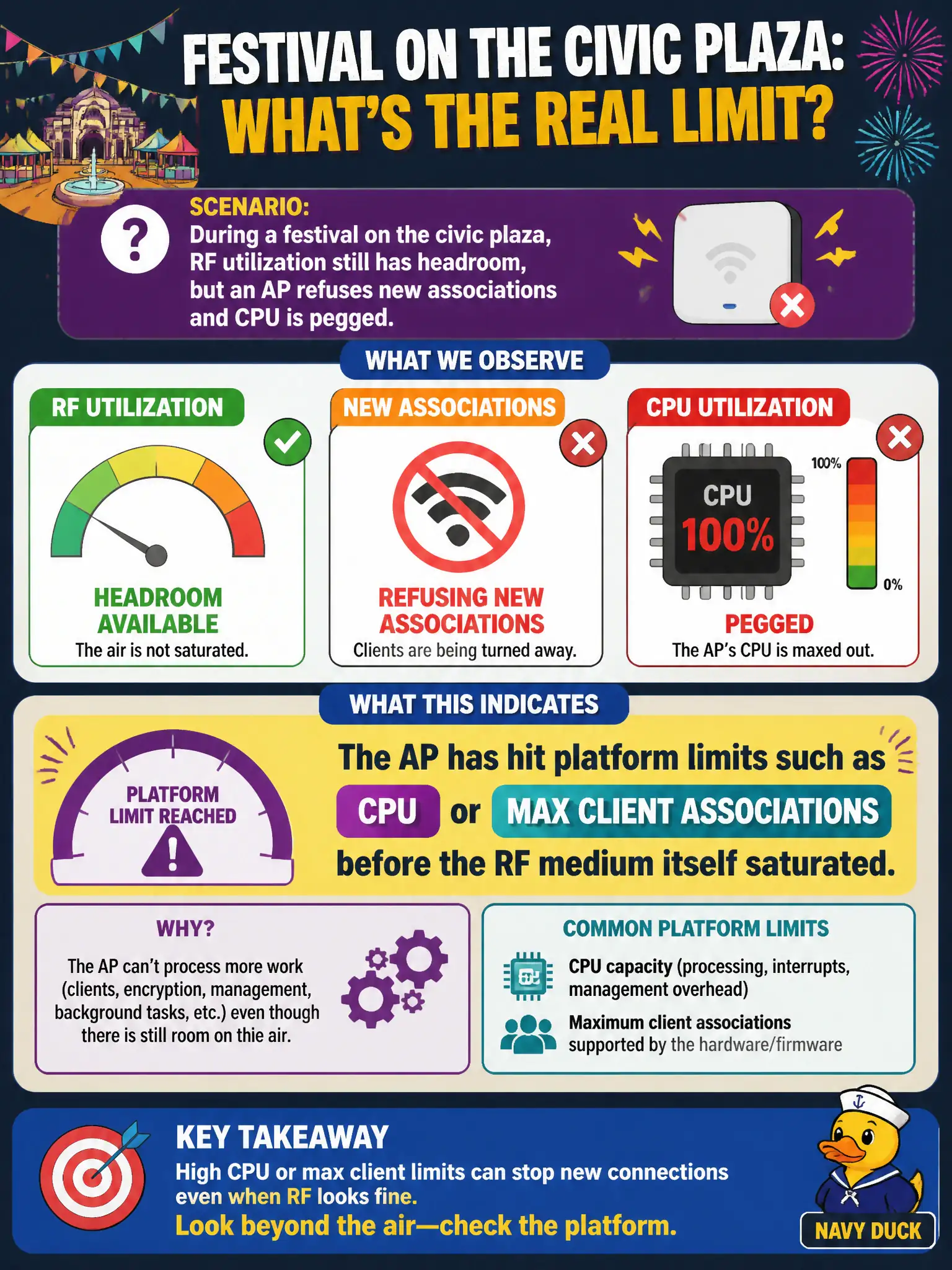
During a festival on the civic plaza, RF utilization still has headroom, but an AP refuses new associations and CPU is pegged. What does this indicate?
Select an answer to reveal the explanation.
Short Explanation
Sometimes the radio still has runway but the AP's brain is full—CPU or association caps slam the gate. That is a platform scale limit, not pure RF saturation.
Full Explanation
During a civic-plaza festival, RF utilization can still show headroom while an AP refuses new associations with CPU pegged, indicating the AP has hit platform limits such as CPU or maximum client associations before the RF medium itself saturated. Capacity planning must include AP platform ceilings, not only airtime. Interpreting the symptom as DFS radar permanently disabling the radio mismatches a CPU-bound association refusal with a channel-vacate event. Claiming all performance issues must be co-channel interference from neighboring cities ignores local platform limits visible in AP telemetry. Asserting Ethernet PoE class negotiation always caps wireless client count confuses power budgeting with association table and CPU limits. Exam caveat: RF headroom does not imply AP headroom—monitor client counts and CPU alongside channel busy. Operational check: review AP max-client and CPU alarms during the festival peak, shed load or add APs, and document municipal platform limits in the capacity design. In municipal WLAN and IoT operations, record the chosen control and the rejected alternatives in the change ticket so on-call staff understand which failure modes were avoided for city services. Re-validate after the next maintenance window that the same control still holds under the current platform code, device mix, and civic event calendar used by the wireless team.