
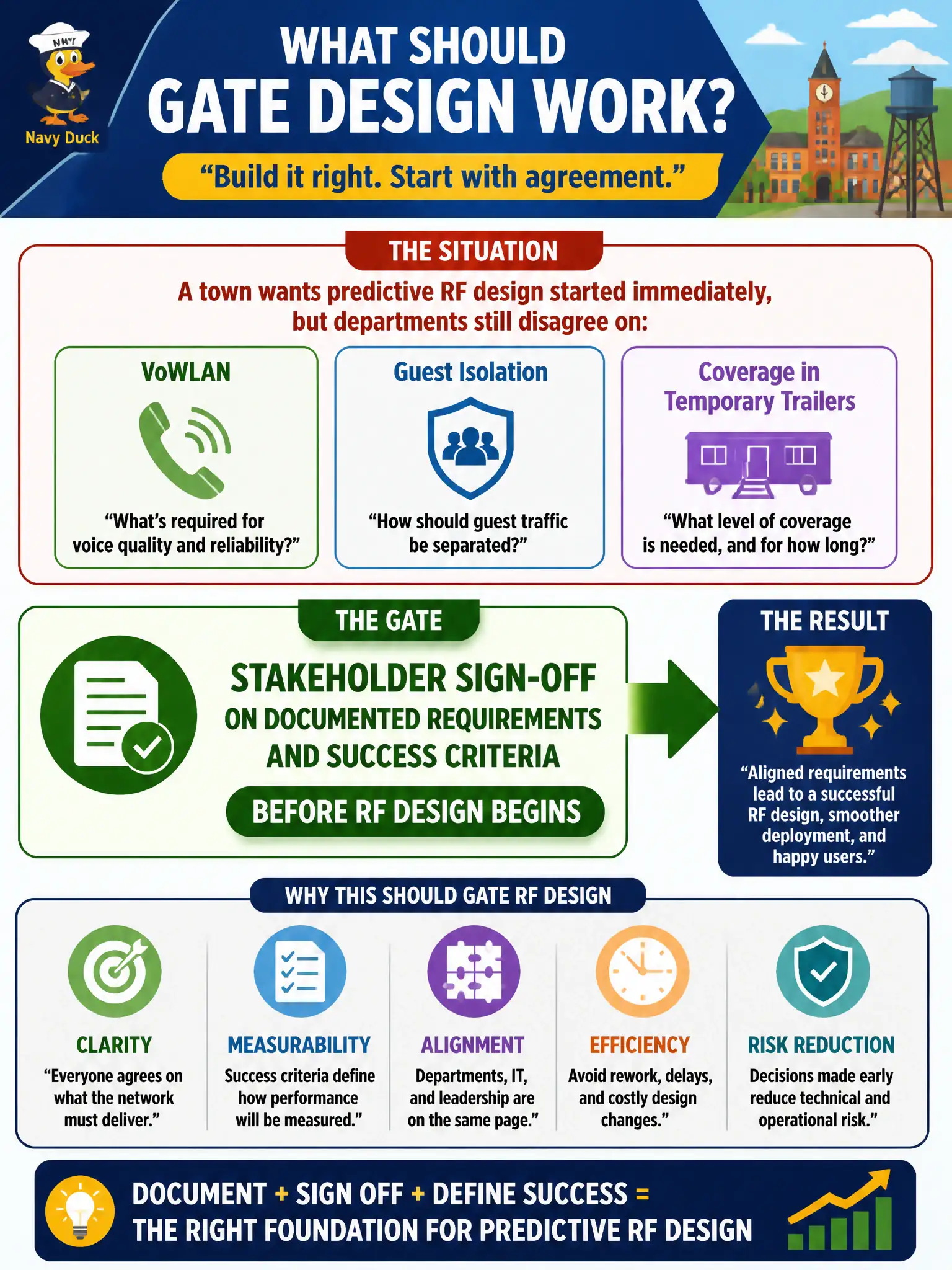
A town wants predictive RF design started immediately, but departments still disagree on VoWLAN, guest isolation, and coverage in temporary trailers. What should gate design work?
Select an answer to reveal the explanation.
Short Explanation
Don’t draw the blueprints while the family is still arguing about how many bedrooms. Get stakeholders to sign the requirements—voice, guest rules, trailer coverage—then design. Designing first and negotiating later is how you buy the wrong house twice.
Full Explanation
Predictive RF design for a town WLAN should not start while VoWLAN needs, guest isolation, and temporary-trailer coverage remain unresolved among departments. Stakeholder sign-off on documented requirements and success criteria gates design work so engineers optimize against agreed service levels instead of reconciling conflicting emails mid-install. Municipal programs that skip this gate routinely rebuild channel plans after the first department complains.
Beginning AP placement from a vendor default template and reconciling requirements later embeds the wrong density and security assumptions. Letting each department email conflicting wish lists directly to installers during mounting turns the job site into a change board. Skipping requirements and maximizing AP count “to be safe” wastes budget and often worsens co-channel interference.
Exam caveat: requirements sign-off can be phased by building, but each design package still needs its own agreed success criteria before predictive work. Operational check: obtain a signed requirements summary covering voice, guest isolation, trailer coverage, and acceptance metrics; refuse to publish predictive AP counts until that document is baselined.