
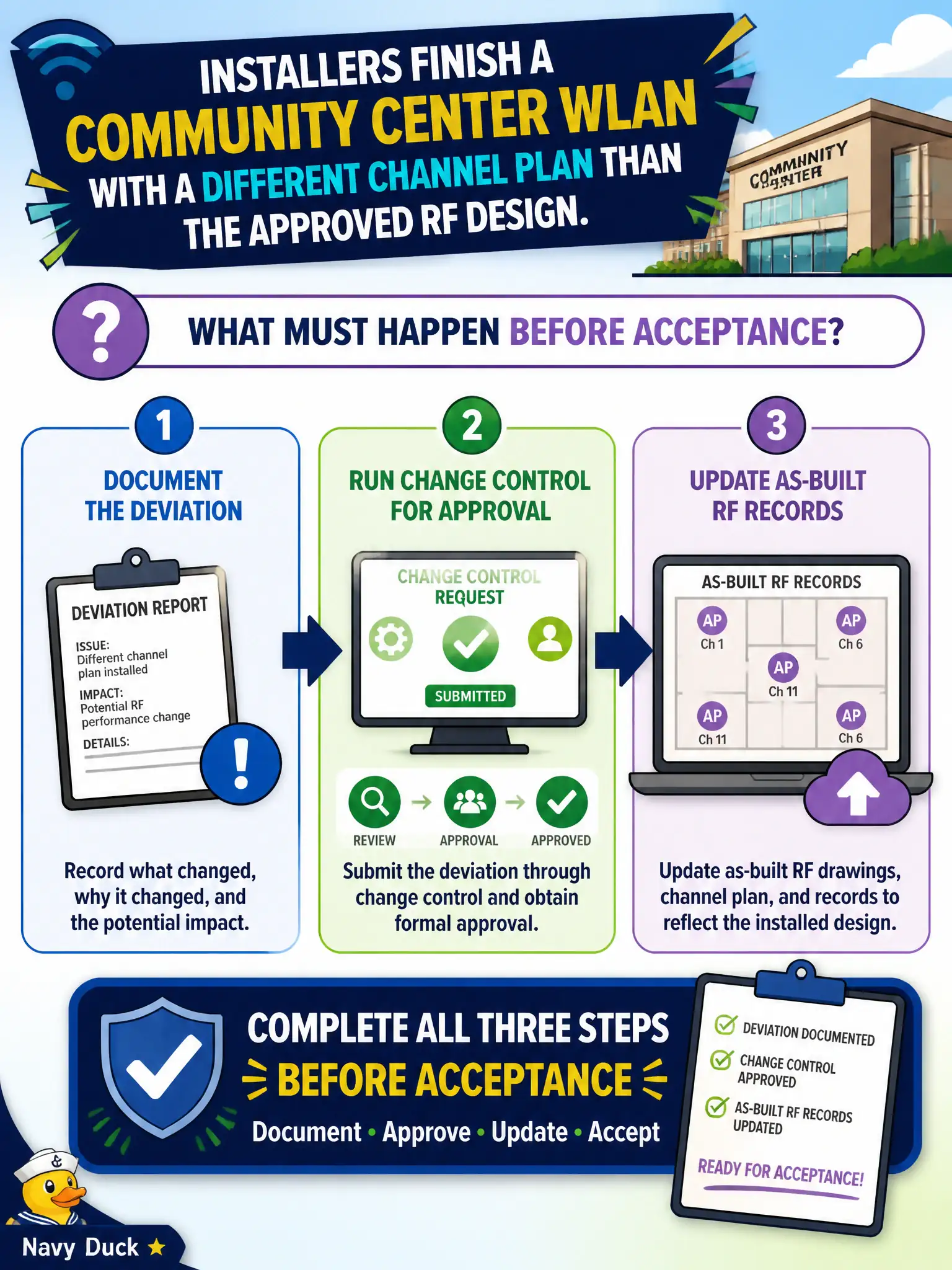
Installers finish a community center WLAN with a different channel plan than the approved RF design. What must happen before acceptance?
Select an answer to reveal the explanation.
Short Explanation
If the finished painting isn’t what the architect signed, you don’t hang the gallery lights and walk away—you file the change. Same for RF: write down what changed, get it approved, and update the as-built channel plan before anyone stamps acceptance.
Full Explanation
When installers finish a community center with a channel plan that differs from the approved RF design, acceptance must not silently bless the drift. Documenting the deviation, running change control for approval, and updating as-built RF records before acceptance preserves design intent, troubleshooting baselines, and auditability for a public facility. Channel plans drive co-channel behavior; undocumented changes become tribal knowledge that vanishes when the integrator leaves.
Silently keeping the installer’s plan because “they usually know best” breaks governance and may invalidate predictive or validation evidence. Skipping documentation to hit a ribbon-cutting date creates political success and operational debt. Accepting only if every AP uses the same channel as its neighbor is the opposite of sound reuse design.
Exam caveat: change control can approve a better on-site plan—the point is recorded approval and updated as-builts, not rigid refusal to adapt. Operational check: diff the installed channel/power plan against the approved design, open a change record for every material difference, update the as-built package, and withhold final acceptance until that record is signed.