
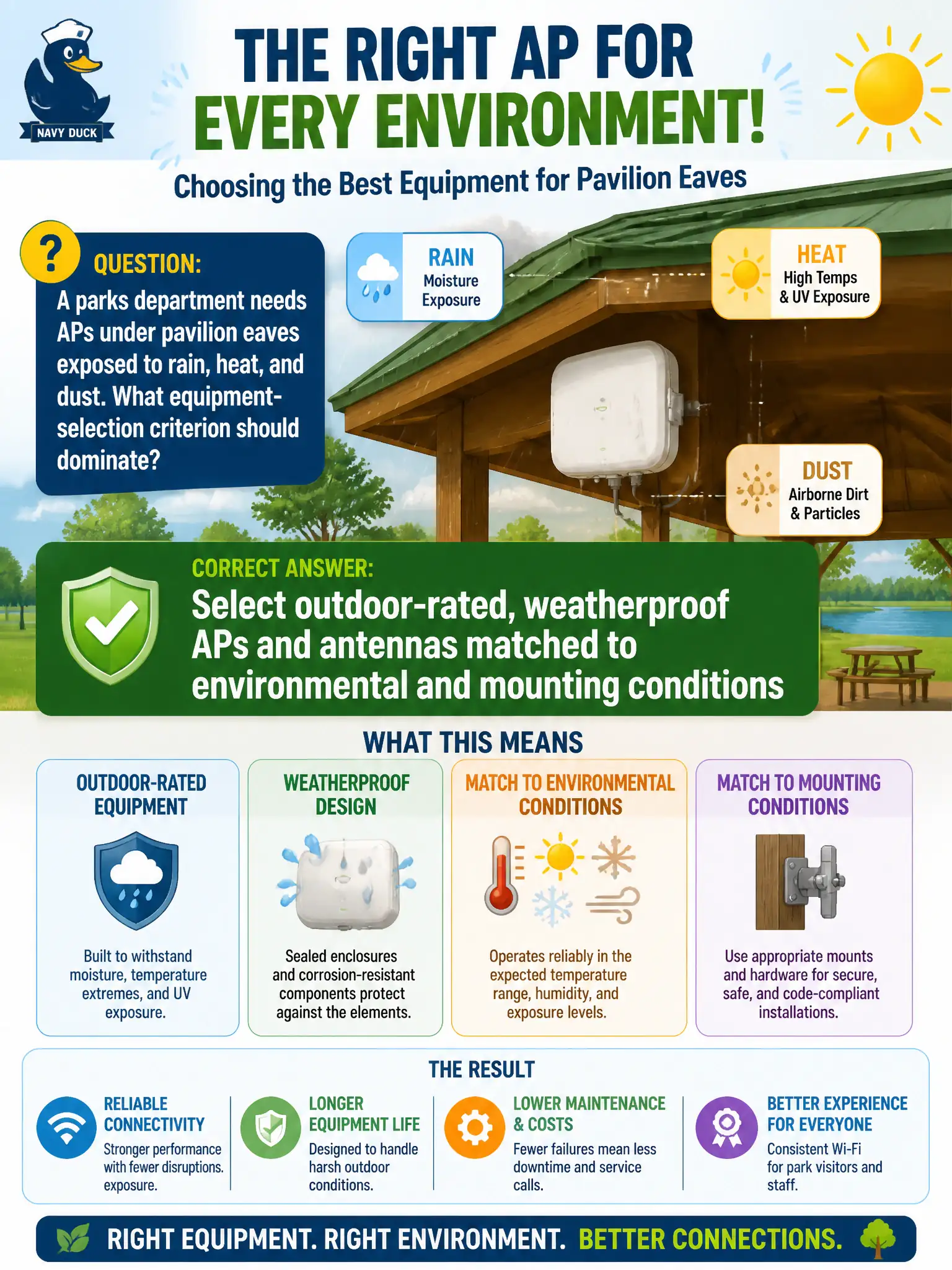
A parks department needs APs under pavilion eaves exposed to rain, heat, and dust. What equipment-selection criterion should dominate?
Select an answer to reveal the explanation.
Short Explanation
Indoor APs outdoors are like sneakers in a rainstorm—possible once, miserable forever. Pick gear rated for wet, hot, dusty mounts and antennas that fit the pattern you need. Paint is not an IP rating.
Full Explanation
Parks pavilion eaves expose APs to rain, heat, dust, and UV—conditions indoor plenum gear is not built to survive. Equipment selection should therefore prioritize outdoor-rated, weatherproof APs and antennas matched to environmental ratings, mounting hardware, and cable glands so the parks WLAN remains maintainable through seasons rather than failing after the first storm. Civic outdoor Wi-Fi that supports events and staff tablets depends on that environmental match as much as on channel planning.
Choosing the cheapest indoor AP and spray-painting it does not create an IP-rated enclosure and can void support while trapping moisture. Decorative indoor ceiling units prioritized for aesthetics over ingress protection will fail outdoors. USB travel routers zip-tied to light poles are not a permanent municipal design—they lack managed RF, security, and supportability.
Exam caveat: “outdoor-rated” still requires correct antenna pattern, grounding/lightning practices, and switch PoE budget for the chosen SKU class—weatherproofing alone is not a complete outdoor design. Operational check: verify AP and antenna environmental ratings against the pavilion exposure, confirm mounting and weather sealing match the install guide, and schedule a post-storm visual and RF health check on the first seasonal weather event.