
Before accepting a predictive design for a municipal courts building, what should the design package record so future auditors can re-check the model?
Select an answer to reveal the explanation.
Short Explanation
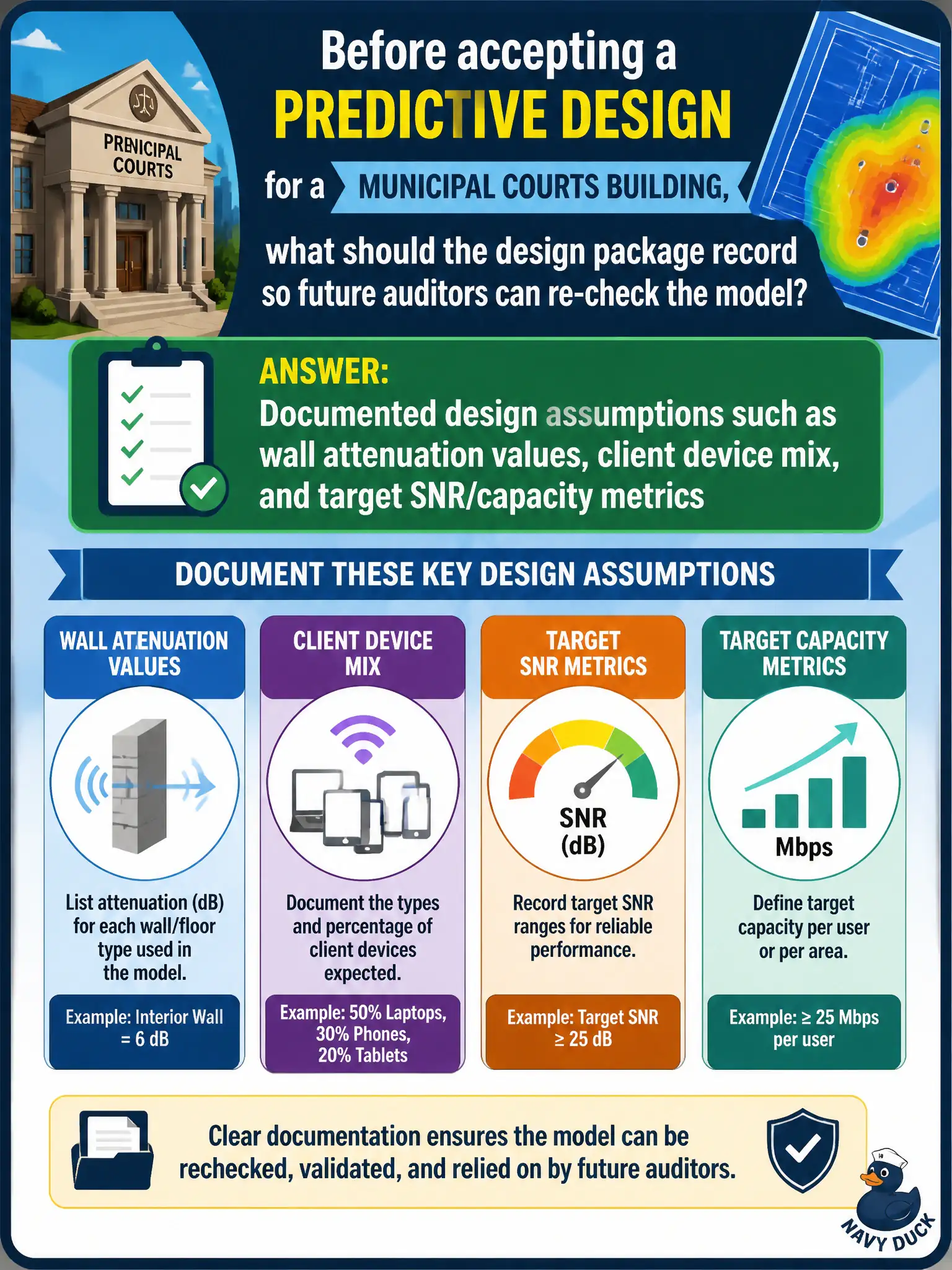
A predictive model is only as honest as the sticky notes on its assumptions. Write down wall losses, what phones and laptops you assumed, and the SNR/capacity bars you aimed for. Future auditors—and next year’s remodel crew—need those breadcrumbs.
Full Explanation
A predictive design for a municipal courts building is only auditable if the package preserves the assumptions that produced the heatmaps. Documenting wall and slab attenuation values, client device mix, application/capacity targets, and SNR or retry objectives lets a future auditor or new engineer re-run or challenge the model when occupancy, materials, or device fleets change. Courts and justice facilities also face evidence and continuity expectations that favor retained engineering rationale over disposable pretty pictures.
Shipping only final heatmaps with assumptions deleted to shrink files destroys reproducibility and invites disputes during acceptance. Vendor marketing slides are not substitutes for material attenuation notes or client-density justification. A bare AP count with no density or attenuation rationale fails as a design record because nobody can explain why that count was right.
Exam caveat: assumptions are living inputs—update them when remodels or device standards change rather than treating the first predictive PDF as permanent truth. Operational check: open the design package and confirm attenuation tables, device mix, and target metrics are present and versioned; have a second engineer regenerate a sample predictive view from those notes alone without tribal knowledge.