
Landmark-preservation rules block visible AP and antenna placement on a historic city facade and ornate lobby ceilings. How should the WLAN specifications treat that constraint?
Select an answer to reveal the explanation.
Short Explanation
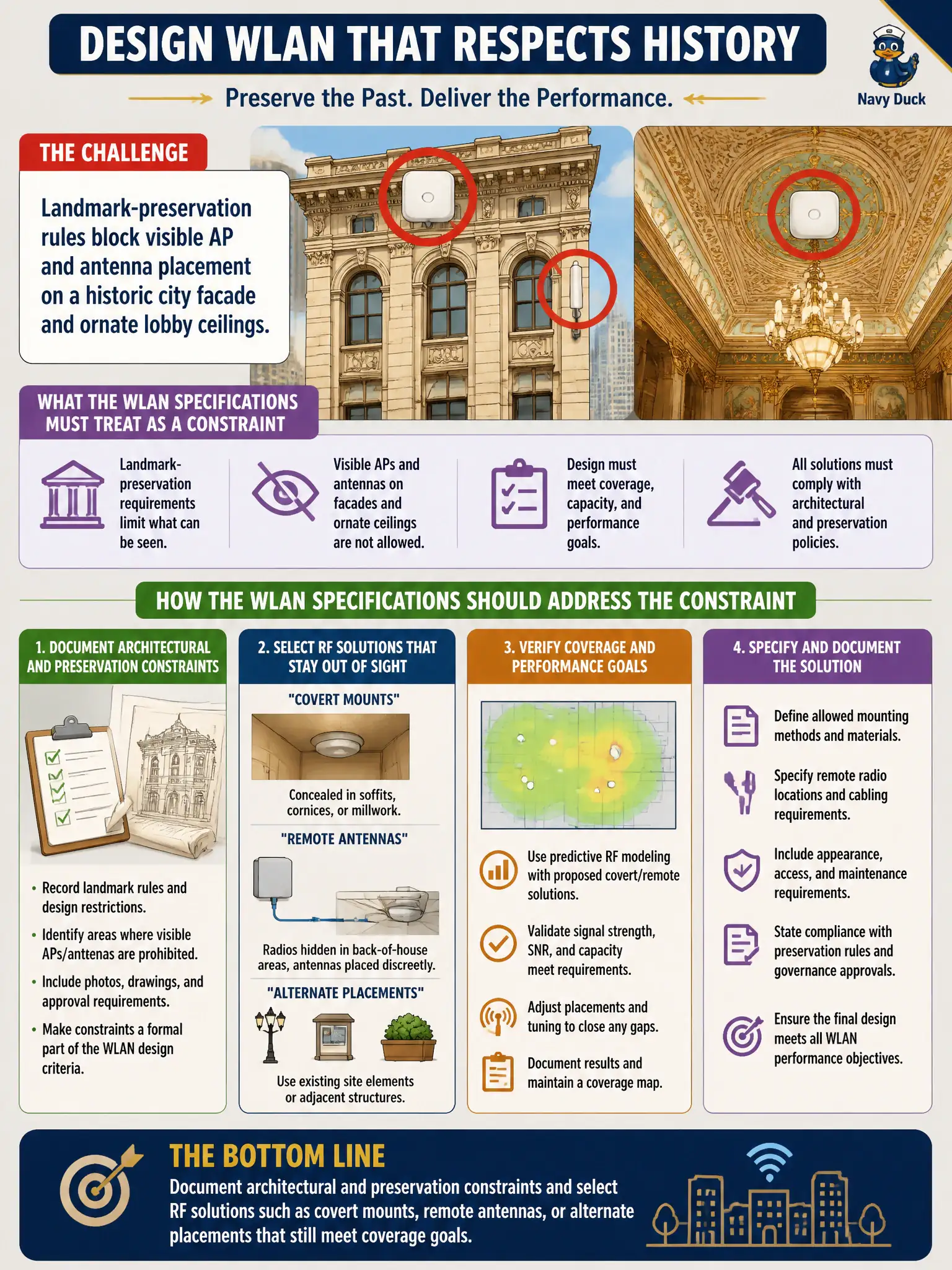
Historic lobbies will not let you hang a shiny AP in the chandelier line of sight. Write the preservation limits into the specs and engineer covert or alternate RF that still works.
Full Explanation
Landmark-preservation rules are binding design constraints that steer mounting solutions, not excuses to ignore RF or cancel service. When rules block visible AP and antenna placement on a historic city facade and ornate lobby ceilings, WLAN specifications should document architectural and preservation constraints and select RF solutions such as covert mounts, remote antennas, or alternate placements that still meet coverage goals. Expertise is marrying aesthetics policy with RF performance for public buildings.
Ignoring preservation rules and mounting APs where RF is easiest fails by concept: violations halt projects and damage heritage assets. Canceling the WLAN project because aesthetics always override wireless service fails by concept: covert and remote-antenna techniques exist to satisfy both. Placing outdoor omnis on neighboring private roofs without easements or design analysis fails by concept: unauthorized placement is not a compliant RF solution.
Exam caveat: CWNE civic designs treat preservation constraints as inputs that drive creative compliant RF solutions.
Operational check: Record facade and lobby preservation rules in the spec, propose covert or remote-antenna options with facilities approval, model coverage for those mounts, and obtain heritage sign-off before procurement.