
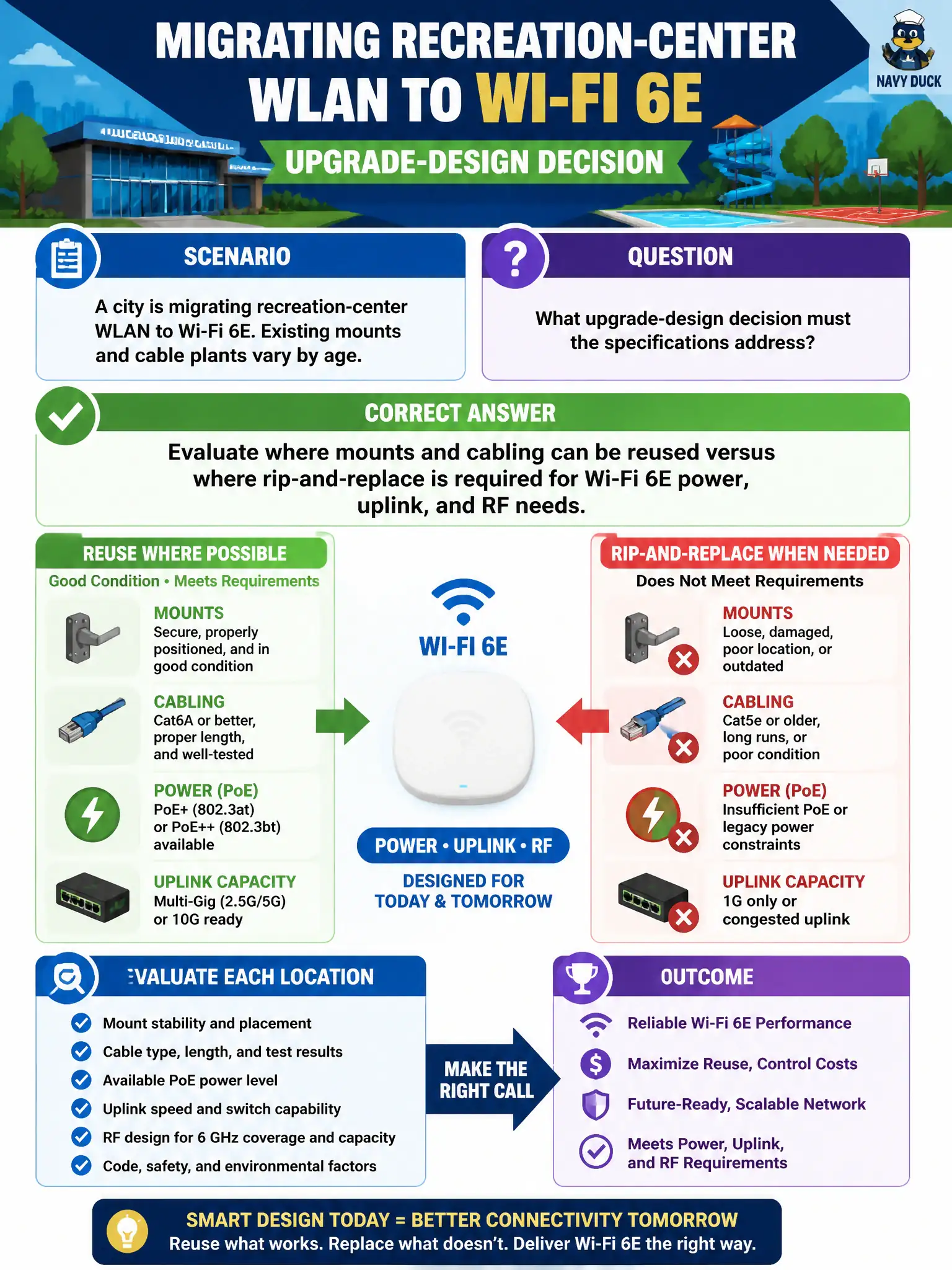
A city is migrating recreation-center WLAN to Wi-Fi 6E. Existing mounts and cable plants vary by age. What upgrade-design decision must the specifications address?
Select an answer to reveal the explanation.
Short Explanation
6E is not a sticker on an old AP. Some mounts and cables can stay; some cannot feed power or multi-gig. Spec the reuse-versus-replace calls before procurement.
Full Explanation
Wi-Fi 6E upgrades force a reuse-versus-replace decision on mounts, PoE, and uplinks that vary by recreation-center age. Specifications must evaluate where mounts and cabling can be reused versus where rip-and-replace is required for Wi-Fi 6E power, uplink, and RF needs—including multi-gig and higher PoE classes where the AP demands them. Blind reuse and blind rip-out are both poor municipal design.
Always reusing every mount and cable without assessing multi-gig, PoE, or antenna needs fails by concept: legacy plants may starve 6E APs. Ripping and replacing all pathways by default even where reuse meets 6E requirements fails by concept: unnecessary cost and disruption where plant already qualifies. Ignoring 6 GHz client and AP capabilities when deciding what to keep fails by concept: RF and band capability drive whether existing antennas and mounts remain valid.
Exam caveat: CWNE upgrade designs document reuse criteria tied to PoE, cabling, and 6E RF—not slogans.
Operational check: Survey each recreation center for cable category, PoE budget, mount suitability, and 6 GHz antenna needs; mark reuse versus replace per IDF; and align the bill of materials to that matrix. In municipal CWNE practice for item q143, document the decision, tie it to the civic service impact, and re-test after change so operations can defend the design to stakeholders with evidence rather than opinion.