
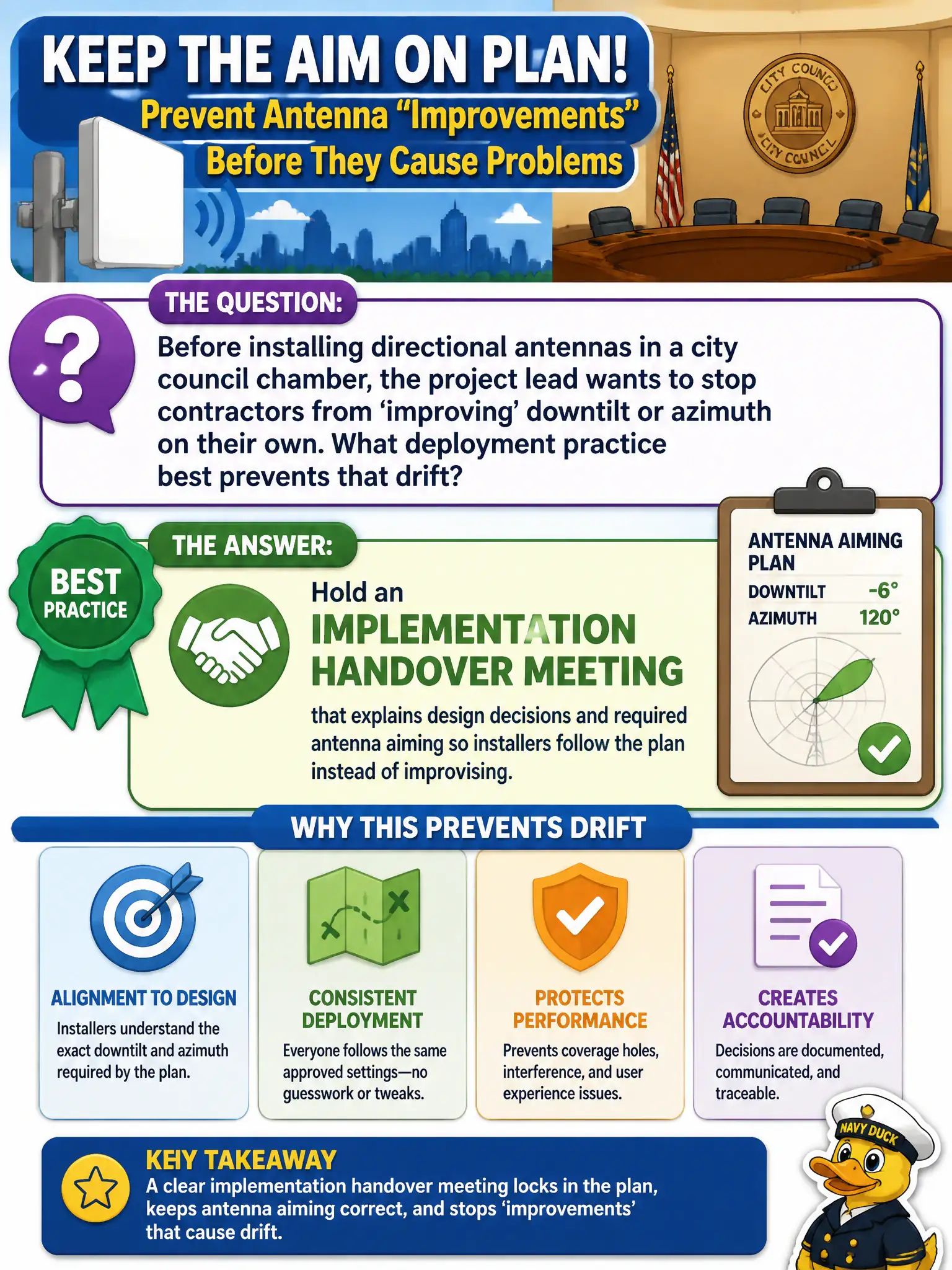
Before installing directional antennas in a city council chamber, the project lead wants to stop contractors from 'improving' downtilt or azimuth on their own. What deployment practice best prevents that drift?
Select an answer to reveal the explanation.
Short Explanation
Installers who 'fix' aiming can wreck a carefully modeled chamber. Walk them through why downtilt and azimuth matter before anyone climbs a ladder. That handover meeting is cheaper than a resurvey.
Full Explanation
Antenna aiming drift ruins chamber RF even when SKUs are correct. Before installing directional antennas in a city council chamber, holding an implementation handover meeting that explains design decisions and required antenna aiming best prevents contractors from "improving" downtilt or azimuth on their own. Shared understanding of why the aim exists beats emailing a channel PDF alone. Improvised street-facing aims create CCI and miss seats the design intended to cover.
Emailing the channel plan only and skipping any design walkthrough fails by concept: channels do not communicate downtilt and azimuth intent. Telling installers to maximize RSSI everywhere by aiming toward the street fails by concept: that invites CCI and coverage holes relative to the chamber design. Allowing each contractor to choose aiming by personal preference fails by concept: preference-based aiming guarantees departure from the RF plan.
Exam caveat: Implementation handover is a CWNE deployment best practice that protects designed antenna geometry.
Operational check: Conduct a handover covering chamber antenna azimuth and downtilt values, mark aims on drawings, and require measured orientation checks before energizing APs for production.