
Before running a predictive design for a city services building, which inputs should the designer insist on gathering?
Select an answer to reveal the explanation.
Short Explanation
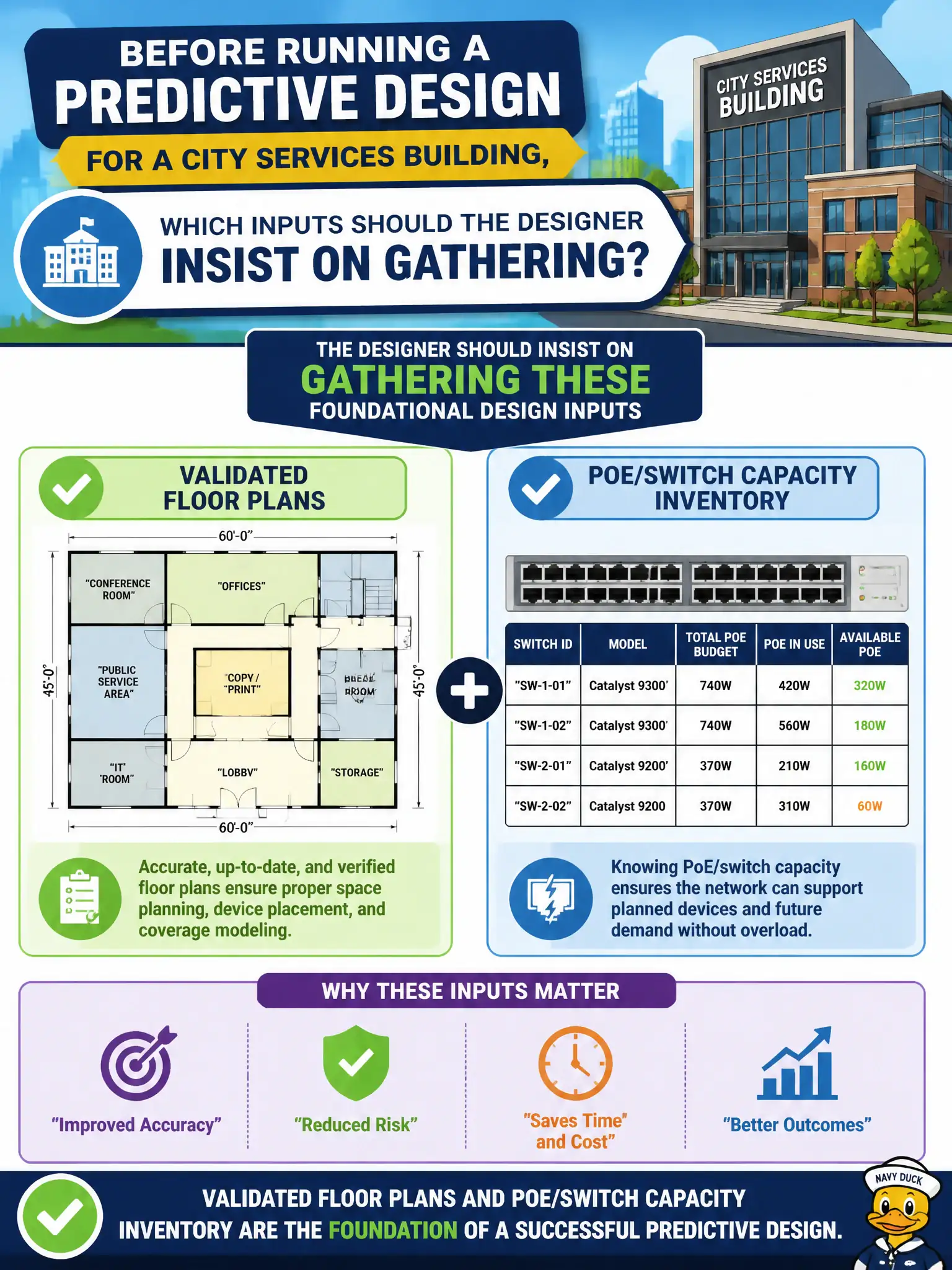
Predictive design without real floor plans and PoE budgets is doodling on a napkin. Get scaled drawings and switch power headroom first so AP counts aren’t fiction. Splash-page slogans don’t place access points.
Full Explanation
Predictive design is only as good as its geometric and infrastructure inputs. Before running a predictive design for a city services building, the designer should insist on validated floor plans and PoE/switch capacity inventory as foundational inputs so AP placement distances are real and each AP can be powered and switched at the intended class. Without scaled plans, coverage radii are fiction; without PoE/switch inventory, the RF plan collides with underpowered IDFs at install time. Slogans and SSID names do not scale walls or budget PoE.
Gathering only marketing slogans for the public Wi-Fi splash page fails by concept: branding copy is unrelated to RF geometry and cabling capacity. Taking only the CEO's preferred SSID name without cabling or plan scale fails by concept: naming does not replace measured plans or switch/PoE reality. Committing to skip switch upgrades regardless of AP power class fails by concept: underpowered switches cap AP features and density before RF modeling finishes and force last-minute redesign.
Exam caveat: CWNE pre-design checklists prioritize scaled plans and wired infrastructure readiness ahead of cosmetic WLAN preferences.
Operational check: Obtain CAD/PDF plans with verified scale, inventory switch PoE budget per IDF serving the city services floors, confirm cabling reaches planned AP mounts, and only then begin predictive AP placement.