
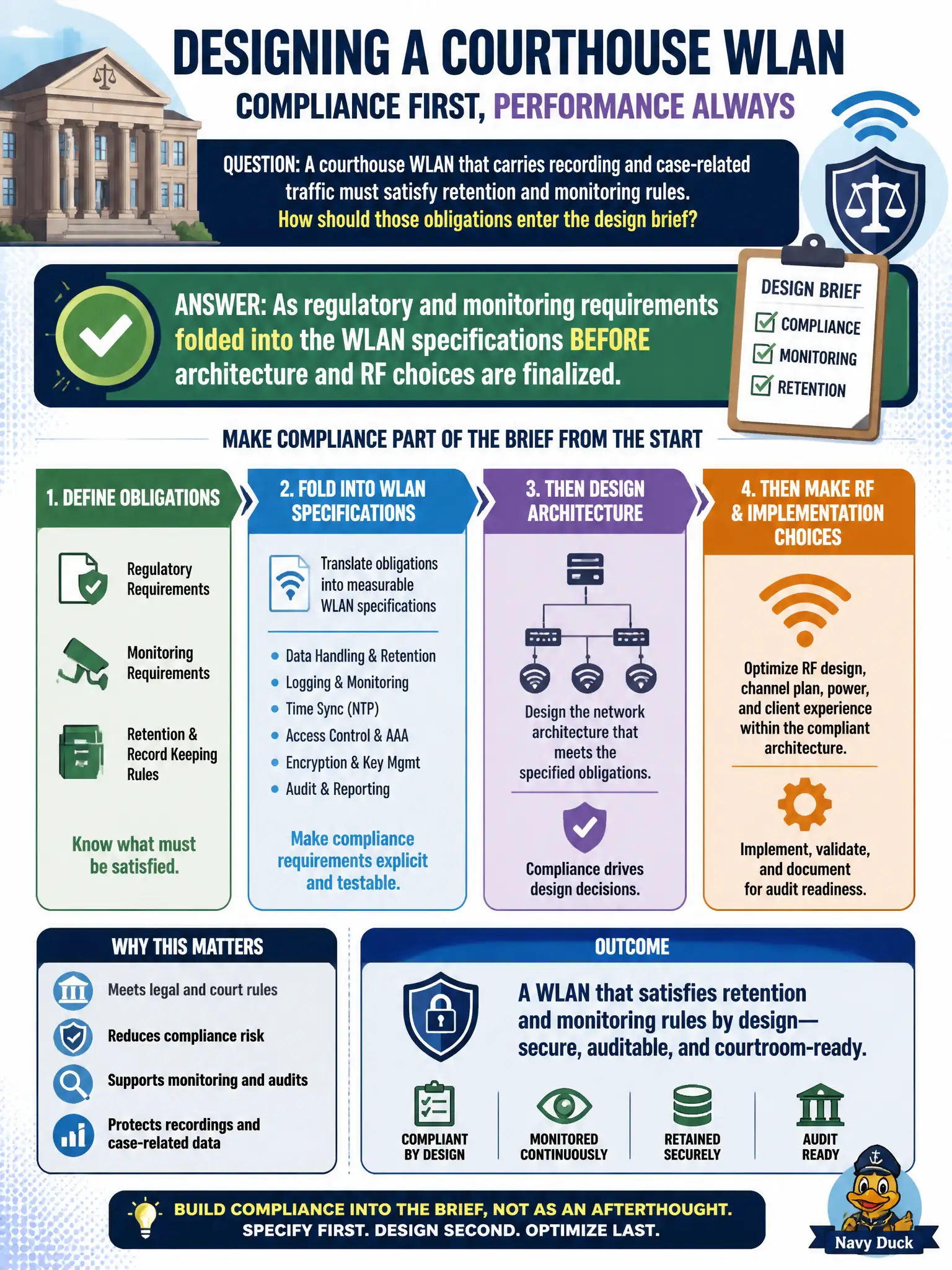
A courthouse WLAN that carries recording and case-related traffic must satisfy retention and monitoring rules. How should those obligations enter the design brief?
Select an answer to reveal the explanation.
Short Explanation
Courthouse recording gear isn’t café Wi-Fi—retention and monitoring rules belong in the brief up front. Bake compliance into specs before you draw AP dots. Skipping logs or dumping recorders onto open guest SSIDs is how audits go sideways.
Full Explanation
Retention and monitoring obligations for sensitive courthouse traffic are design requirements, not footnotes. When a courthouse WLAN carries recording and case-related traffic that must satisfy retention and monitoring rules, those obligations should enter the design brief as regulatory and monitoring requirements folded into the WLAN specifications before architecture and RF choices are finalized—logging destinations, retention periods, access control, and SSID segmentation that support compliance.
Treating them as optional footnotes after the RF plan is locked fails by concept: late policy often forces expensive redesign of SSID, logging, and segmentation. Disabling all logging so retention limits are never reached fails by concept: that violates monitoring duties instead of meeting them. Using an open guest SSID for courtroom recording devices to avoid policy review fails by concept: sensitive recording traffic needs stronger controls and auditability, not policy avoidance via open guest.
Exam caveat: CWNE enterprise design includes regulatory and monitoring inputs alongside RF; public-sector legal traffic heightens that expectation.
Operational check: List retention/monitoring rules in the courthouse WLAN spec, map them to SSID security, logging, and WIPS/WNMS settings, and obtain stakeholder sign-off before freezing channel and AP plans.