
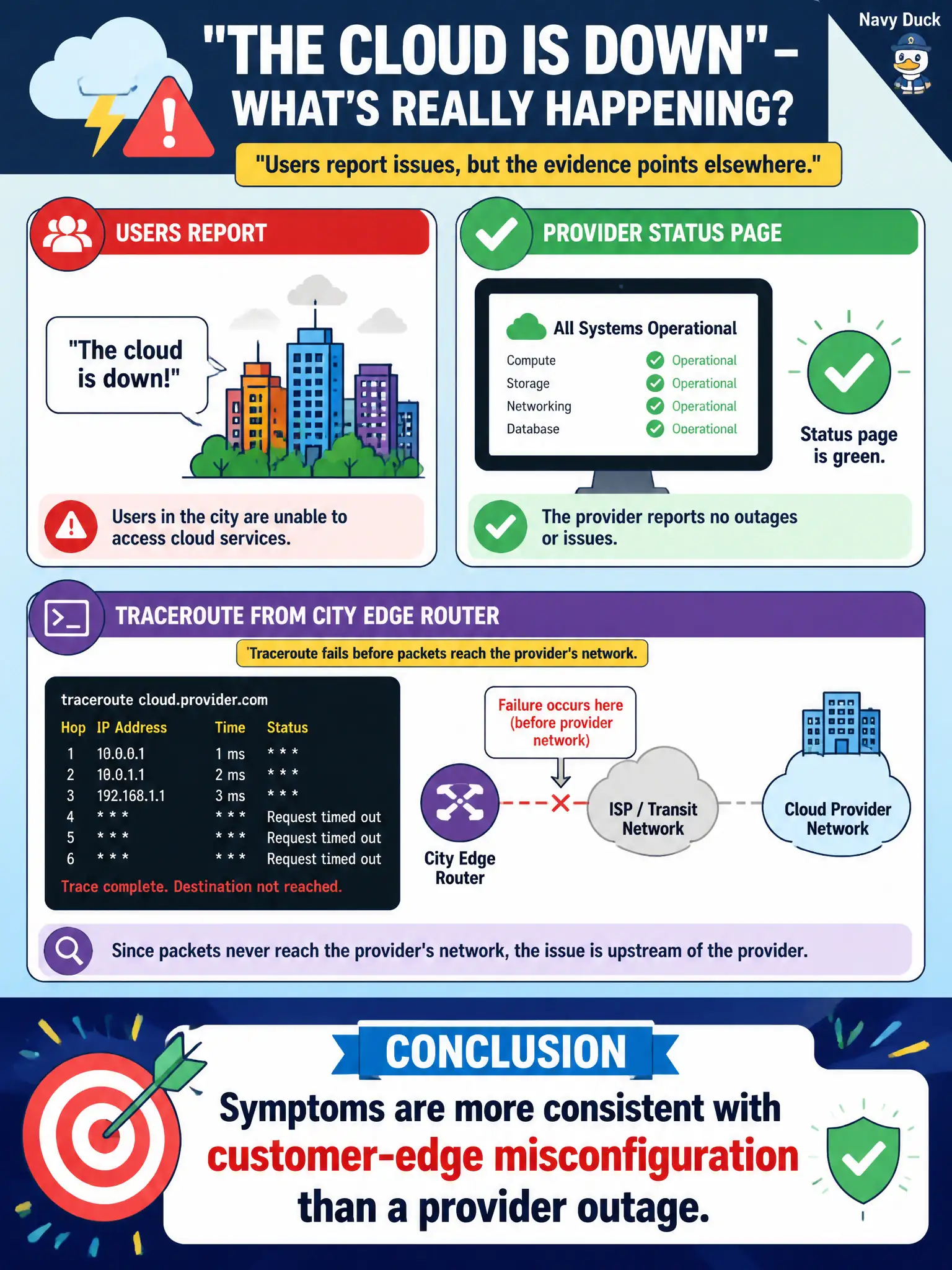
Users report that 'the cloud is down,' but the provider status page is green and traceroute from city edge routers fails before packets reach the provider's network. What should the team conclude?
Select an answer to reveal the explanation.
Short Explanation
When the provider's lights are green and traceroute dies on your side of the fence, don't blame the whole cloud. Fix the customer-edge routing or firewall first.
Full Explanation
When users report that 'the cloud is down,' but the provider status page is green and traceroute from city edge routers fails before packets reach the provider's network, the team should conclude symptoms are more consistent with customer-edge misconfiguration than a provider outage. Failures that never enter the provider network are typically on-premises routing, firewall, or DNS issues under municipal control. All regions worldwide experiencing a simultaneous outage is unlikely when the provider status page is green and traces die at the city edge. Object storage consistency models permanently changing is unrelated to traceroute failure. Migrating every workload to a second cloud immediately is an overreaction before fixing edge routing. Exam caveat: use status pages plus path evidence; escalate to the provider only after proving packets reach their edge or their APIs fail from multiple diverse paths. Operational check: review city edge firewall/routing changes, repair the path to the provider, confirm traceroute and application health, communicate findings to users, and capture the customer-edge root cause in the incident review. In municipal cloud operations, record the chosen control and the rejected alternatives in the change or incident ticket so future on-call staff understand which failure modes were avoided for city services. Re-validate after the next maintenance window that the same decision still holds under current provider limits, identity bindings, and application versions used by the civic platform team.