
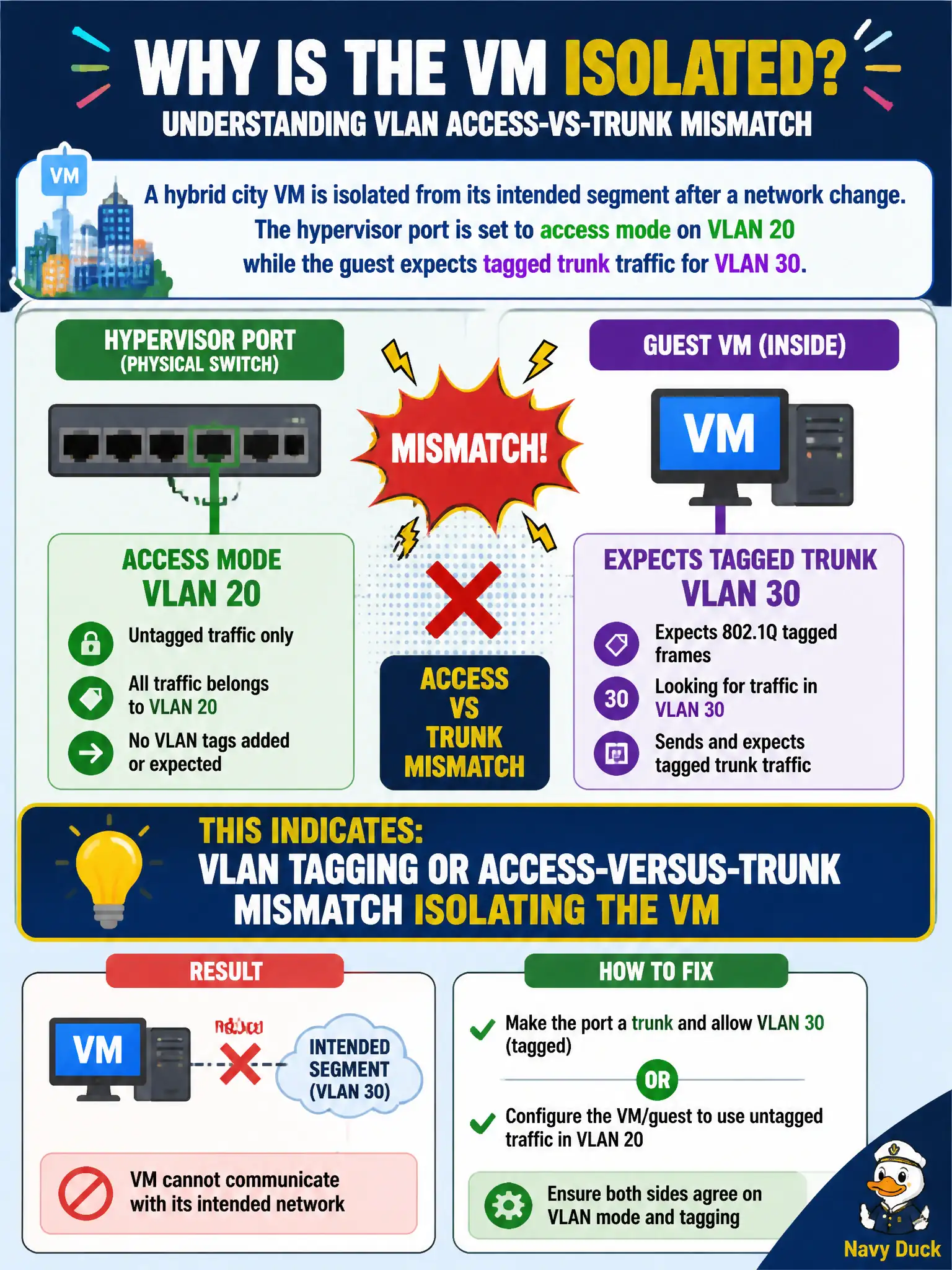
A hybrid city VM is isolated from its intended segment after a network change. The hypervisor port is set to access mode on VLAN 20 while the guest expects tagged trunk traffic for VLAN 30. What does this indicate?
Select an answer to reveal the explanation.
Short Explanation
If the switch port speaks 'untagged VLAN 20' and the guest is waiting for tagged VLAN 30, they are on different party lines. Align access versus trunk and the VLAN IDs so the VM rejoins its segment.
Full Explanation
A hybrid city VM isolated from its intended segment after a network change, where the hypervisor port is set to access mode on VLAN 20 while the guest expects tagged trunk traffic for VLAN 30, indicates VLAN tagging or access-versus-trunk mismatch isolating the VM. Layer-2 mode mismatches silently black-hole municipal hybrid workloads. Insufficient GPU quota for GIS rendering nodes would block GPU scheduling, not VLAN isolation symptoms. Expired API keys for the backup service principal affect backup APIs, not live L2 adjacency. Cold-tier archival of the VM's boot snapshot does not reconfigure vSwitch VLAN modes. Exam caveat: align guest tagging expectations with portgroup/port mode—access for untagged single VLAN, trunk for tagged multi-VLAN civic designs. Operational check: compare VM NIC VLAN settings with the hypervisor port mode, set trunk/access correctly for VLAN 30, restore connectivity tests, document hybrid VLAN standards, and include VLAN checks in change verification. In municipal cloud operations, record the chosen control and the rejected alternatives in the change or incident ticket so future on-call staff understand which failure modes were avoided for city services. Re-validate after the next maintenance window that the same decision still holds under current provider limits, identity bindings, and application versions used by the civic platform team.