
When the city’s web tier scales in, active citizen sessions must not be cut mid-request. What should scale-in policies include?
Select an answer to reveal the explanation.
Short Explanation
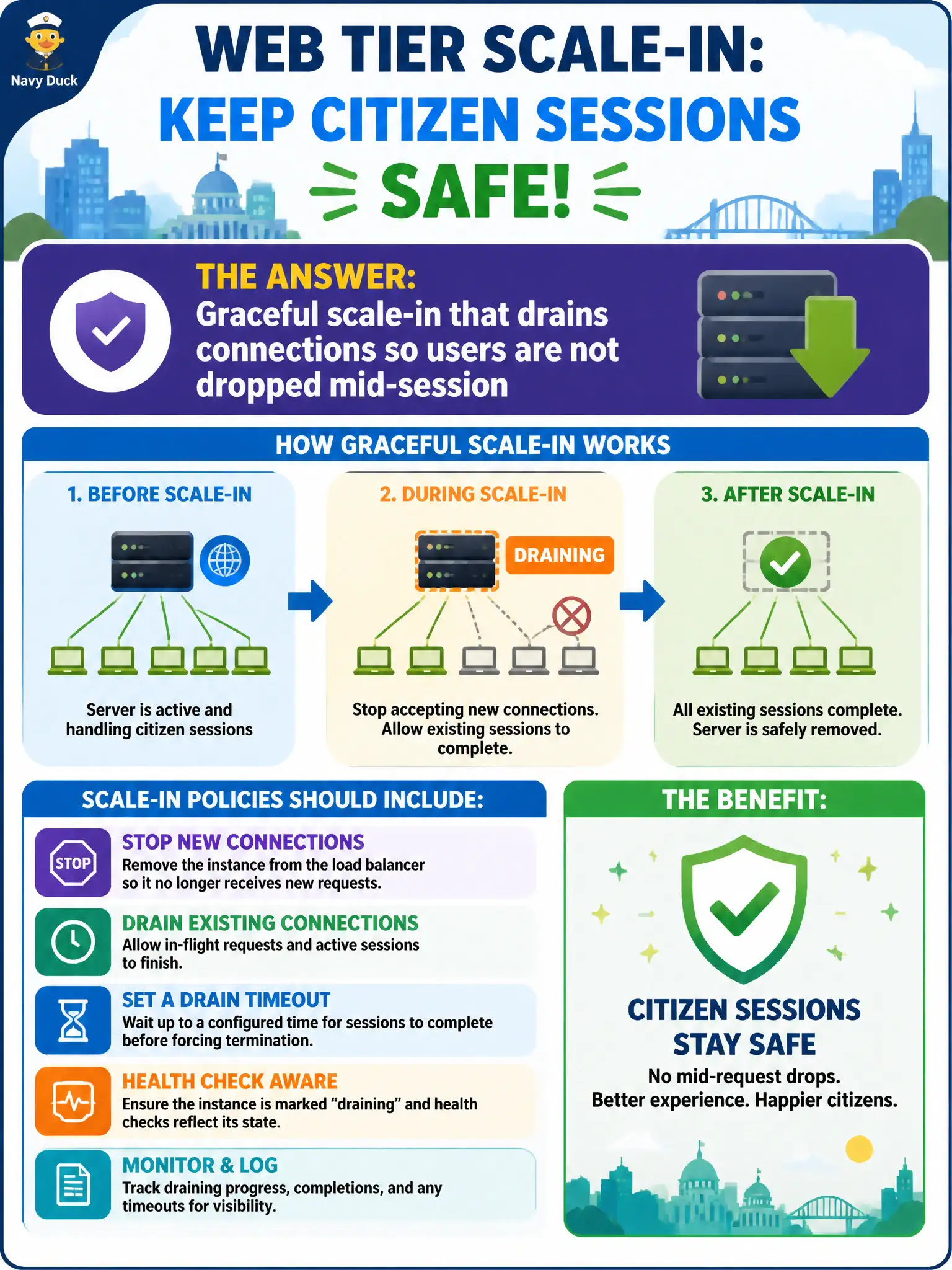
Scale-in without draining is yanking the bridge while cars are still crossing. Graceful policies finish in-flight citizen requests, then retire the instance. Capacity can shrink without feeling like a slap in the face.
Full Explanation
Graceful scale-in that drains connections so users are not dropped mid-session must be included when the city’s web tier scales in during horizontal autoscaling. Hard power-off of random instances with no connection draining cuts citizen sessions mid-request. Immediate deregistration that ignores in-flight requests causes user-visible errors even when capacity is otherwise fine. Scale-in exclusively during peak load to maximize disruption testing is an anti-pattern for production policy. Exam caveat: graceful drain/deregistration is part of safe horizontal scale-in—not optional polish. Operational check: enable connection draining/timeouts, wait for in-flight civic requests, then terminate; verify with synthetic sessions during scale-in tests. In municipal platform operations, record the chosen control and the rejected alternatives in the change record so future on-call engineers understand the failure modes avoided for citizen services. Re-check the decision after the next provider feature change or compliance update to ensure the same answer still holds for the city's estate. Confirm monitoring, access reviews, and backup coverage still align with the selected approach before closing the civic hypercare period.