
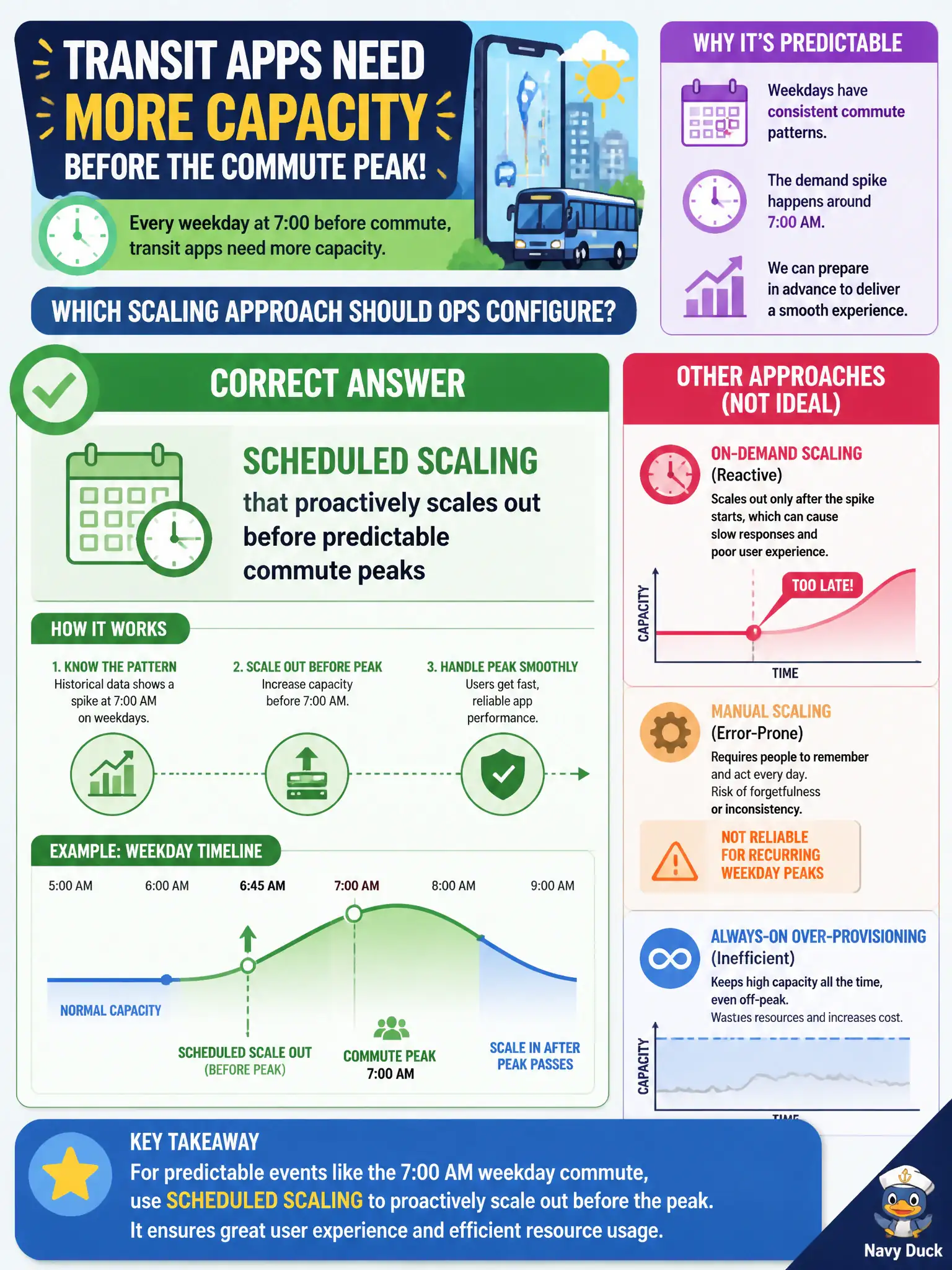
Every weekday at 7:00 before commute, transit apps need more capacity. Which scaling approach should ops configure?
Select an answer to reveal the explanation.
Short Explanation
Commutes don’t surprise anyone who owns a calendar—scheduled scaling opens the gates before 7:00 so the app isn’t gasping. Predictable peaks deserve proactive capacity, not post-outage apologies. Automate the weekday ramp; save heroes for true surprises.
Full Explanation
Scheduled scaling that proactively scales out before predictable commute peaks—every weekday at 7:00—prepares transit apps with capacity before demand arrives rather than after an outage starts. Reactive scaling only after the morning outage has already started fails the proactive timing need. Permanent maximum capacity with no reduction after the rush wastes off-peak budget. Manual war-room calls each morning with no automation fail reliability and staffing efficiency. Exam caveat: scheduled scaling complements metric triggers for known civic demand patterns like rush hour. Operational check: configure cron-like scale-out/in, verify timezone settings, combine with reactive policies as backup, and review after schedule changes for holidays. In municipal platform operations, record the chosen control and the rejected alternatives in the change record so future on-call engineers understand the failure modes avoided for citizen services. Re-check the decision after the next provider feature change or compliance update to ensure the same answer still holds for the city's estate. Confirm monitoring, access reviews, and backup coverage still align with the selected approach before closing the civic hypercare period.