
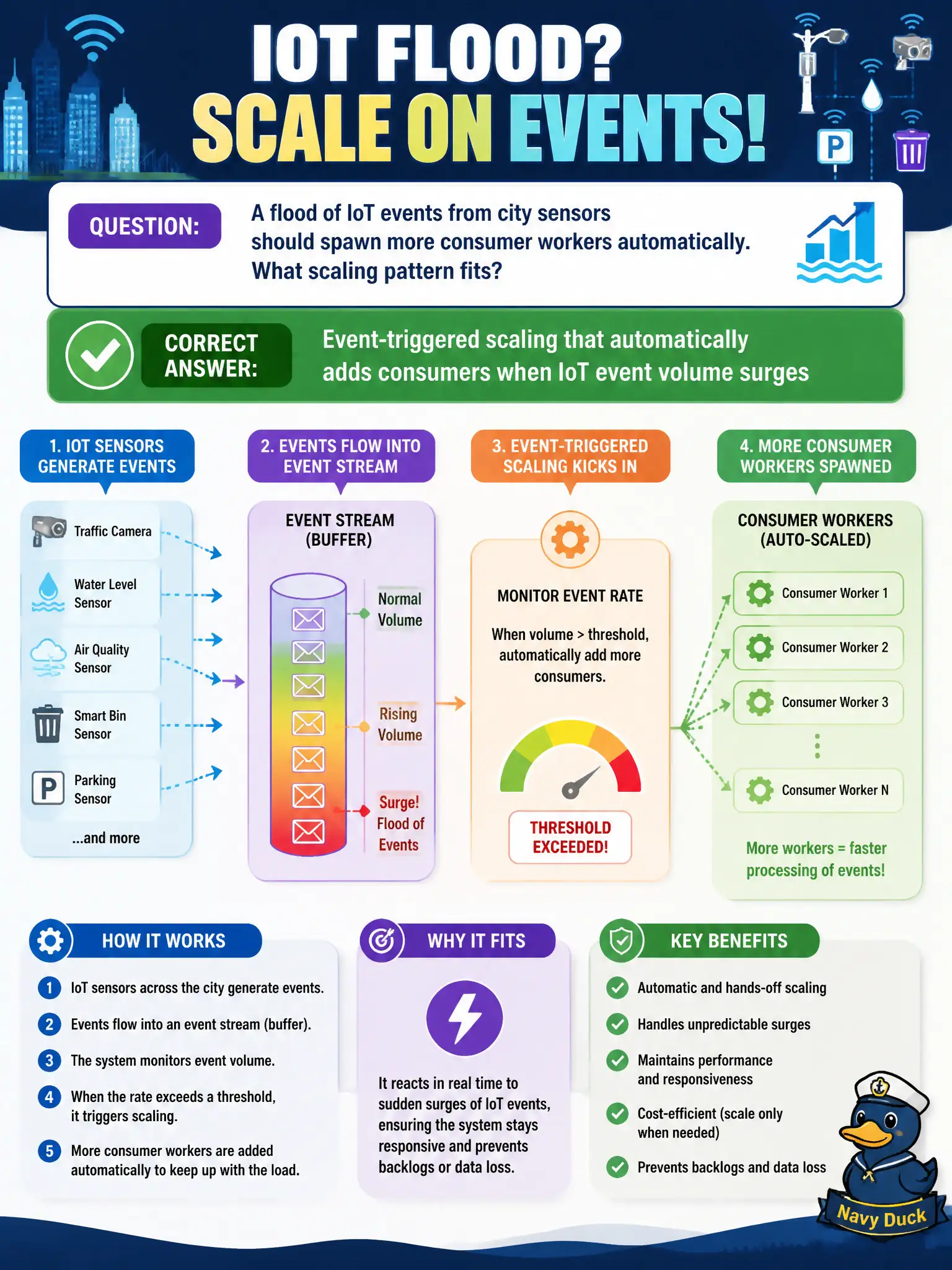
A flood of IoT events from city sensors should spawn more consumer workers automatically. What scaling pattern fits?
Select an answer to reveal the explanation.
Short Explanation
IoT floods are flash mobs for your message queue—you need more greeters when the crowd arrives. Event-triggered scaling spins up consumers as the stream surges, then can wind down later. Fixed yearly schedules won’t catch a sensor storm.
Full Explanation
Event-triggered scaling that automatically adds consumers when IoT event volume surges fits floods of city sensor events that should spawn more workers without waiting for a calendar or manual action. Scheduling consumers to run only once per fiscal year regardless of event volume fails burst response. Always running the maximum consumer count twenty-four hours a day wastes cost during quiet periods. Dropping events silently when the queue grows instead of scaling consumers loses civic telemetry. Exam caveat: event/queue-driven elasticity is the pattern for spiky IoT ingest—not silent drops. Operational check: scale consumers on queue depth/age, set DLQs for poison messages, and alarm if backlog growth outpaces scale-out. In municipal platform operations, record the chosen control and the rejected alternatives in the change record so future on-call engineers understand the failure modes avoided for citizen services. Re-check the decision after the next provider feature change or compliance update to ensure the same answer still holds for the city's estate. Confirm monitoring, access reviews, and backup coverage still align with the selected approach before closing the civic hypercare period.