
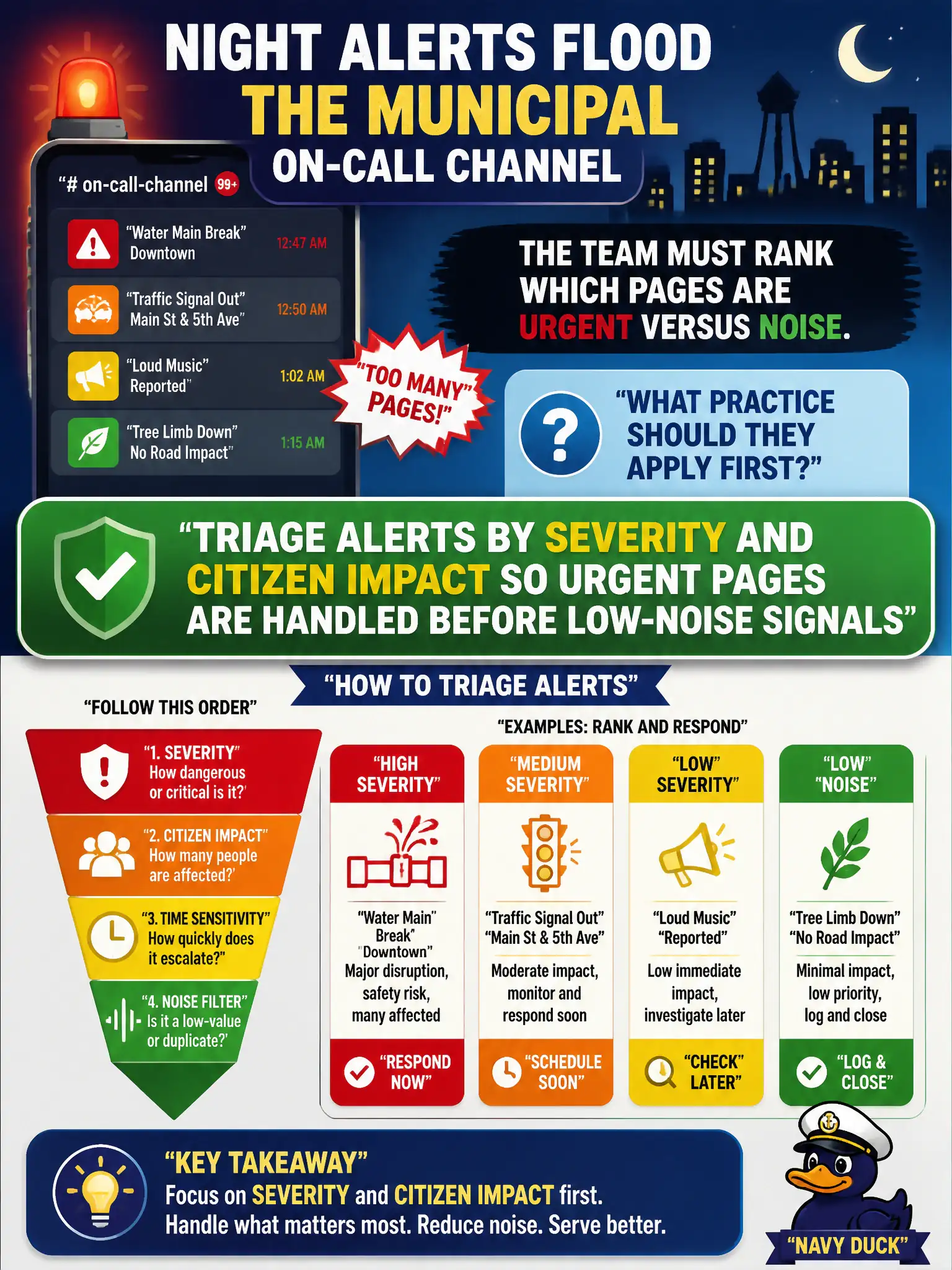
Night alerts flood the municipal on-call channel, and the team must rank which pages are urgent versus noise. What practice should they apply first?
Select an answer to reveal the explanation.
Short Explanation
Alert floods feel like every smoke alarm and toaster beeping at once—you still need to decide which fire is real. Triage ranks by severity and impact so urgent citizen outages jump the queue ahead of noisy niceties. Treating everything as Sev-1 just burns the team out.
Full Explanation
Triaging alerts by severity and citizen impact so urgent pages are handled before low-noise signals is the first practice when night alerts flood the municipal on-call channel. Acknowledging every page as Sev-1 and paging the CIO for each one amplifies noise and exhausts leadership. Disabling all alerting overnight to guarantee sleep fails duty-of-care for citizen services. Forwarding the entire alert storm to social media fails operational confidentiality and usefulness. Exam caveat: triage prioritizes; it is distinct from disabling monitoring or inflating all severities. Operational check: define severity rubrics tied to citizen impact, train night staff, and review noisy alerts weekly to reduce repeats. In municipal platform operations, record the chosen control and the rejected alternatives in the change record so future on-call engineers understand the failure modes avoided for citizen services. Re-check the decision after the next provider feature change or compliance update to ensure the same answer still holds for the city's estate. Confirm monitoring, access reviews, and backup coverage still align with the selected approach before closing the civic hypercare period. Document residual risk for auditors.