
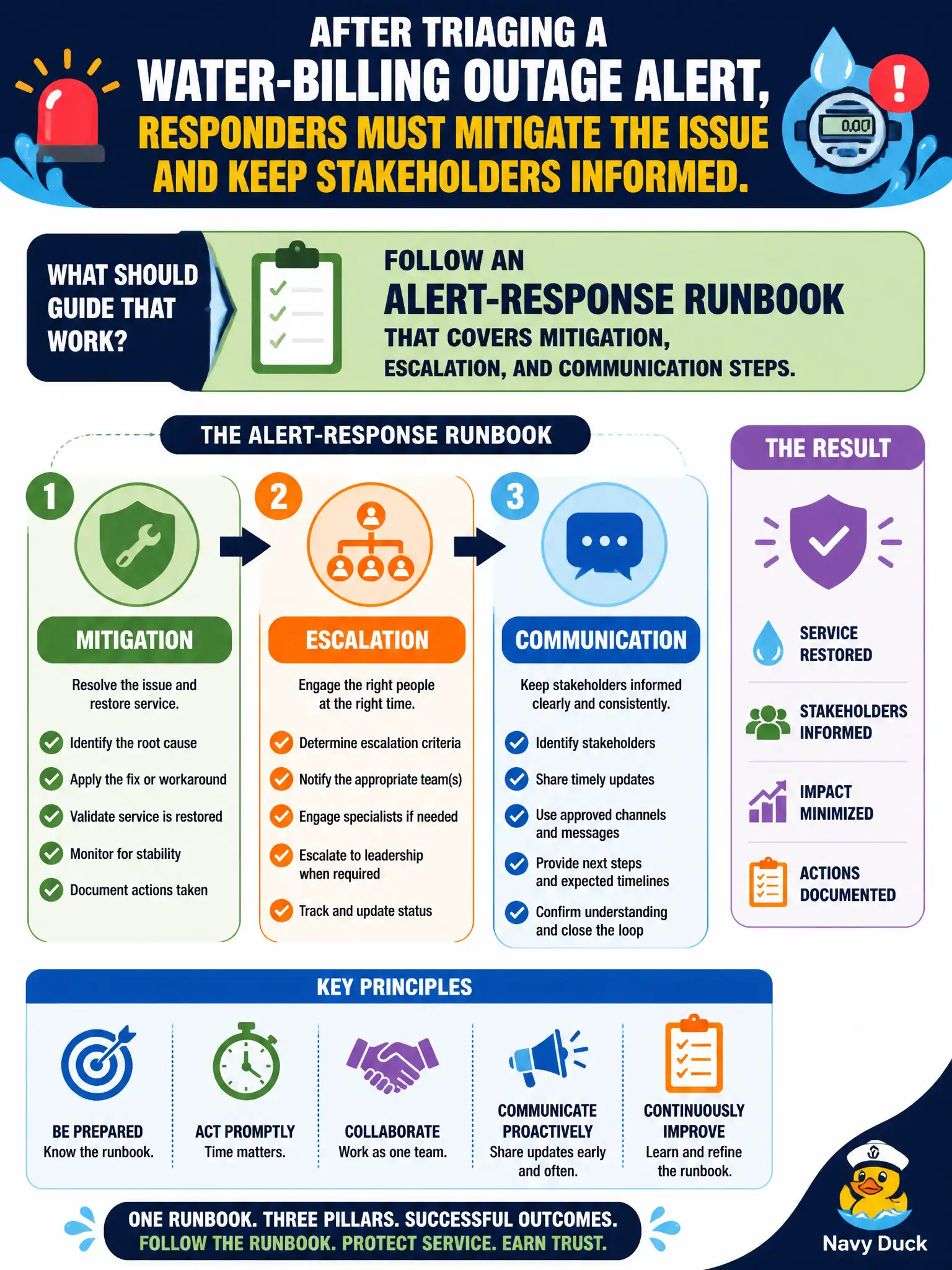
After triaging a water-billing outage alert, responders must mitigate the issue and keep stakeholders informed. What should guide that work?
Select an answer to reveal the explanation.
Short Explanation
A runbook is the laminated card in the fire truck—when the pager lights up, you already know the next moves. After triage, responders mitigate, escalate if needed, and tell stakeholders what’s going on. Wing-it nights turn one outage into three confused threads.
Full Explanation
Following an alert-response runbook that covers mitigation, escalation, and communication steps guides responders after triaging a water-billing outage so mitigation and stakeholder updates are consistent. Improvising uniquely each night with no documented steps fails reliability of civic incident handling. Closing the ticket immediately without mitigation to keep MTTA low fails actual service recovery. Waiting until the next business day before acknowledging any overnight page fails response time expectations. Exam caveat: alert response is more than ack—it includes mitigate, escalate, and communicate via runbooks. Operational check: keep runbooks linked from the alert, practice water-billing failover steps, and update comms templates for finance stakeholders. In municipal platform operations, record the chosen control and the rejected alternatives in the change record so future on-call engineers understand the failure modes avoided for citizen services. Re-check the decision after the next provider feature change or compliance update to ensure the same answer still holds for the city's estate. Confirm monitoring, access reviews, and backup coverage still align with the selected approach before closing the civic hypercare period.