
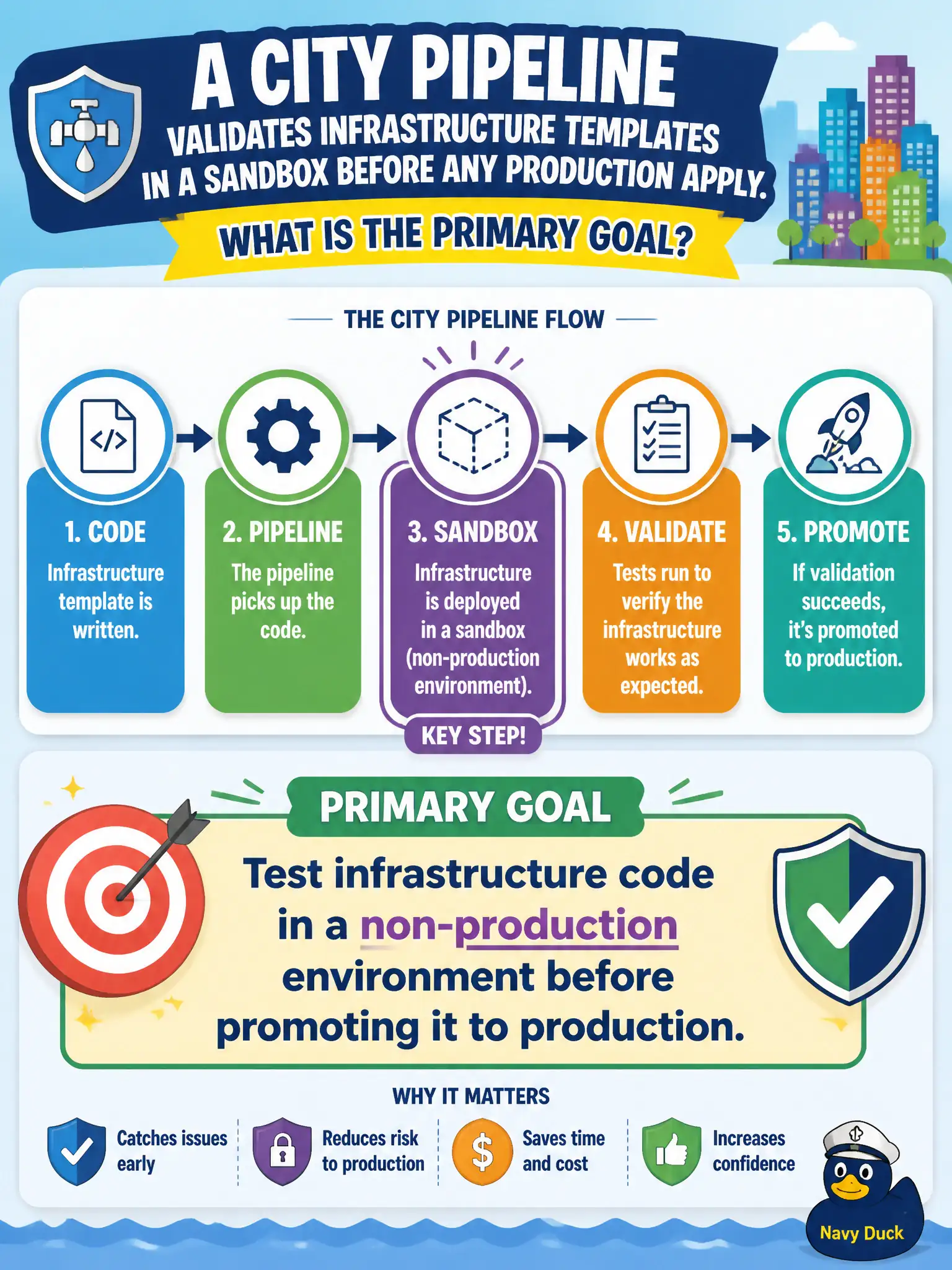
A city pipeline validates infrastructure templates in a sandbox before any production apply. What is the primary goal?
Select an answer to reveal the explanation.
Short Explanation
Try the recipe in a practice kitchen before serving the whole city. Sandbox validation catches broken templates before they rearrange production.
Full Explanation
Testing infrastructure code in a non-production sandbox before promoting it to production reduces the risk that defective templates impact citizen services. A city pipeline that validates templates in sandbox first pursues that primary goal. Skipping all template validation once a sandbox exists anywhere fails; existence of a sandbox is not validation. Forcing every sandbox resource to use production citizen data fails privacy and testing ethics. Replacing monitoring with a single successful sandbox apply forever fails ongoing assurance. Exam caveat: sandbox validation may include plan preview, policy checks, and smoke applies—but the core idea is pre-production verification of IaC. Operational check: gate production applies on green sandbox stages, use synthetic data, assert policy-as-code rules for encryption and tagging, and promote the same commit artifact. In municipal platform operations, record the chosen control and the rejected alternatives in the change record so future on-call engineers understand the failure modes avoided for citizen services. Re-check the decision after the next provider feature change or compliance update to ensure the same answer still holds for the city's estate.