
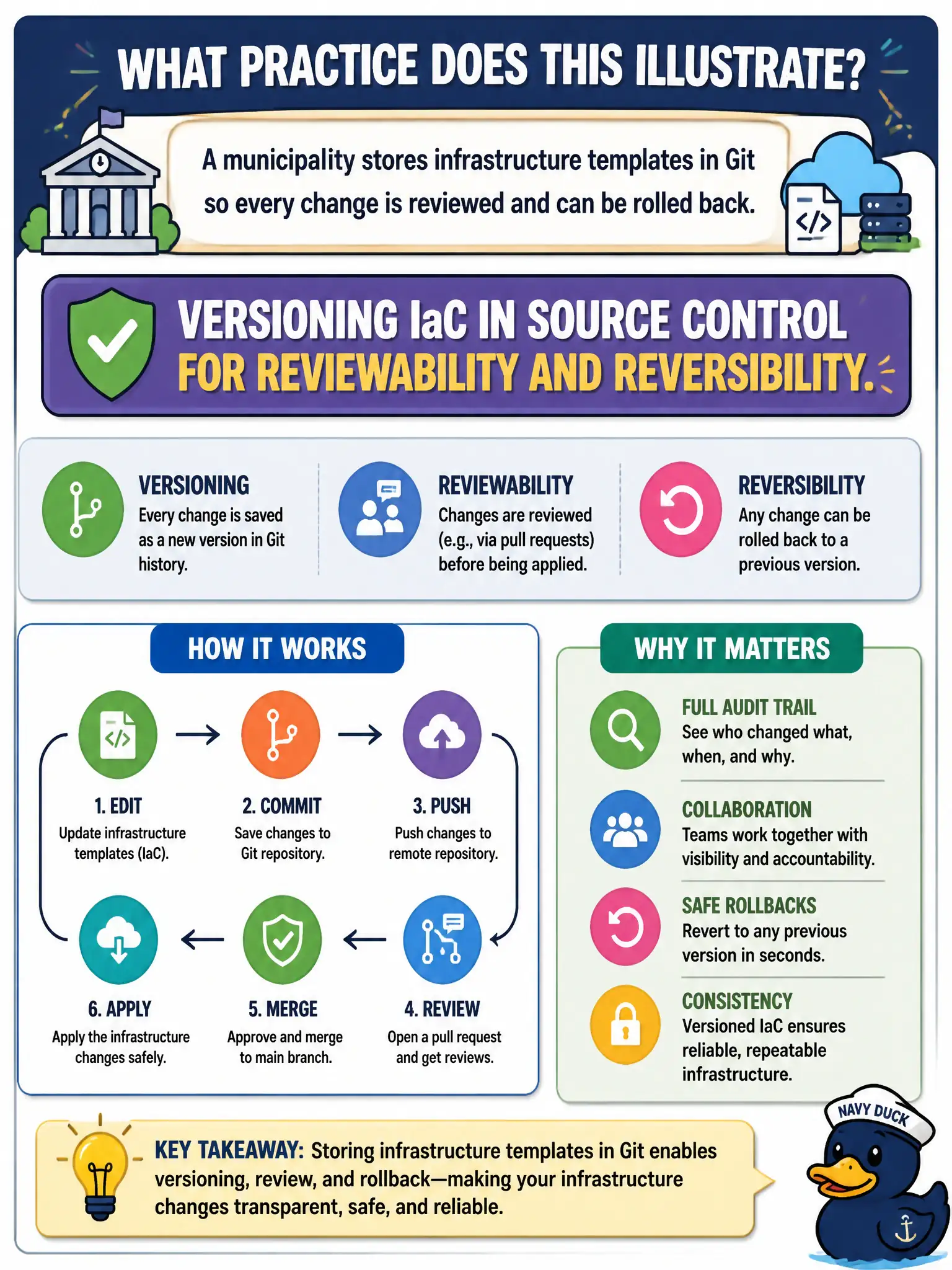
A municipality stores infrastructure templates in Git so every change is reviewed and can be rolled back. What practice does this illustrate?
Select an answer to reveal the explanation.
Short Explanation
Git is the city's filing cabinet with time travel—every template change gets a review stamp and a way to rewind. That is versioning your infrastructure code, not hiding it on one laptop.
Full Explanation
Versioning infrastructure as code in source control provides reviewability, history, and reversibility for municipal template changes. Storing templates in Git so every change is reviewed and can be rolled back is that practice. Ephemeral container registries as the only audit trail fails because registries are not a substitute for reviewed IaC history. Disabling pull requests to accelerate production applies fails governance and peer review. Keeping templates only on a laptop with no remote history fails durability and team access. Exam caveat: source control for IaC is a foundational Cloud+ operations practice—separate from merely having files somewhere. Operational check: require protected branches, mandatory reviews for production paths, and tag releases that match civic change tickets; practice revert drills so a bad network template can be restored without recreating knowledge from memory during an outage. In municipal platform operations, record the chosen control and the rejected alternatives in the change record so future on-call engineers understand the failure modes avoided for citizen services. Re-check the decision after the next provider feature change or compliance update to ensure the same answer still holds for the city's estate.