
Ops confuses a canary (small user percentage) with blue-green (full parallel environment switch). What is the key distinction?
Select an answer to reveal the explanation.
Short Explanation
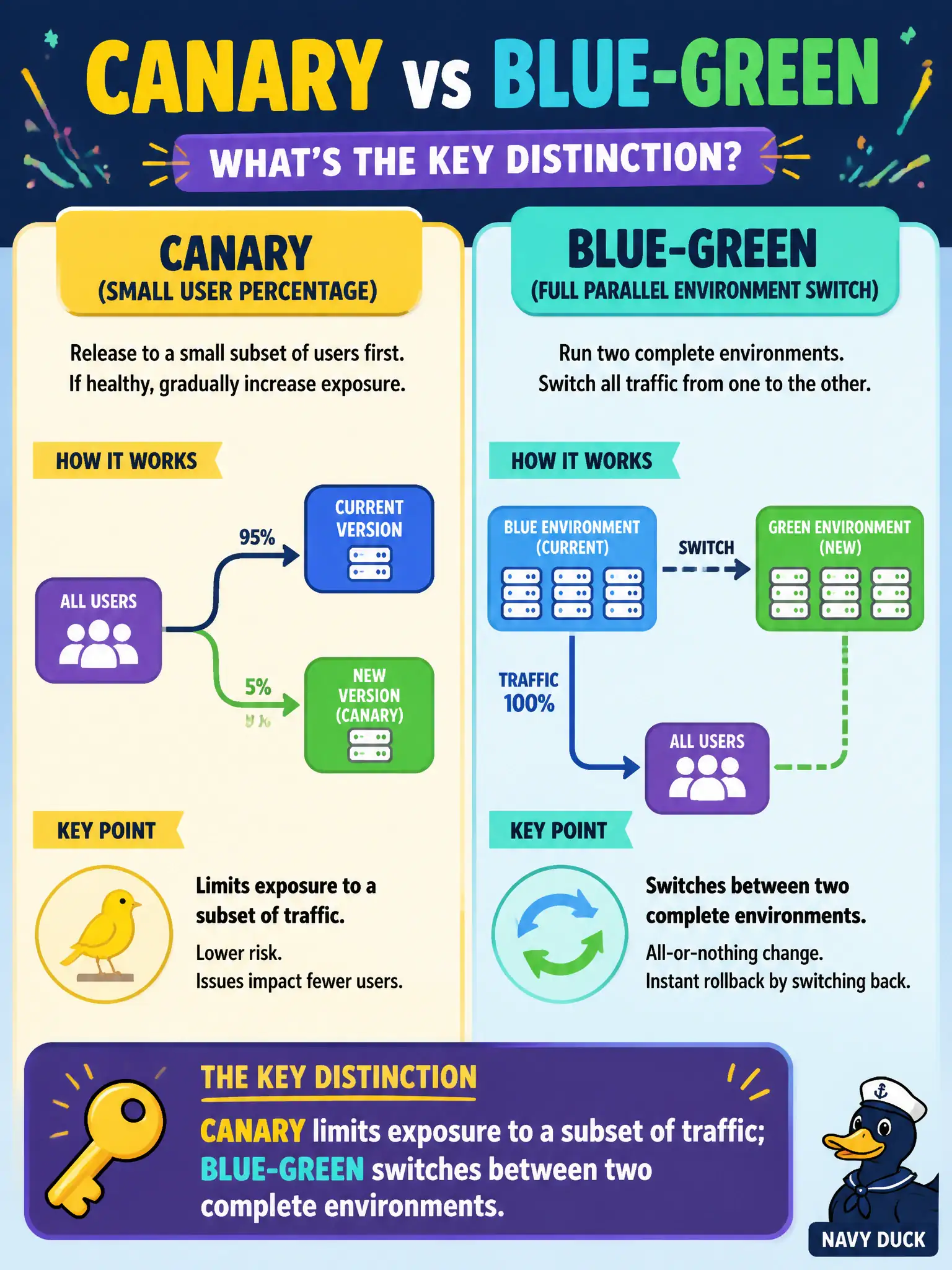
Canary is a teaspoon of the new soup for a few diners; blue-green is two full kitchens with a door swap. Subset exposure versus whole-environment cutover is the distinction. They are related release tactics, not the same thing with different logos.
Full Explanation
The key distinction is that canary limits exposure to a subset of traffic or users on the new version, whereas blue-green switches traffic between two complete environments. Municipal operators must not treat those as marketing synonyms when briefing risk to city leadership. The claim that canary always requires two idle full production stacks while blue-green never uses load balancers fails conceptually: canary does not require a full idle twin, and blue-green commonly uses load balancers or traffic managers for the switch. The claim that blue-green only updates one instance at a time while canary always takes the entire site offline reverses both definitions. Asserting the strategies are identical fails because exposure model and environment topology differ. Exam caveat: Cloud+ loves definition traps among canary, blue-green, rolling, and in-place—anchor on exposure scope versus environment duplication. Operational check: when selecting a strategy for a civic portal, write one sentence naming the blast-radius model (percentage vs full switch vs batches) and validate tooling actually implements that model before release day. Mislabeling a full cutover as a canary in status reports creates false assurance for council stakeholders.