
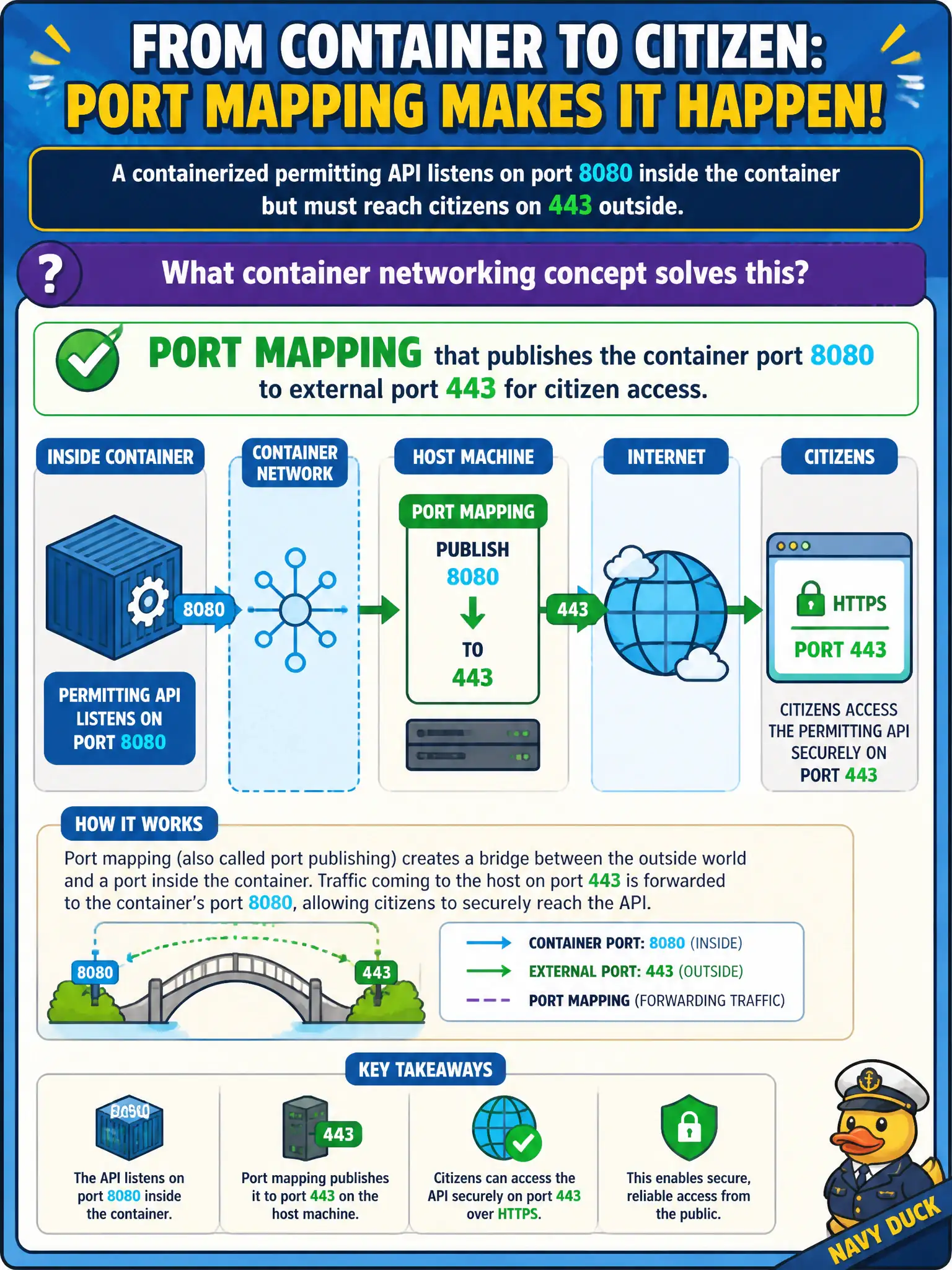
A containerized permitting API listens on port 8080 inside the container but must reach citizens on 443 outside. What container networking concept solves this?
Select an answer to reveal the explanation.
Short Explanation
Port mapping is the translator between the app's private door (8080) and the public street number citizens dial (443). The process inside still binds where it expects. You just publish the right outside port.
Full Explanation
Port mapping publishes a container’s internal listening port to a different host, node, or load-balancer port that external clients use. A containerized permitting API that listens on 8080 inside the container but must serve citizens on 443 outside relies on port mapping—often combined with ingress TLS termination—so the external contract stays standard HTTPS while the process binds to 8080. Host affinity that pins a container to a hypervisor with a hardware TLS dongle does not by itself rewrite or publish application ports for citizen access. Object storage lifecycle rules manage object age and storage class; they do not rewrite TCP ports during image pull. Cold archive retrieval delays have no role in publishing an API listener on port 443 for interactive permitting. Exam caveat: distinguish the container’s private port namespace from the externally published service port citizens and partner systems actually call. Operational check: configure service/ingress mappings from 443 to 8080, install valid TLS certificates, restrict security groups to expected sources, verify health checks target the correct port, and confirm internal service calls prefer cluster DNS over hairpinning through the public VIP when appropriate.