
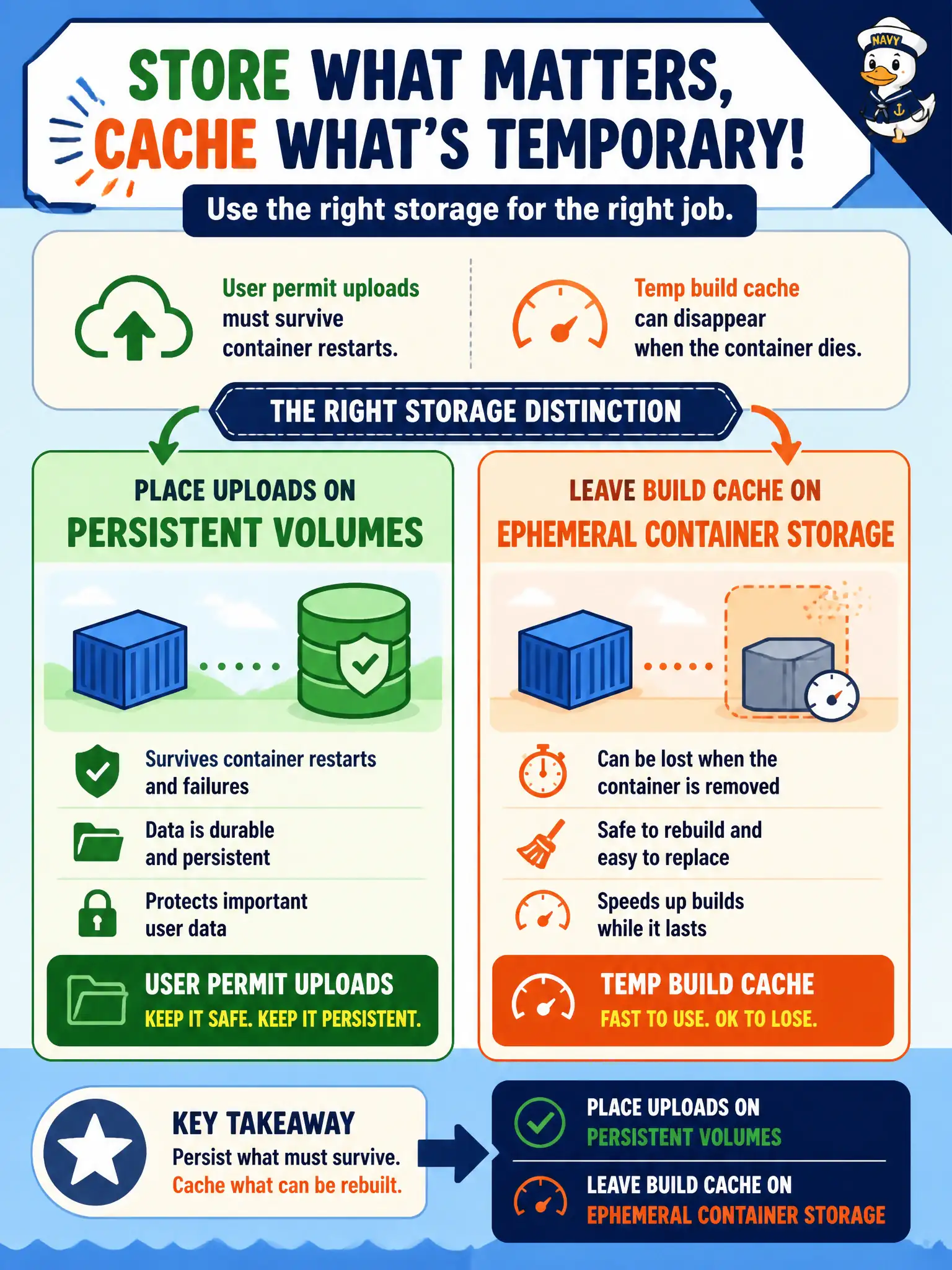
User permit uploads must survive container restarts, while temp build cache can disappear when the container dies. Which storage distinction should the team apply?
Select an answer to reveal the explanation.
Short Explanation
Citizen uploads are family photos—you want them on durable shelves. Build cache is scratch paper you can toss when the container exits. Persistent versus ephemeral is really about what you are willing to lose.
Full Explanation
Persistent volumes outlive individual container instances so application data survives restarts and rescheduling, while ephemeral container storage is wiped when the container dies and suits disposable caches. User permit uploads must therefore land on persistent volumes or durable object storage, whereas temporary build cache can safely use ephemeral storage that disappears with the pod. Keeping uploads only in container RAM disks while placing build cache on durable object storage reverses durability priorities and risks losing citizen records. Treating both uploads and build cache as equally ephemeral so neither outlives the pod endangers retention and audit requirements. Requiring every temporary cache file to use the same multi-AZ database as citizen uploads over-engineers scratch space and can harm database performance and cost. Exam caveat: Cloud+ container storage items turn on what must survive restart—bind durability to business data and evidence, not to compiler or build scratch. Operational check: mount a persistent volume or write uploads to encrypted object storage with backups, keep build caches on emptyDir-style ephemeral paths, kill and reschedule a pod to prove uploads remain, and document retention and legal-hold handling for permit artifacts.