
Production microservices for licensing need scheduling, automatic restarts, and scaling across a node pool. Which approach best meets those needs?
Select an answer to reveal the explanation.
Short Explanation
Orchestration is the air-traffic control for containers—where they land, when they relaunch, and how many fly. A lonely laptop container will not cover city licensing at scale. Give production a scheduler that watches health and capacity.
Full Explanation
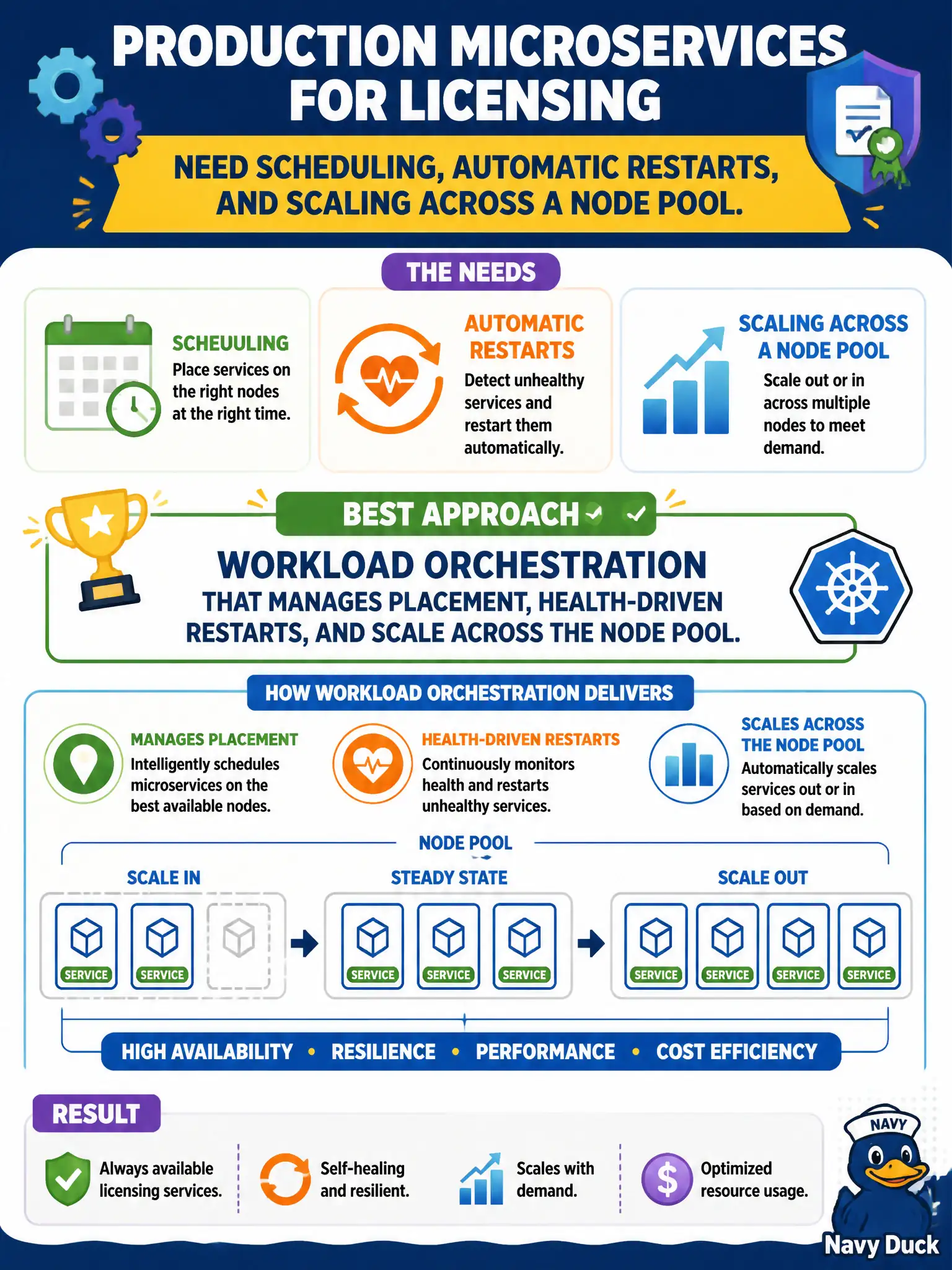
Workload orchestration platforms schedule containers across a node pool, restart failed tasks based on health probes, and scale replicas to meet demand. Production microservices for licensing that need automated placement, self-healing restarts, and scaling therefore require an orchestrator rather than unsupervised one-shot runs on a laptop or a single unmanaged host. Running each service only as a one-shot laptop container with no supervisor fails availability, placement, and scale requirements for citizen licensing. Burning services onto physical appliances that cannot be rescheduled when a node fails abandons cloud-native mobility and recovery. Disabling restarts so failed pods stay down until an engineer SSHs overnight rejects the self-healing behavior orchestration exists to provide. Exam caveat: packaging code in a container image is not the same as orchestrating it—Cloud+ separates runtime packaging from cluster scheduling, healing, and scale. Operational check: define deployments with CPU/memory requests and readiness probes, set replica counts and horizontal scaling for licensing peaks, rehearse node drains with automatic rescheduling, and alert on CrashLoopBackOff or pending pods before the public portal shows errors.