
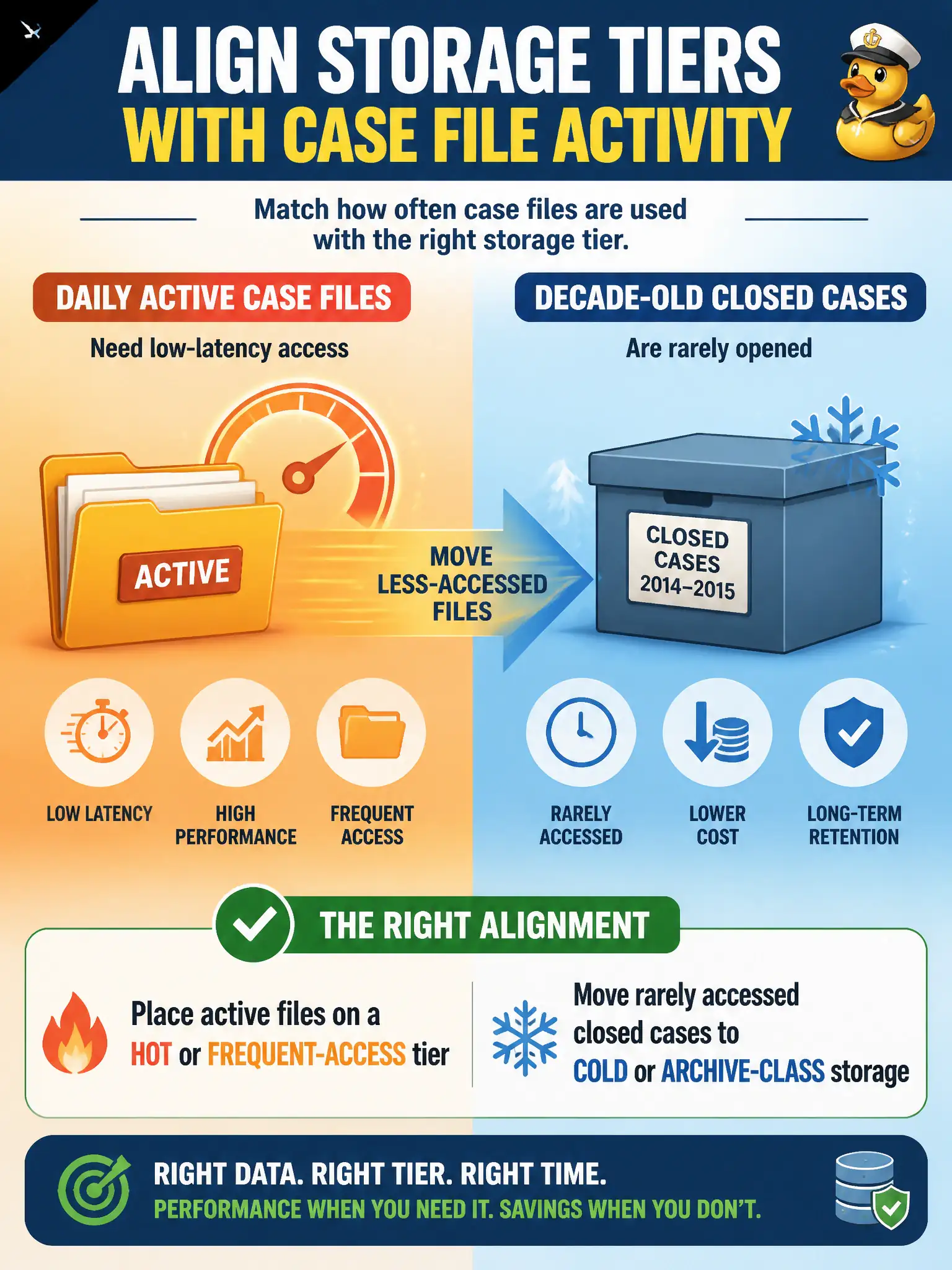
Daily active case files need low-latency access, while decade-old closed cases are rarely opened. How should storage tiers be aligned?
Select an answer to reveal the explanation.
Short Explanation
Hot storage is the desk drawer for today’s files; cold storage is the basement box for decade-old cases you almost never open. Match access frequency to cost and latency. Parking everything on premium SSD forever burns budget for no gain.
Full Explanation
Storage tiering aligns performance, retrieval time, and cost with how often data is accessed. Hot or frequent-access tiers favor low latency for daily work, while cold or archive-class storage reduces cost for objects that are seldom read. Daily active case files therefore belong on a hot or frequent tier, and decade-old closed cases that are rarely opened should transition to colder tiers through lifecycle policies. Storing every closed case indefinitely on the highest-IOPS premium SSD wastes budget without improving citizen outcomes. Keeping active case files only on offline tape while serving open matters from deep archive harms responsiveness for clerks and attorneys. Deleting all closed cases because cloud storage supposedly cannot distinguish access frequency is false—object lifecycle rules and intelligent tiering exist specifically to act on access patterns and age. Exam caveat: Cloud+ storage items reward matching tier to access pattern and acceptable retrieval delay, not defaulting everything to premium disks or the cheapest archive without reading the SLA. Operational check: tag case objects by status and retention, enable lifecycle transitions after defined inactivity, test restore time for a closed-case subpoena against legal deadlines, monitor spend by tier, and ensure encryption and legal-hold settings survive transitions.