
Network teams want centralized, policy-driven virtual networking instead of configuring each device only with isolated static settings. Which concept describes that model?
Select an answer to reveal the explanation.
Short Explanation
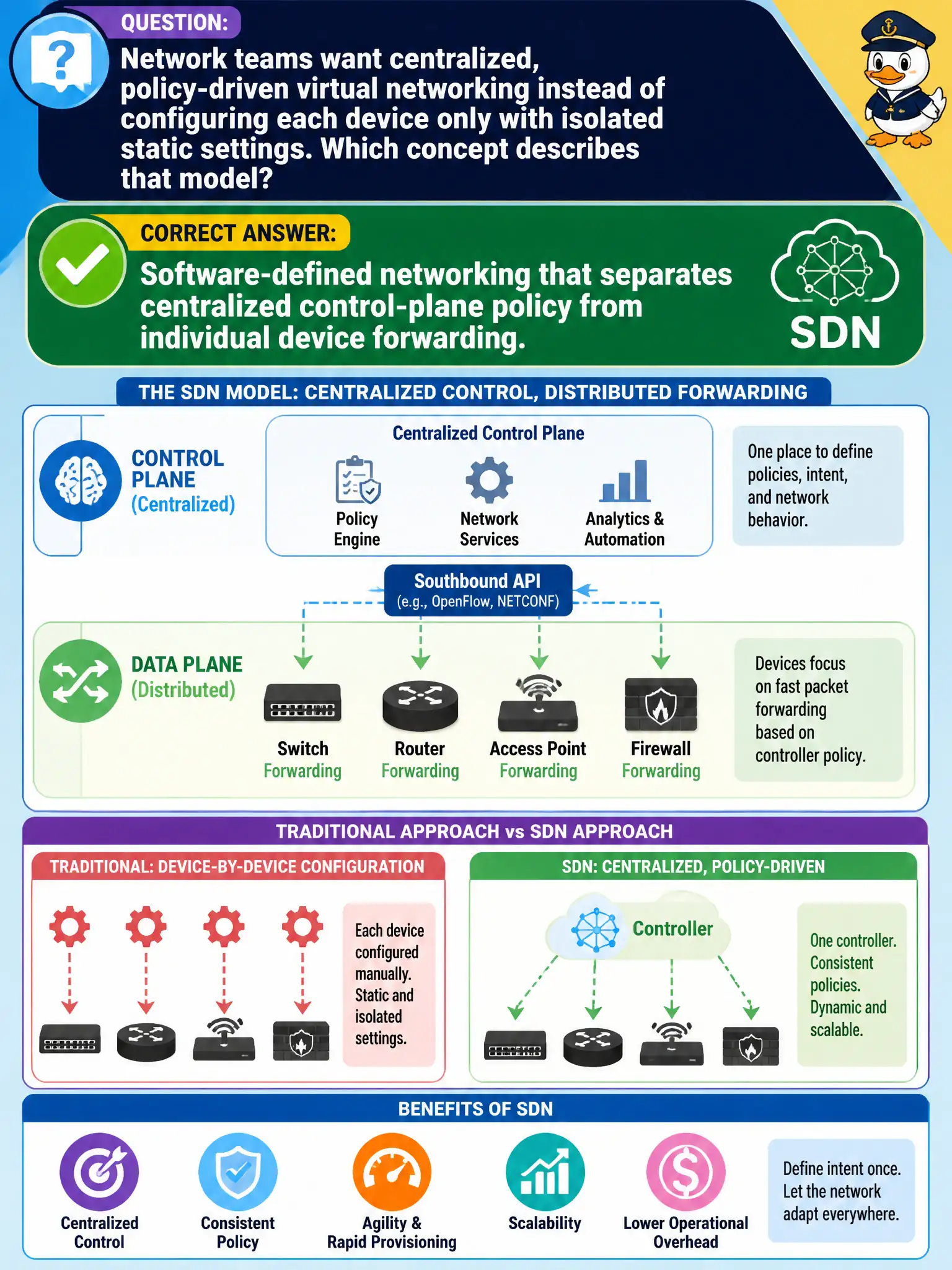
SDN is the difference between yelling new rules into every closet switch versus posting policy once from a control brain. The control plane sets intent; devices forward accordingly. Living only on box-by-box static configs is what SDN was meant to escape.
Full Explanation
Software-defined networking separates a centralized control plane that expresses intent and policy from the data-plane devices that forward packets, enabling programmable virtual networks, overlays, and automated microsegmentation at cloud scale. Network teams that want centralized, policy-driven virtual networking instead of configuring each device only with isolated static settings are applying SDN concepts. Manual serial-console wiring as the sole source of truth cannot deliver consistent, rapid policy across a growing municipal cloud fabric. Air-gapped paper runbooks may capture human procedures but do not replace a programmable control plane that can push intent to overlays and security rules. Relying exclusively on physical patch-panel changes for every microsegmentation rule abandons the virtual overlay agility that cloud platforms provide. Exam caveat: SDN is about centralized intent and programmable control—not merely “having VLANs” or “deploying a firewall appliance.” Operational check: encode segmentation and routing policies as templates or infrastructure-as-code, apply them through the cloud networking control plane, verify effective routes and security rules in each VPC after changes, and audit configuration drift when someone modifies resources outside the approved pipeline.