
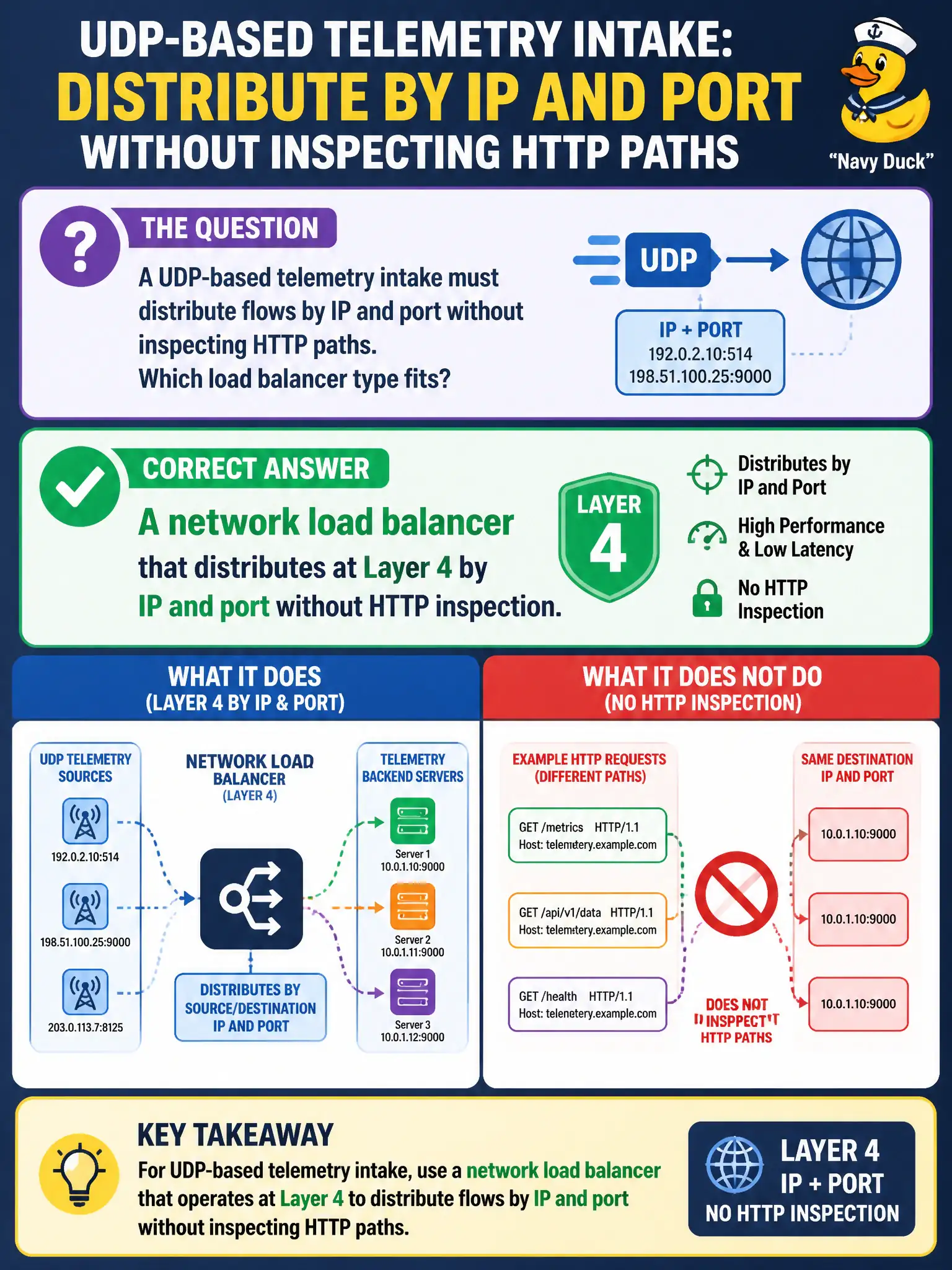
A UDP-based telemetry intake must distribute flows by IP and port without inspecting HTTP paths. Which load balancer type fits?
Select an answer to reveal the explanation.
Short Explanation
UDP telemetry is like sorting trucks by entrance lane and plate—not by reading letters inside the cargo. Layer-4 network load balancing looks at IP and port, not HTTP paths. Pointing that traffic at a pure Layer-7 HTTP balancer is the wrong tool.
Full Explanation
A network load balancer distributes flows at Layer 4 using IP address and port information without requiring HTTP path inspection, which suits UDP-based telemetry and other non-HTTP protocols. Municipal sensor, radio, or vehicle telemetry intakes that arrive as UDP should therefore sit behind Layer-4 distribution to healthy collectors rather than behind an HTTP-only construct. A Layer-7 application load balancer that understands HTTP host and path rules is a poor architectural fit when the protocol is UDP and there is no HTTP content to inspect. A static website hosting endpoint serves files over HTTP(S) and cannot forward UDP telemetry streams. An email SMTP relay terminates message submission traffic and has no role in balancing telemetry UDP flows. Exam caveat: selecting the wrong load-balancer layer is a common Cloud+ trap—UDP and raw TCP often need network load balancing, while path-based citizen web apps need application load balancing. Operational check: confirm UDP listener support on the balancer, map ports to telemetry collectors, use health checks appropriate for the protocol or companion TCP probes, restrict security groups to expected sources, and verify even distribution under peak event bursts such as weather or transit rushes.