
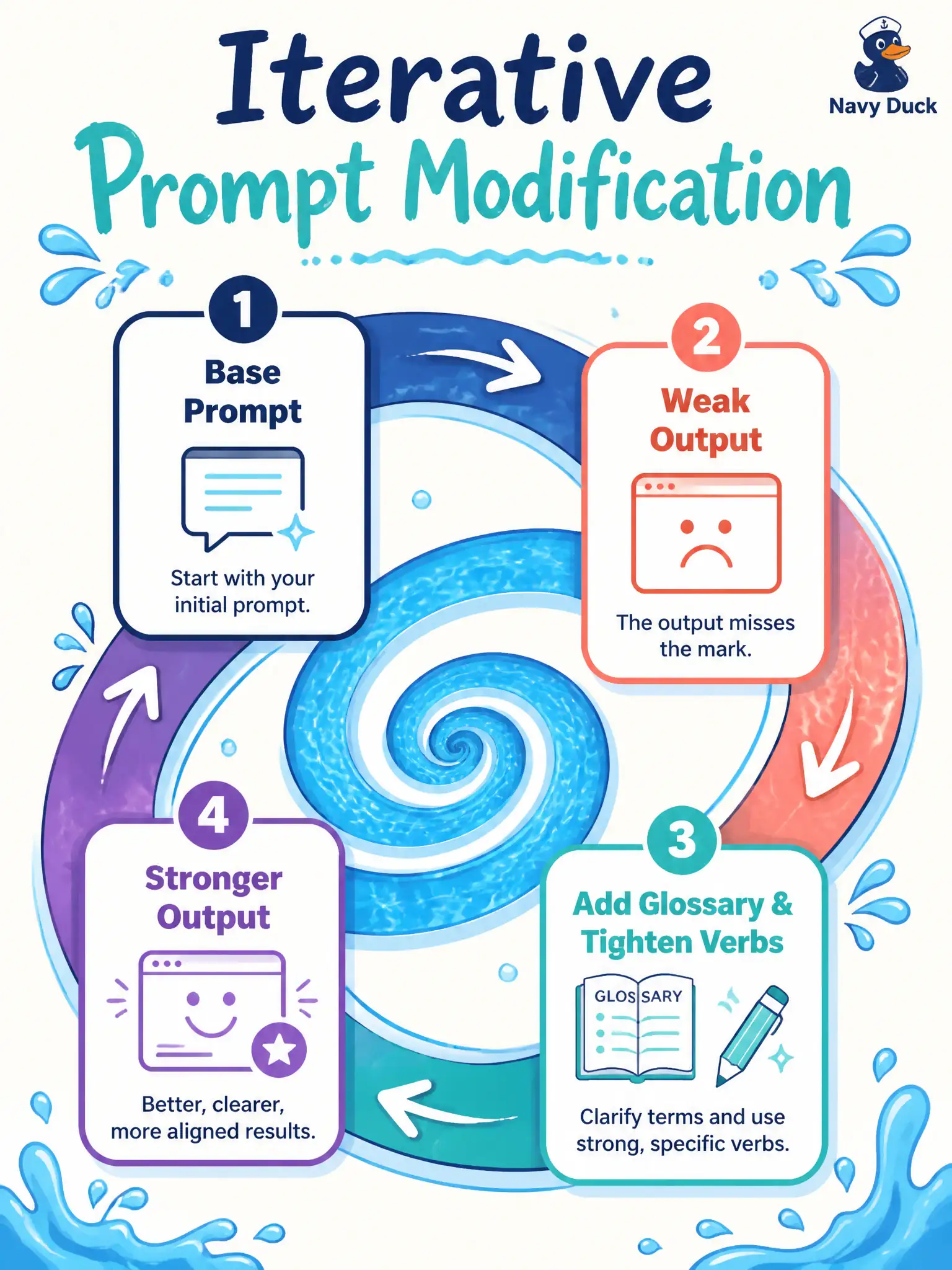
A public-pool lane-booking tester starts with a thin prompt, gets a weak case pack, then adds the member/guest glossary and tightens the verbs before regenerating. Which refinement practice is this?
Select an answer to reveal the explanation.
Short Explanation
Weak pack? Strengthen the prompt—add the glossary, sharpen the verbs, try again. That’s iterative modification from real results.
Full Explanation
A public-pool lane-booking tester who starts with a thin prompt, gets a weak case pack, then adds the member/guest glossary and tightens verbs before regenerating is practicing iterative prompt modification based on actual results—adding context, terminology, and specificity. Civic aquatics testing improves when weak outputs drive concrete prompt repairs rather than wishful freezing. A/B testing of two frozen prompts without changing either based on results fails because the stem describes sequential enrichment of one line of prompting, not a controlled comparison of fixed variants. Red-team jailbreak refinement aimed at breaking the pool chatbot fails by goal: the work improves application case generation, not attacking the assistant. A one-time vendor SKU upgrade as the only allowed improvement fails as tool substitution that skips prompt craft. Exam caveat: iteration uses observed weaknesses to add context and precise language. Operational check: keep a prompt changelog for the civic pool pack, regenerate after glossary and verb tightening, and compare metric deltas before declaring the lane-booking cases ready. Retain the municipal audit note so later testers can see why the decision protects public service quality and fairness.