
An animal-shelter adoption pair writes two prompt versions—one asking for a table, one for numbered steps—and scores both on the same predefined metrics. Which practice are they using?
Select an answer to reveal the explanation.
Short Explanation
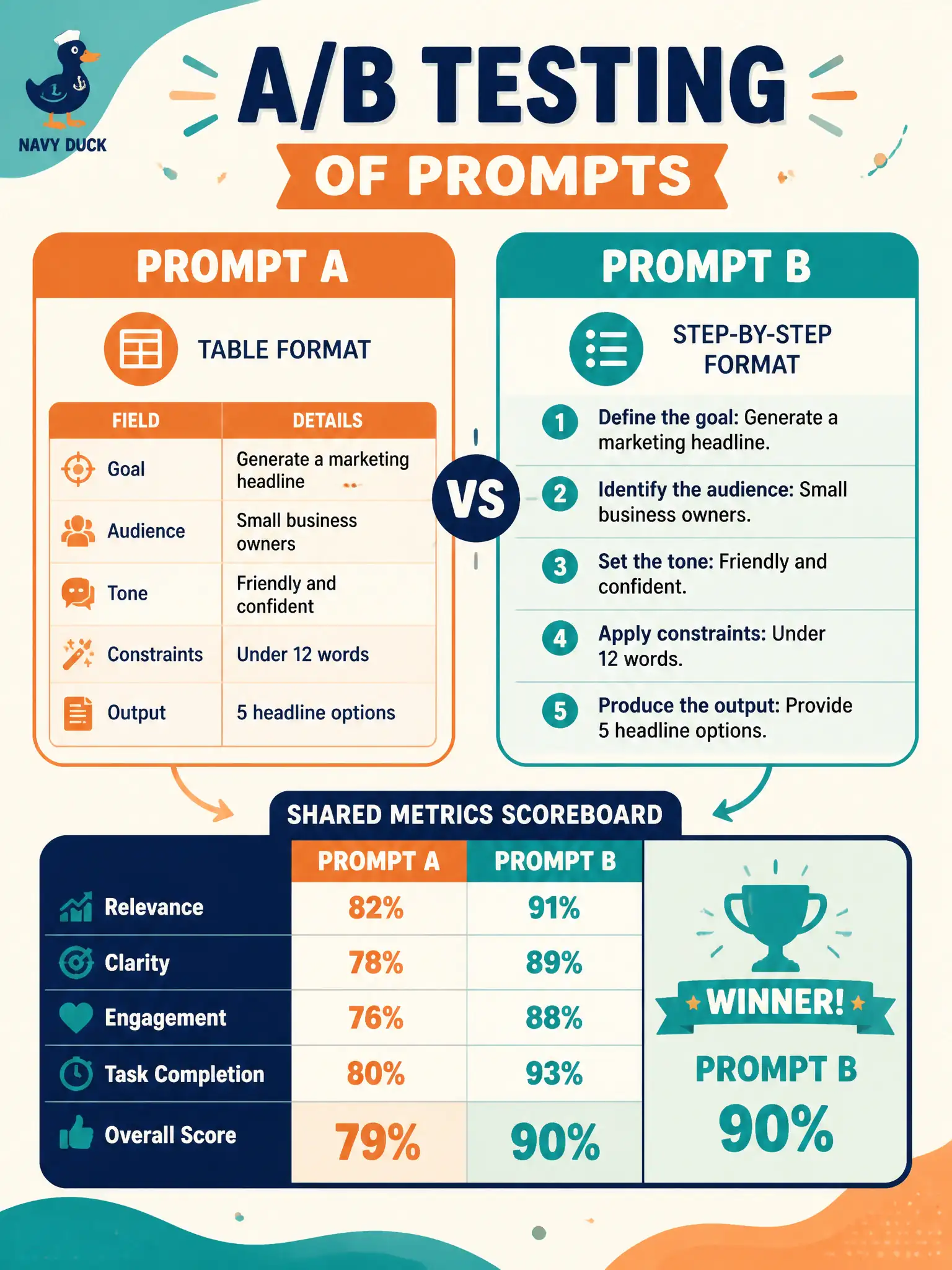
Two recipes, same scorecard—that’s A/B testing of prompts. Keep the better performer on the shared metrics.
Full Explanation
An animal-shelter adoption pair that writes two prompt versions—one asking for a table, one for numbered steps—and scores both on the same predefined metrics is using A/B testing of prompts by comparing versions against predefined metrics. Civic shelter QA benefits when format choices are evidenced rather than chosen by taste alone. Meta prompting only without comparing outputs fails because the stem compares two concrete prompt versions’ results. Neuron coverage measurement of an adoption-matching model fails by concept relative to prompt A/B evaluation. Freezing the first prompt forever because tone sounded friendly fails as anti-measurement bias. Exam caveat: A/B prompt testing requires predefined metrics and comparable runs. Operational check: define accuracy/diversity/execution metrics up front, run both civic prompts on the same adoption story, score blindly where possible, and promote the winner into the shelter prompt library with the score sheet attached. Retain the municipal audit note so later testers can see why the decision protects public service quality and fairness. Retain the municipal audit note so later testers can see why the decision protects public service quality and fairness.