
A community-radio pledge desk has exactly one blessed defect-report template and a new failure to describe. Which prompting technique is the best fit?
Select an answer to reveal the explanation.
Short Explanation
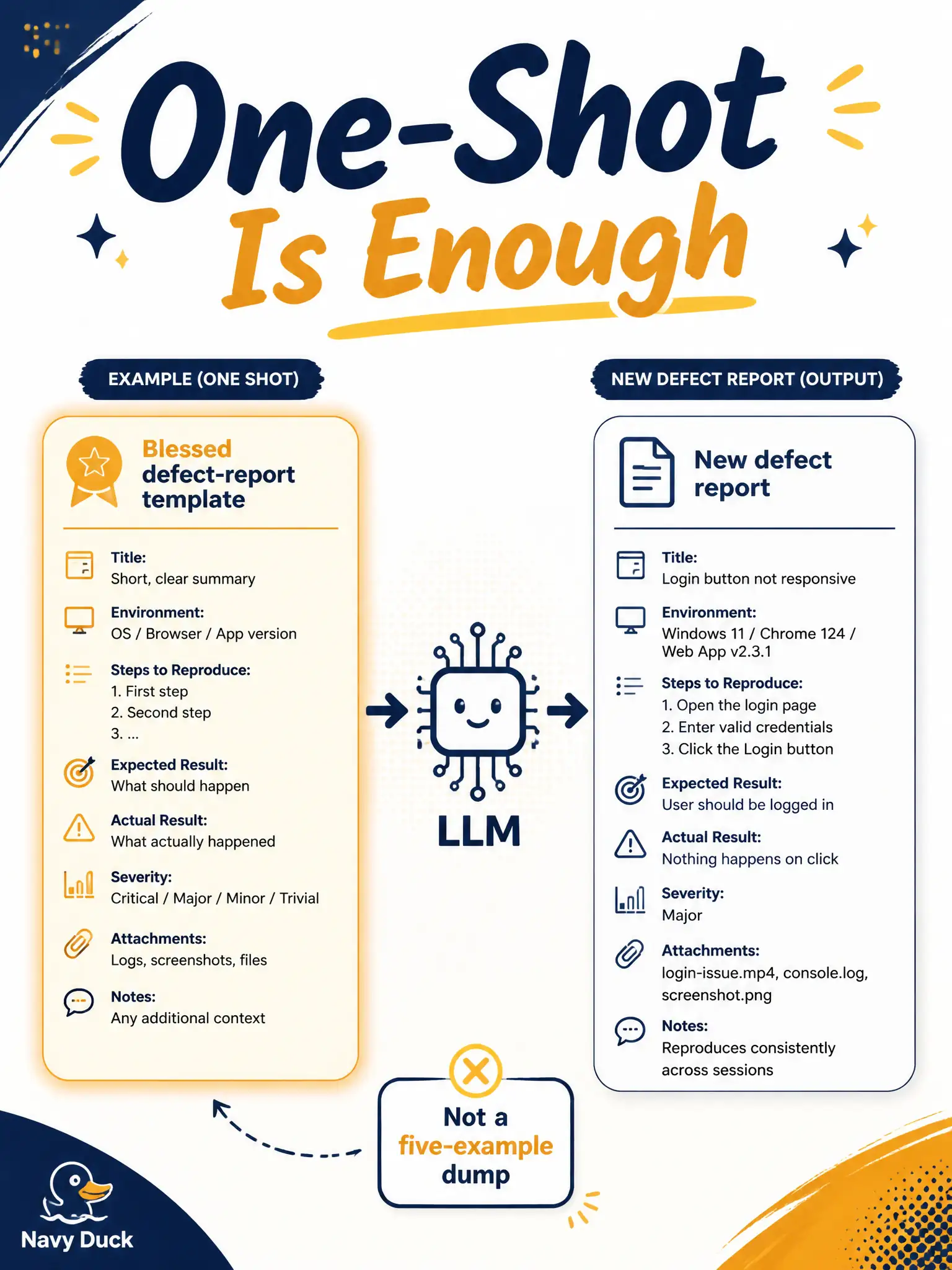
One golden template is enough to show the shape—that’s one-shot. You don’t need a junk drawer of five extras.
Full Explanation
A community-radio pledge desk that has exactly one blessed defect-report template and a new failure to describe is best served by one-shot prompting that includes that single house example to demonstrate the expected result. Civic fundraising defect tracking stays coherent when the solitary gold template shapes the next report without flooding context. Few-shot prompting that dumps five noisy, unblessed reports and blows the context window fails because extra low-quality shots dilute the blessed pattern and waste tokens. Prompt chaining that ignores the blessed template and redesigns transmitter hardware fails by goal and scope. Zero-shot prompting that refuses to show the single accepted template fails to use the one trusted exemplar the desk already maintains. Exam caveat: one-shot is appropriate when a single canonical example should steer output. Operational check: attach the blessed civic defect template, generate the new late-pledge failure report, verify fields and evidence links with a producer, and file only after PII and donor payment details are minimized. Keep civic stakeholders informed of residual risk and re-check the decision after the next monitoring cycle so public service quality remains auditable.