
A watershed rain-gauge team has no accepted sample of a flood-alert condition list and does not want to invent fake examples that would mis-train the format. Which technique should they select?
Select an answer to reveal the explanation.
Short Explanation
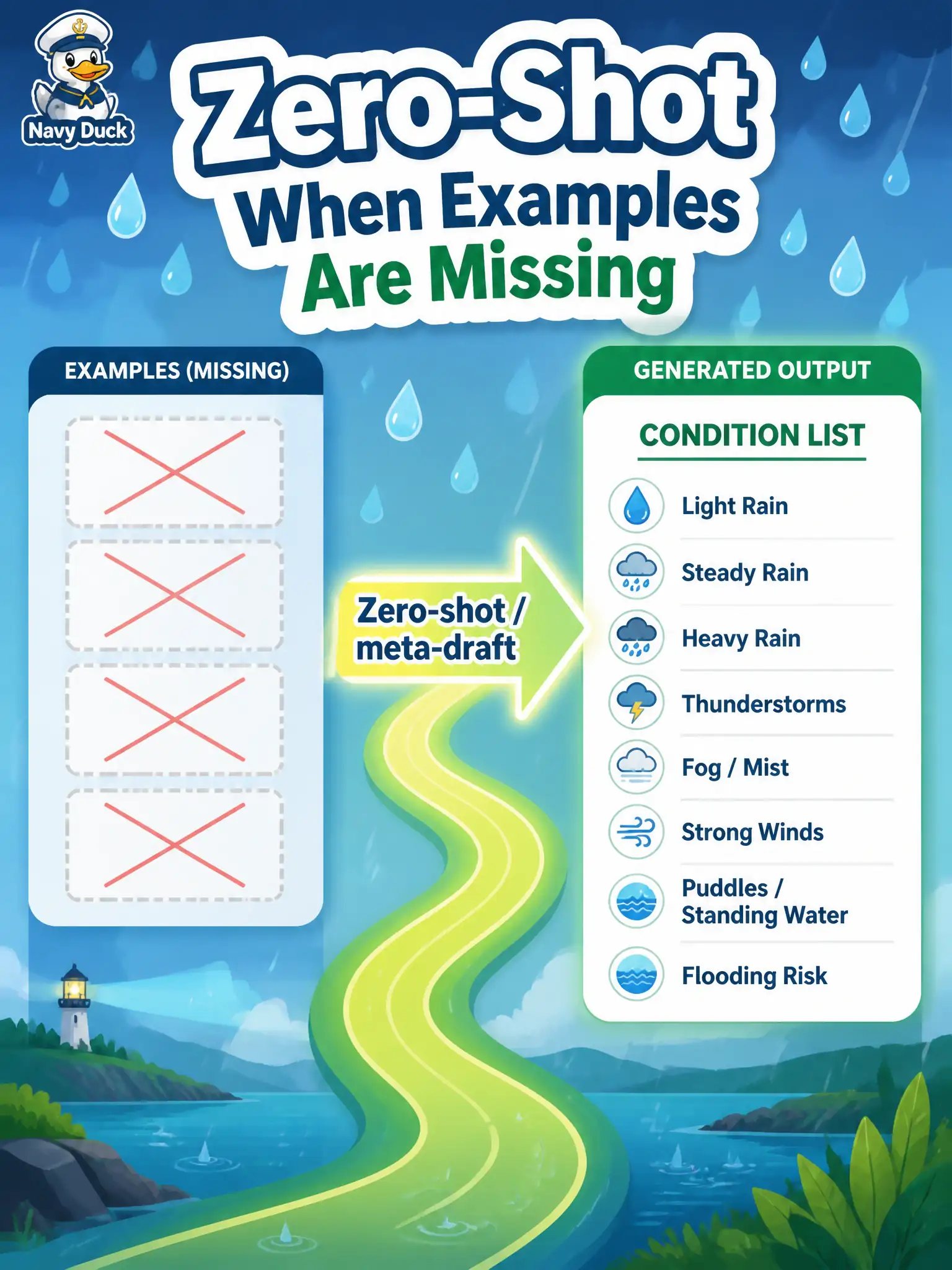
No good house sample? Don’t fake one. Go zero-shot—or meta-draft a prompt—so you lean on the model’s prior knowledge instead of bad examples.
Full Explanation
A watershed rain-gauge team with no accepted sample of a flood-alert condition list and no desire to invent fake examples that would mis-train the format should select zero-shot prompting—or meta prompting to draft a prompt—that relies on the model’s existing knowledge instead of untrustworthy examples. Civic flood alerting is safety-critical; bad exemplars can encode wrong thresholds into downstream testware. Few-shot prompting with two fabricated rows that contradict flood-alert policy fails because contradictory examples actively mis-steer format and content. One-shot prompting that pastes an outdated highway-alert example as if it were flood policy fails by domain mismatch and staleness. Jailbreak prompting to force confidential gauge credentials fails ethically and by syllabus scope. Exam caveat: when trusted examples are unavailable, prefer zero-shot or meta-crafted prompts over fabricating misleading shots. Operational check: run a zero-shot or meta-drafted civic ask for flood-alert conditions, have hydrology staff correct thresholds, and only later promote corrected rows into few-shot libraries once they are blessed. Keep civic stakeholders informed of residual risk and re-check the decision after the next monitoring cycle so public service quality remains auditable.