
A public-wifi guest-voucher tester lets the model propose a prompt, adds two house examples to lock the pattern, then splits extract-rules / draft-cases / check-coverage with a review between hops. Which approach does this illustrate?
Select an answer to reveal the explanation.
Short Explanation
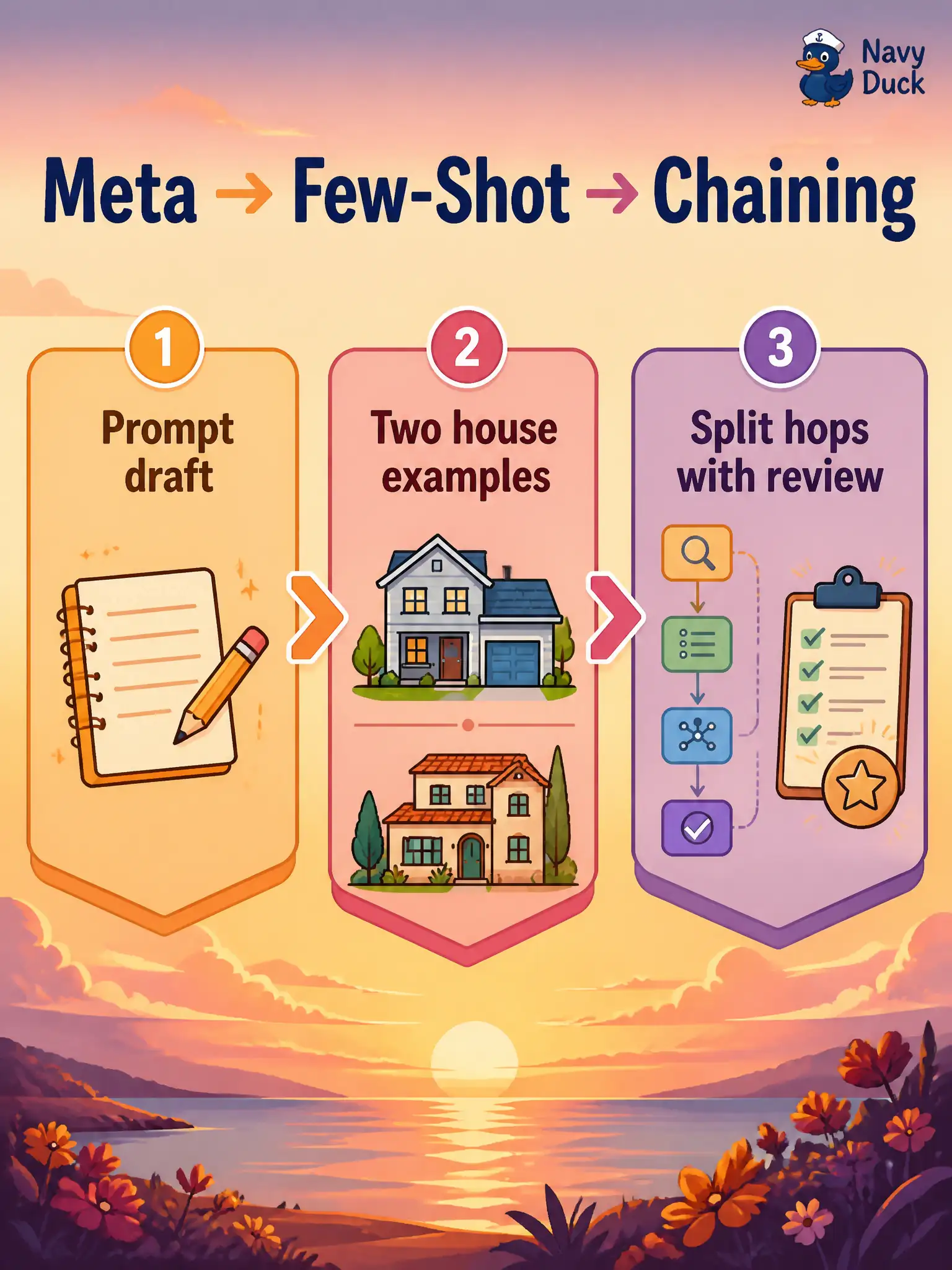
Build the recipe (meta), show two house dishes (few-shot), then cook in stages with taste tests (chaining). That combo is the syllabus sequence.
Full Explanation
When a public-wifi guest-voucher tester lets the model propose a prompt, adds two house examples to lock the pattern, then splits extract-rules / draft-cases / check-coverage with review between hops, the approach illustrates a combined sequence of meta prompting, then few-shot, then chaining. Civic guest-access testing often needs exactly that blend: craft the ask, lock format with examples, and stage work with human checks. Claiming zero-shot only because no examples or steps should ever be used fails against the described workflow that explicitly uses examples and staged hops. API contract mutation testing of wifi controller firmware only fails by concept: firmware mutation testing is not the prompting-technique story in the stem. A/B testing of two production vendor chatbots without any prompting technique fails because vendor bake-offs are not meta/few-shot/chaining practice. Exam caveat: techniques combine; recognize meta→few-shot→chain as a valid civic workflow. Operational check: document which stage used which technique, keep house examples aligned to posted voucher rules, and require human review between chained hops before publishing the municipal coverage table. Keep civic stakeholders informed of residual risk and re-check the decision after the next monitoring cycle so public service quality remains auditable.