
An after-school bus-tracker tester has never asked an LLM to cluster anomalies in a messy completion log and does not know how to phrase a good prompt. Which technique should they select first?
Select an answer to reveal the explanation.
Short Explanation
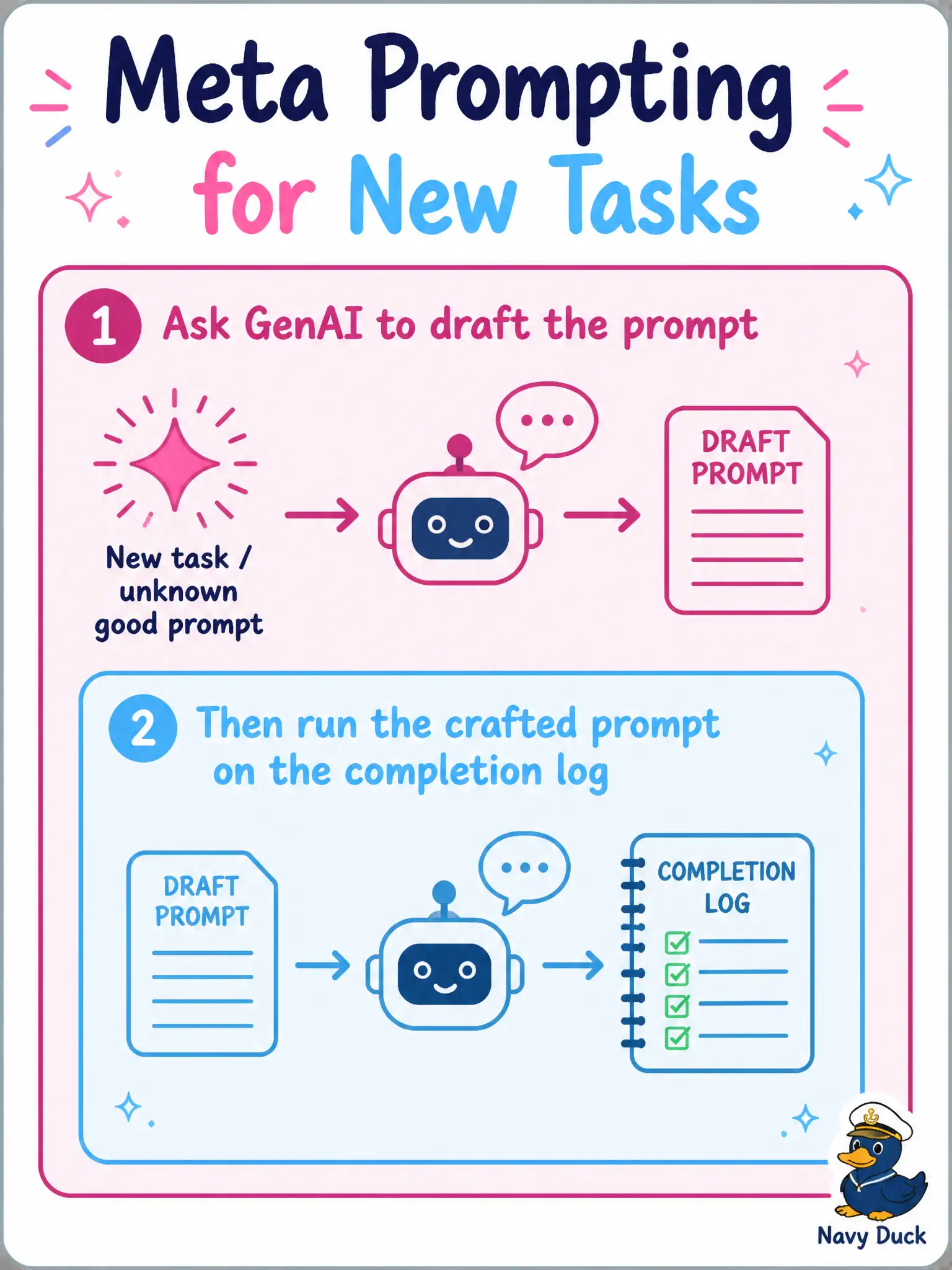
New task, blank playbook—ask the model to help write the prompt itself. That is meta prompting for flexible, first-time work.
Full Explanation
An after-school bus-tracker tester who has never asked an LLM to cluster anomalies in a messy completion log and does not know how to phrase a good prompt should first select meta prompting to craft a suitable prompt for this new clustering task. Civic student-transport monitoring benefits when the ask itself is well formed before expensive log analysis runs. Few-shot prompting using grocery-website examples as if they were bus-tracker anomalies fails because mismatched exemplars corrupt the clustering frame. Treating the bus-tracker chatbot as the SUT with neuron-coverage goals fails by concept: the immediate need is crafting an analysis prompt, not evaluating model internals. One-shot prompting that pastes a blank template with no instruction on how to build the ask fails to solve the “don’t know how to phrase it” problem that meta prompting addresses. Exam caveat: meta prompting is the go-to when the tester needs help designing the prompt for an unfamiliar task. Operational check: ask GenAI to propose a clustering prompt for municipal completion logs, refine it with a transport lead, then run the crafted prompt on a sample week and verify clusters against raw failures. Keep civic stakeholders informed of residual risk and re-check the decision after the next monitoring cycle so public service quality remains auditable.