
A community-college waitlist regression log is messy: mixed pass/fail rows, duplicate symptoms, and outdated known issues. Which GenAI prompting approach best supports analyzing that report?
Select an answer to reveal the explanation.
Short Explanation
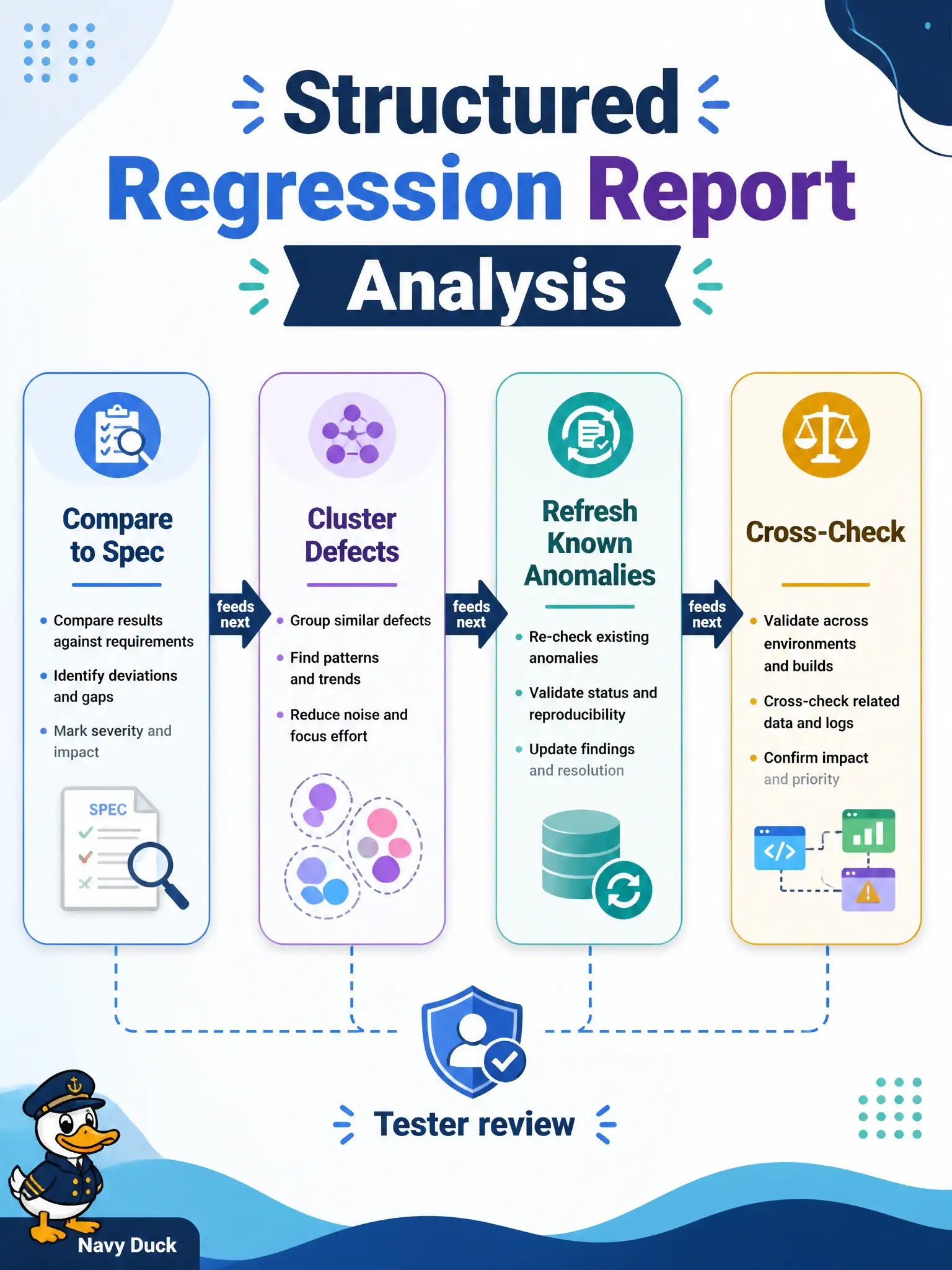
Messy logs are like a jammed mailroom—sort first, then label, then check the forwarding list. A stepwise GenAI chat that compares, clusters, refreshes anomalies, and cross-checks keeps the analysis honest.
Full Explanation
A messy community-college waitlist regression log—mixed pass/fail rows, duplicate symptoms, and outdated known issues—is best handled with a stepwise structured conversation: compare results to the specification, cluster similar defects, refresh known anomalies, then cross-check, with each step feeding the next. Civic enrollment systems need disciplined synthesis so public students are not blocked by misread failure noise. Asking once for a complete rewrite of product requirements so the log can be discarded fails because monitoring analysis should interpret execution evidence, not erase scope. Scoring the model on neuron coverage for every failed waitlist row fails by concept: white-box LLM metrics do not analyze application regression logs. Pasting the entire log and accepting the first narrative summary without comparing it to the specification fails as overtrust in a single fluent dump. Exam caveat: GenAI monitoring help works best as chained structured steps anchored to the basis, not one-shot uncritical summaries. Operational check: stage civic prompts for spec comparison, clustering, known-issue refresh, and cross-check; retain intermediate tables; and have a registrar tester reject clusters that lack traceable failures before changing the waitlist exit decision.